What Plants Are Disporum cantoniense and Agapetes lacei? Read This One Article to Understand
About the Author: One Hand Brush One Hand Flower: Landscape architecture major, has deeply loved plants and nature since childhood, hopes to always work in plant-related fields, in this world only beautiful flowers and delicious food are worth not letting down, Weibo @One Hand Brush One Hand Flower
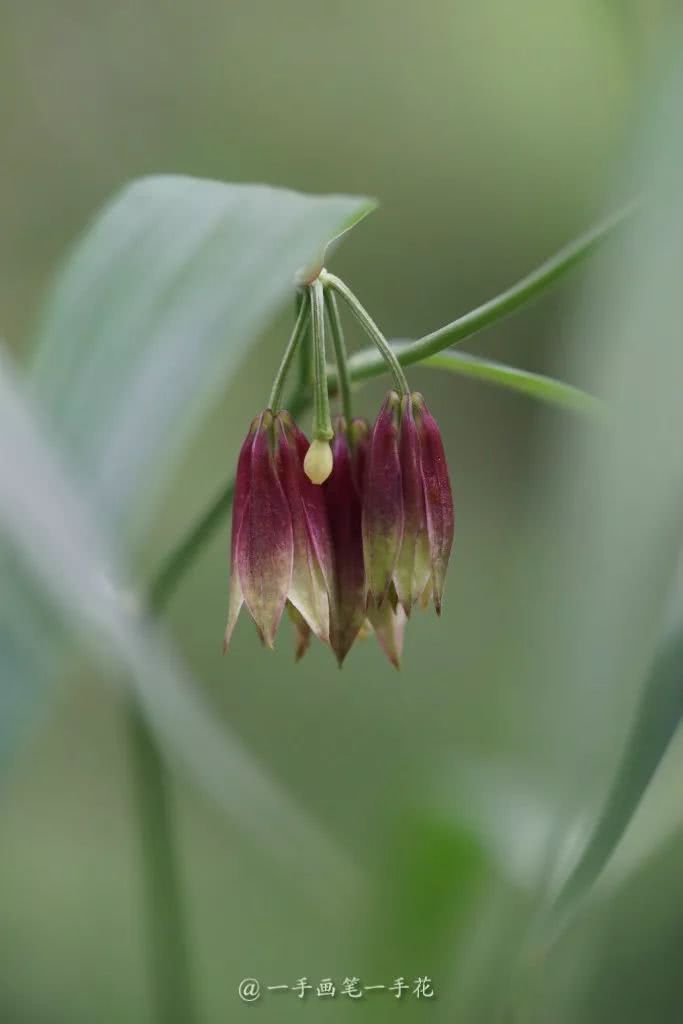
The first time I saw Disporum cantoniense at Shenzhen Fairy Lake Botanical Garden, I almost thought I had encountered the legendary Agapetes lacei. The same long pedicels dangling slender, downward-facing bell-shaped flowers, unique and alluring.
Disporum cantoniense~
Disporum cantoniense (Disporum cantoniense) of the genus Disporum in the Liliaceae family, also known as Zhuyeshen, Shanzhuhua, etc. Its stem nodes are like bamboo stems, and its leaves are narrow and long like bamboo leaves, but unlike bamboo of the grass family, its flowers are in umbel-like inflorescences, each flower drooping, transitioning from dark red to greenish-yellow, with a very unique color scheme, not gaudy, yet pleasant to look at.
In the shade garden and medicinal garden of Fairy Lake Botanical Garden, Disporum cantoniense can be seen. Since it can be planted in the medicinal garden, it must have medicinal value; the label introduction states it has effects such as dispelling wind and dissipating heat, and promoting blood circulation.
The "bamboo nodes" of Disporum cantoniense
What one keeps in mind will surely echo back. Perhaps Agapetes lacei knew I had long admired her, and specially waited in Yunnan to meet me. When I saw red radish-like shapes waving on a small shrub, I was stunned for a moment, then filled with joy - I really saw you, in Yunnan, this place full of surprises, I saw you.
Agapetes lacei
Agapetes lacei (Agapetes lacei) of the genus Agapetes in the Ericaceae family, produced in western Yunnan, southeastern Tibet and other places. The Agapetes family likes to grow at higher altitudes. Its correct Chinese name in the Flora is Denglonghua, but I still prefer the name Agapetes lacei.
Its small elliptical leaves are reddish when first emerging, then tender greenish-yellow, and finally become leathery dark green. The branches, pedicels, and calyx all have fine dense hairs. The long dark red floral tube turns tender green at the point of splitting; although not related, its color scheme is remarkably similar to that of Disporum cantoniense. The style is slightly longer than the floral tube, quietly poking its head out.
Before seeing the fruit of Agapetes lacei, I thought it was called "tree radish" because of its flowers. After seeing pictures of the fruit, I realized the fruit looks more like a radish. It's just that this time I had no chance to see the actual fruit. Friends who want to see pictures can copy this link into a browser: http://www.fpcn.net/a/guanmu/20130909/Agapetes_lacei.html (Flower Picture Network: Agapetes lacei)
Although Disporum cantoniense and Agapetes lacei are similar in appearance, their structures differ: the petals of Disporum cantoniense overlap one by one, while Agapetes lacei is a single floral tube that only splits open at the bottom.
Here is another photo taken in Yunnan, possibly of a relative of Agapetes lacei; the flower is pink and crystal clear, with pure white fuzz. I ask the experts to help identify the species, thank you very much.
A fuzzy type of Agapetes
When the heart has a longing, one gets to see the flower one loves. Encountering these similar strangers one after another, there is a fate unseen.
Author: One Hand Brush One Hand Flower
Images: One Hand Brush One Hand Flower, Jiang Mouren
This work is licensed under the (CC BY-NC-ND 4.0) license agreement
Please retain the above statement when reproducing
iPhone users can tip the author via the QR code below