African violets bloom indoors all year round, and one pot can propagate into dozens of pots
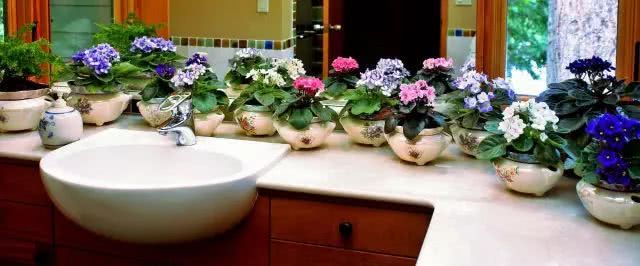
This plant that blooms all year round when grown indoors is the African violet, also known as the African violet (Saintpaulia). It is a tropical ornamental potted plant that loves a warm, humid environment, and its flowering period is very long. In warm regions it can bloom all year round, and in winter, as long as it is given proper light, it can bloom too.
African violets can be grown anywhere indoors, and as long as the environment stays bright, ventilated, warm and humid, they will maintain good growth.
Moreover, it has a wide variety of cultivars, diverse flower colours, and excellent ornamental value, and it can also be propagated continuously. Later, we will explain in detail how to propagate it with leaf cuttings.
When caring for African violets in summer, be sure to avoid scorching sun and provide shaded care; just give a little scattered light. Grow them on a windowsill, keep the air circulating, keep the soil slightly moist without waterlogging, and maintain the temperature between 20 and 25 degrees for the best growth. When the temperature is too high, spray water on the ground appropriately to cool things down.
When the indoor air is dry, you can spray water around the plant to increase the ambient humidity, which can prevent the leaves from wilting. When the air is not circulating or is too dry, its leaves tend to wither.
1. How should African violets be cared for to bloom all year round?
1. Proper moisture
Caring for African violets means keeping them warm and humid. In summer, basically keep the soil slightly moist; do not let the soil get too dry, but do maintain a certain level of ambient humidity. When the temperature drops in winter, watering can be reduced appropriately.
2. Proper light and temperature
African violets are afraid of cold, and the minimum care temperature is best kept above 7 degrees. When the summer temperature is above 33 degrees, you can cool it down appropriately.
It is a relatively shade-tolerant plant. Keep the light bright during care, and it can get some morning light, but avoid scorching sun or direct sunlight.
3. Potting soil
For the soil, choose a slightly acidic sandy soil that drains well, is loose and fertile. Do not use alkaline soil or heavy clay soil to plant it.
(An African violet flower after successful pollination)
4. How can you make African violets bloom more
To encourage African violets to bloom more, besides sufficient ambient humidity and moisture, you also need to apply light fertilizer frequently in small amounts. For routine care, give a balanced fertilizer, and each month give a little phosphorus and potassium fertilizer. This will ensure blooming all year round.
In addition, note that after the flowers fade, the spent flowers should be cut off promptly to conserve nutrients.
2. How are African violets propagated?
1. Sowing:
Sowing can be done when the temperature is between 20 and 25 degrees. Sowing in autumn gives the highest germination rate. Below is its seed pod, which contains hundreds to thousands of very tiny seeds.
Prepare a loose, breathable medium, which can be a mix of peat moss, perlite and vermiculite. Then evenly scatter the seeds on the soil, water carefully to moisten the soil, cover with plastic film, poke a few holes in the film appropriately, and place it in a ventilated, shaded spot. In one week they can germinate and take root. After that, uncover the film, keep the soil slightly moist, and give proper light.
2. Leaf cutting propagation
As shown below, cut off some thick, robust leaves. Leaves that are too old will have a very low rooting rate, so choosing young, robust leaves for leaf cutting propagation is best.
Seal the cut leaves in a plastic bag for 5 minutes, then make the soil slightly moist, insert the leaf stalk diagonally into the soil, cover with a lid, ventilate appropriately every day, and keep a warm, humid environment. After a few weeks they will take root and sprout.
Young plantlets will gradually grow from the leaf stalk. Keep the soil slightly moist, remove the cover, and then the young plantlets will slowly grow larger while the mother leaf gradually turns yellow and withers.
When the young plantlets have grown fairly large, they can be divided. Some will grow many side shoots, which can be cut apart directly with a blade, and many pots can be planted.
When transplanting, simply transplant them with the soil attached. Be careful when transplanting young plantlets, and do not damage the roots and stems.