Potted plants infested with aphids and you don't want to spray chemicals? Try ten organic pest control methods
Growing some ornamental flowers at home makes life more wonderful. In your leisure time, planting your favorite flowers on the balcony and in the yard is really great.
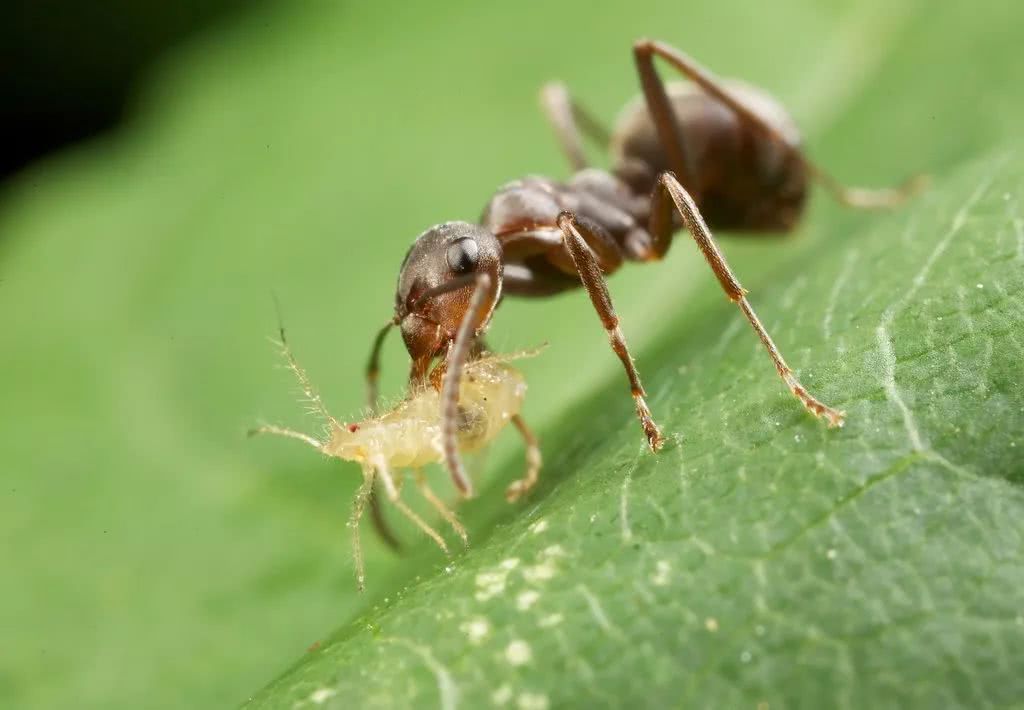
The picture above shows ants eating the honeydew excreted by aphids; they actually farm aphids.
When you happily go to check on your beloved plants and see flower buds covered in aphids, you will feel especially sad. If you don't want to spray chemicals to get rid of these aphids, you can use the ten organic methods below to clear them out.
Method one: Nettle extract
You can prepare 1 liter of clean water, then prepare 200 grams of fresh nettle leaves, or 20 grams of dried leaves. Then soak the plant material in the water, stir well, and let it soak for a few hours. After that, filter out the residue with gauze, and the resulting solution can be sprayed onto plants infested with aphids.
Nettle leaves are not only rich in iron, they can also get rid of aphids.
Method two: Soapy water against aphids
If you are a gardener in the south, where the soil does not easily become alkaline, you can use appropriate soapy water to kill pests. Dissolve soap in water, then dilute it with the right amount of water and spray it on the aphids. Of course, pay attention to the amount; the mixing ratio should not be too strong. Generally, a few drops of soapy water need to be diluted in 1 liter of water. Soapy water is a great method for repelling aphids.
Method three: Raise ladybugs and other aphid predators
The seven-spot ladybug in the picture above is eating aphids
I really like raising some seven-spot ladybugs. They can directly prey on aphids and are beneficial insects for gardeners. You can directly buy some seven-spot ladybug larvae and then place them on the branches and leaves with pests and diseases.
Method four: Make garlic solution
Some leftover garlic in the kitchen can also be used to repel pests. You can prepare about 100 grams of garlic, then soak it in an appropriate amount of water. You can crush 100 grams of garlic into juice, mix it into 3 liters of boiling water, stir well, and let it sit for 5 to 6 hours. After that, filter out the residue, put the solution into a spray bottle, and spray it directly onto the branches and leaves infested with pests.
Method five: Onion pest repellent
Using onion to repel aphids is quite similar to using garlic. Likewise, prepare 5 liters of boiling water, add 40 grams of onion, also crush it into juice, let it sit for about 4 hours, filter out the residue, and the resulting solution can be sprayed onto plants infested with pests.
Method six: Edible vinegar
You probably never expected that vinegar can also repel aphids. You can prepare 100 milliliters of edible vinegar, add it to 1 liter of clean water, and the resulting solution can be sprayed onto plants infested with aphids. Edible vinegar can also appropriately supplement nutrients for potted plants.
Method seven: Black tea repels aphids
Black tea not only has a fresh scent, it can also be used against aphids. Boil black tea for about 15 minutes, then let it cool, and the resulting solution can be sprayed onto plants infested with aphids.
Method eight: Oregano repels aphids
Oregano is a very common herb plant. Besides having its own fragrance and being used in cooking, it is also a herb that can repel aphids. You can put 100 grams of fresh oregano or 10 grams of dried oregano leaves into 1 liter of boiling water, then simmer for 15 minutes. Let the resulting solution cool, remove the residue, and it can be sprayed on the aphids.
Method nine: Bracken fern
You can mix fern plants and water at a ratio of 10:1. You can collect 100 grams of fern leaves, mix them into 1 liter of water, stir well, filter out the residue from the resulting solution, and it can be sprayed on the aphids.
Method ten: Neem oil
Neem oil is a solution extracted from the branches, leaves, or fruits of the neem tree. The neem tree is very common. The solution obtained from these fruits can be directly dissolved in water and stirred appropriately. Generally, neem oil is mixed with water at 1:500. Shake it evenly before use, and then it can be sprayed directly onto the stems and leaves of plants with aphid damage. You can add a few drops of vegetable oil to the solution to enhance the insecticidal effect.