Grow flowers this way and you'll soon be able to open a shop
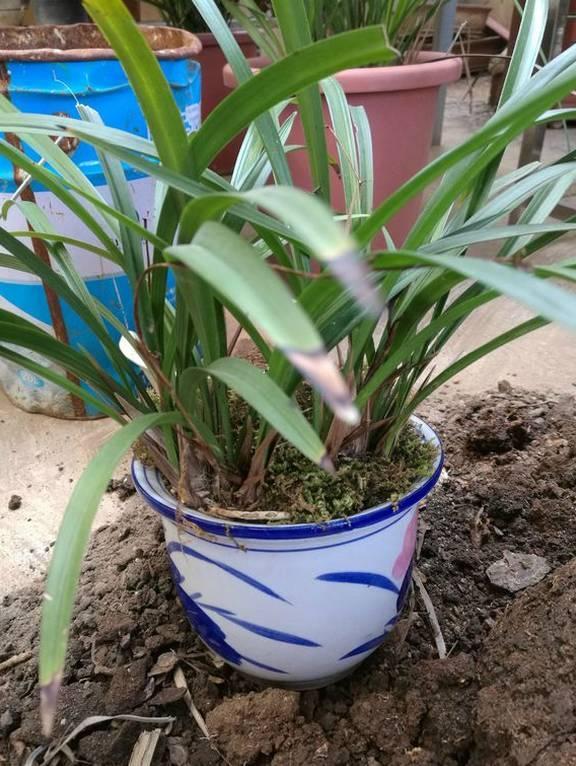
If you want to multiply your plants, besides cuttings and sowing, division is a great method! Division is the propagation method of cutting the small offshoots growing from the roots and stem base of a plant away from the mother plant at the point where they are connected, then planting them separately so they grow into independent new plants. Compared with sowing and cuttings, division has a high survival rate and fast growth.
Different flowers have different organs for division propagation.
Division of creeping stems: such as dahlia, canna, tuberose, iris, etc.
Division of tillering shoots: such as hosta, asparagus fern, dianthus, Chaenomeles speciosa, etc. You can dig out the tiller shoots sprouting from the roots and plant them elsewhere.
With the division method, it is mostly done in early spring before new buds sprout, or it can be done earlier in late autumn after the leaves fall. When dividing in spring, it must not be too late, otherwise it will affect bud formation and flowering that year.
Orchids
Orchids are not cheap. Once they grow to a certain size, they can be divided, and 1 pot can become many pots!
Division is generally done in spring and autumn. In spring, it is usually chosen from the Spring Equinox to Grain Rain, when the flowering period has ended and the leaf buds have not yet sprouted, so they are not easily damaged by frost. In the second half of the year, it is best from the Autumn Equinox to Frost's Descent, when orchids will enter dormancy. Repotting at this time will have less impact on orchid growth. After resting and building up nutrients through winter, they will flower and sprout well in spring.
First, carefully remove from the pot
Lay the soil clump on its side on the ground, lightly pat around the outer edge with your palm, gradually loosen the soil clump, then untangle and separate the coiled roots
Use a sterilized knife to cut at the connection points, trying to find the spot with the smallest wound surface. After separating, let dry for 1 day to prevent bacterial infection (you can also apply disinfectant powder or carbendazim)
Put base fertilizer in the bottom of the pot, place the divided orchid in, and plant it
According to our country's orchid-growing habits, each pot of orchid grass must have at least two growth clusters for normal growth. If there are too few, the plant cannot quickly recover to healthy growth. For Cymbidium faberi and others, because their metabolism is stronger, more leaf clusters must be left when dividing.
(Orchid Bar, Jiang Yu Mi)
Aloe
Aloe can be divided throughout its growing period, but it is better in spring and autumn. New seedlings green up faster and are easier to keep alive.
Peel the rooted young plantlets from the suckers at the stem base or roots of the aloe directly from the mother plant, let the wounds dry slightly, then transplant them into new pots.
Generally, divide when the small plantlets have grown 2-3 leaves. When dividing, be careful not to damage the mother plant, and keep soil and roots with the small plantlets. Within one week after planting the small plantlets, place them in a cool place and keep them moist. Fertilize only after they survive.
Cactus family
Dividing cactus family plants is very simple. They easily produce offsets. Just twist off the offsets, let them dry, and bury them in soil, and they will live.
Jinxing is also called Changyou Bagua Zhang, and because the radial spines on the globe crisscross like a "net" covering the globe, it is also called "Mengtian Wang".
Everyone, take a look at how many pots this one can be divided into? O(∩_∩)O haha~
(Cactus Ball Bar, Youzi Xitang)
Snake plant
Dividing snake plants is relatively simple. Cut an overly dense snake plant leaf clump into several clumps. Each clump should not only have leaves but also a section of rhizome and suckers, then plant them separately in pots.
Remove the snake plant from the pot, use a sharp knife to separate the offsets from the mother plant, trying to avoid damaging the root system as much as possible, and let the separated offsets carry as many roots as possible. After separating the offsets, place them indoors in a dark place, protect them from rain, and control watering to avoid rot at the cut. Only after new leaves grow can they be returned to normal care.
Succulents
Dividing succulents is very easy to keep alive. You can carefully twist off the young plantlets growing beside the mother plant, or cut them off with a small knife, let them dry, and then plant them.
Before dividing succulents, withhold water for a few days to make it easier to remove the plant from the pot. After cutting, be sure to let them dry before planting, and water sparingly in the early stage to reduce the chance of bacterial infection.
Asparagus fern
Asparagus fern plants that have grown for 3-5 years are relatively dense and can be propagated by division.
Choose spring when repotting for division. Use a sharp knife to follow the growth direction and divide the clustered stems and roots into 2-3 clumps, making sure each clump contains 3-5 buds, then plant them separately in pots. When dividing, damage the root system as little as possible. After planting separately, water thoroughly, place in semi-shade, and pay attention to moisture retention and shading. Afterward, watering should be controlled appropriately, otherwise yellow leaves are easily caused.
Simple and easy, one pot became three pots!
Clivia
Clivia easily produces offsets at the roots. Generally, choose around April-May or September-October to cut off the offsets for cultivation. When the offsets have grown 3 to 5 leaves, they can be cut.
Find a utility knife, sterilize it with alcohol, and set aside.
Turn it upside down and gently support the clivia out, shake off the old soil, and observe the root system.
(Clivia Bar, the little pig selling braised eggs)
Cut off the offsets with a small knife or directly twist them off (try to use a knife to cut). When cutting, be quick and keep the wound surface small. Note that the small plantlets should carry roots as much as possible, so they are easier to survive. Apply disinfectant powder to the wound.
After separating clivia, let dry for 4-5 hours.
(Flower Bar, Hua Zai Tang)
If the root system is badly tangled, carefully separate the roots and damage them as little as possible.
(Clivia Bar, Songshi Danni)
After drying, they can be potted, with soil up to the base. After planting, water thoroughly, and after 2 weeks you can cover with a layer of growing medium. In about 1-2 months, new roots will grow.
Some of the flowers and plants above are not cheap
So learn how to divide them
And you can turn 1 pot into 10 pots!
The extra flowers and plants
Sell them and turn them into money!
Show this to flower lovers who need it!