Detailed Explanation of Main Citrus Rootstock Types and Their Performance in Zhejiang Province
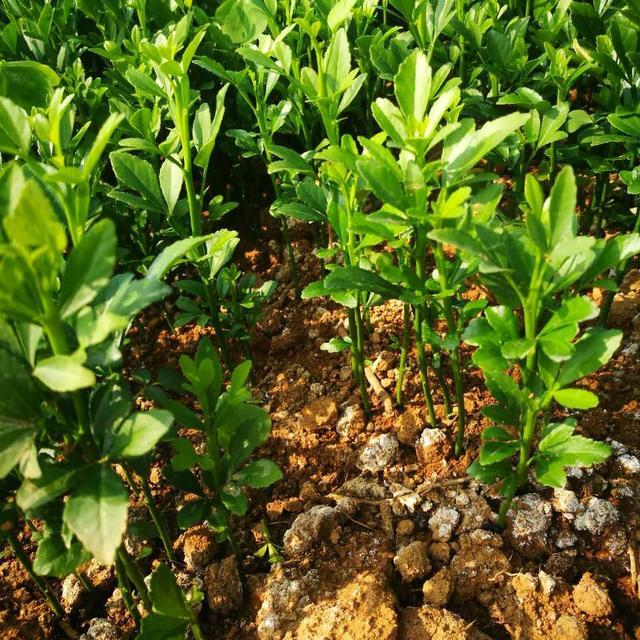
Main Citrus Rootstock Types and Their Performance in Zhejiang Province
1 Citrus Rootstock Types in Zhejiang Province
Currently, the main citrus rootstock types in Zhejiang Province are: trifoliate orange (Poncirus trifoliata), Goutoucheng (Citrus aurantium 'Goutoucheng'), and Bendizao (Citrus succosa 'Bendizao'). In addition, through long-term rootstock selection and cultivation research, there are also scattered plantings of other rootstocks.
1.1 Trifoliate Orange (Poncirus trifoliata)
Trifoliate orange is the most important rootstock type for citrus in Zhejiang and even in China. According to leaf size, it can be divided into two types: large-leaf and small-leaf. According to leaf shape and flower size, it can be divided into four categories: large-leaf large-flower, large-leaf small-flower, small-leaf large-flower, and small-leaf small-flower, with the small-leaf large-flower type having the best production performance. Fruit shapes include round and pear-shaped. When used as a rootstock for Satsuma mandarin (Citrus unshiu), it is cold-resistant, drought-resistant, and barren-resistant, can promote early fruiting, high and stable yields, and produces fruit of excellent quality; the tree form is relatively dwarfed, and it is resistant to foot rot, gummosis, and nematode disease, but not resistant to exocortis. Years of grafting rootstock trials have shown that trifoliate orange rootstock is not tolerant of waterlogging or saline-alkali conditions, and is suitable as a rootstock on acidic red and yellow soils in mountainous areas. As a rootstock for Satsuma mandarin, the large-leaf large-flower type is relatively superior.
1.2 Goutoucheng (Citrus aurantium 'Goutoucheng')
Produced in Huangyan, Zhejiang, belonging to sour orange (Citrus aurantium). Seedlings grow relatively fast, with a well-developed root system, tolerant of clay and moisture, and performs well as a rootstock for sweet oranges and mandarin-type citrus. It has wide adaptability to soil. On the coastal reclaimed land along the Zhejiang coast, Satsuma mandarins grafted onto Goutoucheng rootstock grow well without iron-deficiency chlorosis. Huangyan has traditionally used it as the rootstock for early tangerine, Man tangerine, Ruju, Zhuhong, and other citrus varieties. As a rootstock for sweet orange, the tree is vigorous, drought-tolerant, moisture-tolerant, resistant to saline-alkali conditions and foot rot, and high-yielding, but the tree grows relatively slowly.
1.3 Bendizao (Citrus succosa 'Bendizao')
Produced in Huangyan, Zhejiang. Seedlings grow relatively slowly, with a well-developed root system, drought-resistant and cold-resistant. When used as a rootstock for Satsuma mandarin, the tree is vigorous, with a rounded canopy and compact branches, high and stable yields, and good quality. As a rootstock for Man tangerine and early tangerine, the canopy is slightly dwarfed; as a rootstock for navel orange, the canopy is dwarfed. This rootstock is relatively tolerant of saline-alkali conditions and also tolerant of acid, and can be used on both tidal flats and mountainous areas.
1.4 Zhuluan (Citrus aurantium 'Zhuluan')
Produced in Wenzhou, Zhejiang; it and the Xiaohongcheng produced in Huangyan are actually the same thing under different names. Seedlings grow fast in the early stage, with a well-developed root system that is densely distributed and has many fibrous roots, and wide adaptability to soil. In Wenzhou, when used as a rootstock for Ougan, Ouju, and Satsuma mandarin, the canopy is relatively tall and large, but fruiting is slightly delayed. In Huangyan, when used as a rootstock for Bendizao, early growth is good and fruiting is early, but after the tree reaches a slightly older age, it shows a large scion and small rootstock, with weak growth vigor, and in the rainy season the roots easily rot, causing leaf drop, so it is not suitable as a rootstock for Bendizao. As a rootstock for sweet orange, the tree is vigorous, with a well-developed root system, drought-resistant and high-yielding, but fruiting is relatively late.
1.5 Xiangcheng (Citrus junos)
Produced in Jiangsu, Anhui, Hubei, Sichuan, and other provinces. Seedlings grow relatively slowly. After grafting with mandarin-type citrus such as Satsuma mandarin, the tree is vigorous, drought-tolerant, cold-resistant, high-yielding in the later stage, with excellent fruit quality, and resistant to foot rot. When grafted with sweet orange, the canopy is relatively dwarfed. As a rootstock for Liangping pomelo, it shows strong compatibility, early fruiting, and vigorous growth.
1.6 Wenling Gaocheng
A local hybrid of mandarin, pomelo, and orange from the Wenling and Yuhuan area of Zhejiang, suitable as a rootstock for pomelos and mandarin-type citrus. Seedlings grow fast. Satsuma mandarin grafted onto Gaocheng rootstock shows strong growth vigor when planted on tidal flats, with tree vigor stronger than that of trifoliate orange rootstock, deep roots, drought tolerance, and strong salt tolerance.
2 Comparison of Resistance Among Different Rootstocks
It is generally believed that trifoliate orange is the most cold-resistant rootstock; grafted trees have dwarfed canopies, are easy to manage in the field, and produce excellent quality fruit. It has relatively strong waterlogging tolerance. In 1987, after being hit by a typhoon, Satsuma mandarin on trifoliate orange rootstock showed stronger waterlogging tolerance compared with Goutoucheng rootstock. Trifoliate orange is resistant to gummosis, foot rot, decline virus, and nematode disease, but has very weak resistance to exocortis, and is the only susceptible rootstock for stubborn disease. Sour orange (Goutoucheng, Zhuluan, Xiaohongcheng, etc.) was the earliest and most widely used rootstock type in Zhejiang before the promotion of trifoliate orange rootstock, and is currently second only to trifoliate orange, suitable for almost all citrus varieties. Compared with trifoliate orange rootstock, it is a vigorous rootstock, with a large canopy, strong tree vigor, high yield, and high productivity, but fruit quality is inferior to that of trifoliate orange rootstock. It is suitable for clay soils, tolerant of alkaline soils, relatively cold-resistant, and resistant to damping-off, but sensitive to nematodes; its greatest disadvantage is that it is very sensitive to decline virus. According to literature reports, the salt and alkali tolerance of different citrus rootstocks in descending order is: Xiangcheng > Citrange > Red tangerine > Goutoucheng > Zhuluan > Bendizao > Trifoliate orange. Weng Maidong's salt tolerance tests on citrus seedlings showed that trifoliate orange is the most sensitive to salt, while Goutoucheng and Bendizao are moderately sensitive.
3 Performance of Different Rootstocks in Nutrient Uptake
Different rootstocks differ in the uptake of mineral and other nutrients. The reason is that differences in the mechanisms by which different citrus rootstock roots absorb nutrient ions and differences in root morphology all affect the ability to absorb mineral elements. Many researchers at home and abroad believe that rootstocks have a relatively significant effect on the mineral element content in the leaves of scion varieties. Zou Yuming's research showed that rootstocks have a significant effect on the content of most nutrient elements in Satsuma mandarin leaves. The order of influence on macronutrients is Ca, N, K, Mg, P, and the order of influence on micronutrients is Cu, Fe, Zn, Mn. Zhou Xuewu et al. analyzed the mineral nutrients of several commonly used rootstock plants and found that trifoliate orange has high K, Mn, and Cu content but the lowest Fe content, while Goutoucheng is the opposite, with high Fe content and relatively low K and Cu content. Satsuma mandarin on trifoliate orange rootstock shows obvious nutrient deficiency chlorosis on tidal flats, and is prone to iron, manganese, and zinc deficiency symptoms. On acidic soils, whether Goutoucheng or trifoliate orange is used as the rootstock, magnesium and boron deficiency symptoms are likely to occur. Using Bendizao as a rootstock for Satsuma mandarin not only overcomes the nutrient deficiency (iron, manganese, zinc) chlorosis problem of using trifoliate orange as a rootstock for Satsuma mandarin on tidal flats, but also provides a new excellent rootstock variety for citrus on tidal flats. Satsuma mandarin on Bendizao rootstock has a well-developed root system, larger and thicker leaves, a compact and rounded canopy, strong bearing capacity, and also has the advantages of strong stress resistance, salt-alkali tolerance, and resistance to chlorosis.
4 Performance of Different Rootstock Types on Different Soils
Chen Qishou et al. conducted comparative trials on tidal flats using four rootstocks: Goutoucheng, Zhuluan, trifoliate orange, and Bendizao. The results showed that Satsuma mandarin on Goutoucheng rootstock had the strongest growth vigor and the tallest and largest tree body, showing drought tolerance, waterlogging tolerance, and salt-alkali tolerance; Zhuluan rootstock was slightly inferior, Bendizao ranked third, and trifoliate orange rootstock grew well in the early stage and fruited early, but had poor salt-alkali tolerance, showing chlorosis after first fruiting and weakening tree vigor. Tang Weiying et al. conducted sowing and grafting trials with citrus rootstocks and preliminarily concluded that Goutoucheng and Zhuluan are rootstocks suitable for citrus on tidal flats. Satsuma mandarin on Gaocheng rootstock also showed strong salt tolerance when planted on tidal flats. From canopy surveys, the differences in tree height and canopy diameter between Satsuma mandarin on Gaocheng rootstock and trifoliate orange rootstock were not significant, but the canopy volume and projected area of 7-year-old Satsuma mandarin both showed that Gaocheng rootstock was relatively superior, with branch and trunk structure and growth vigor relatively similar, and strong compatibility. The base of Wenling Gaocheng rootstock showed obvious swelling, demonstrating strong growth vigor. Leaf size was similar, and the total leaf area per tree was larger with Gaocheng rootstock. There were no obvious differences in fruiting performance and fruit indicators, and yields were relatively close. However, compared with trifoliate orange, Gaocheng rootstock has a well-developed root system, roots more deeply, and has the characteristics of drought tolerance, waterlogging tolerance, wind resistance, and wide adaptability.
Therefore, at present, Satsuma mandarins cultivated in mountainous areas generally use trifoliate orange as the rootstock, while those on tidal flats mainly use Goutoucheng and Bendizao rootstocks.
5 Differences in Fruit Quality of Satsuma Mandarin Among Different Rootstock Types
Compared with Goutoucheng and Bendizao as rootstocks, Satsuma mandarin on trifoliate orange rootstock has better fruit quality, thinner peel, and higher sugar content. Among the four rootstocks Goutoucheng, Zhuluan, trifoliate orange, and Bendizao, Satsuma mandarin on tidal flats had the highest yield with Goutoucheng rootstock, but fruit ripening was slightly later than with other rootstocks. Since 1961, Linhai County, Zhejiang Province, has used locally grown seedling Bendizao from large-scale plantings on tidal flats, mountains, and plains to graft Satsuma mandarin. After nearly twenty years of practice, it achieved success, with excellent fruit quality, mainly manifested in thinner peel, more edible portion, and generally higher sugar content. Upon evaluation, the flavor of Satsuma mandarin on trifoliate orange rootstock was considered better.
In summary, in citrus production, the main purpose is to utilize the characteristics of rootstocks such as vigor induction, dwarfing, drought resistance, cold resistance, waterlogging tolerance, salt-alkali tolerance, and pest and disease resistance to enhance the superior traits of scion varieties, so as to maintain their inherent biological characteristics and fruit economic traits. The influence of rootstocks not only varies with site conditions, but also throughout the entire growing season, the influence of rootstocks on the quantitative and qualitative traits of the scion is unstable. The influence of different years, climate, and soil tillage methods on tree growth and fruit quality is greater than the influence brought by rootstocks. In the cultivation of Satsuma mandarin in Zhejiang Province, after many years of practice, a cultivation approach has gradually formed with trifoliate orange, Goutoucheng, and Bendizao as the main rootstocks for Satsuma mandarin. Divided by soil type, the distribution of Satsuma mandarin rootstocks is generally as follows: on acidic soils and neutral soils on flat land, trifoliate orange is generally used as the rootstock, so that Satsuma mandarin is relatively resistant to poor soils; on alkaline soils and plain orchard sites with relatively high groundwater levels, Goutoucheng and Bendizao are generally used as rootstocks, so that Satsuma mandarin is relatively tolerant of saline-alkali conditions and waterlogging.