Compound Management Technology for Magnolia officinalis and Taxus wallichiana var. mairei Mixed Forest with Codonopsis pilosula
Compound Management Technology for Magnolia officinalis and Taxus wallichiana var. mairei Mixed Forest + Codonopsis pilosula
1 Analysis of Compound Management Adaptability
1.1 Main Biological Characteristics
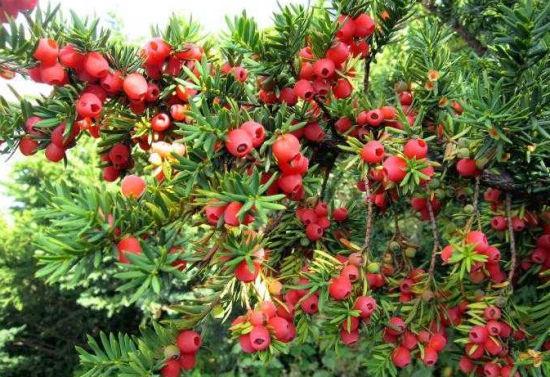
Magnolia officinalis is a deciduous tree distributed at an altitude range of 500-1,500 m, preferring a cool, moist, and well-lit environment. It grows well in fertile, humus-rich, well-aerated, and well-drained soil conditions, with soil pH in its distribution area ranging from slightly acidic to neutral. It generally blooms and undergoes leaf differentiation in mid-April, gradually sheds leaves after September, and when mixed with coniferous species, a 12-year-old Magnolia officinalis can reach a crown width of 2.8 m x 3 m and a tree height of 8.9 m. Studies show that although Magnolia officinalis is a shallow-rooted species, after mixing with coniferous species, its root system is mainly concentrated below 40 cm of soil depth. Magnolia officinalis generally needs to grow for more than 15 years before its bark can be peeled for medicinal use; Taxus wallichiana var. mairei is an evergreen tree distributed at an altitude range of 500-3,500 m, preferring a shady and moist environment, and excessive light tends to cause poor growth. It grows better on moist yellow-brown soil and yellow soil, with soil pH in its distribution area being weakly acidic. Taxus wallichiana var. mairei grows slowly, and a 12-year-old Taxus wallichiana var. mairei is only 4-6 m tall. It is a shallow-rooted plant with an inconspicuous taproot and numerous fine lateral roots; Codonopsis pilosula is a perennial herbaceous vine distributed in high mountain areas at an altitude of 900-3,000 m, preferring a moist and cool environment, with seedlings preferring shade. It grows well in soil rich in organic matter, with good aeration and drainage, and neutral to weakly acidic soil. The stem twines, about 1-2 m long, and large seedlings need a trellis to climb for light.
1.2 Adaptability Analysis
Magnolia officinalis, Taxus wallichiana var. mairei, and Codonopsis pilosula overlap in environmental conditions such as altitude and climate. Magnolia officinalis prefers sunlight and has rapid leaf area growth, which can provide shade for the shade-loving Taxus wallichiana var. mairei. After Magnolia officinalis and Taxus wallichiana var. mairei are mixed, due to limited competitive space for roots in the surface soil layer, the roots of Magnolia officinalis, which have stronger gravitropic growth, distribute into deeper soil, while the roots of Taxus wallichiana var. mairei concentrate in the surface layer, effectively utilizing the soil fertility space. Codonopsis pilosula grows quickly and can cover the ground surface in a short time, reducing soil erosion and soil nutrient leaching. In summer, when light intensity is strongest each year, the increase in leaf area of Magnolia officinalis reduces gaps and increases forest canopy density, making the understory temperature and light more suitable for Codonopsis pilosula growth. Annual management activities for Codonopsis pilosula, such as fertilization, weeding, and harvesting after maturity, can improve forest soil conditions, replacing management with cultivation and promoting tree growth.
2 Selection of Afforestation Site
Within the altitude range of 900-1,500 m, select yellow-brown soil or brown soil with relatively sufficient light, deep soil layer, relatively high humidity, good drainage and aeration, rich organic matter content, and soil pH 6.5-7.0 for afforestation.
3 Site Preparation and Afforestation
3.1 Site Preparation
From mid-February to early March each year, afforest before bud break. Planting should be done on cloudy or overcast days when the soil is moist. The forest land clearing method is complete clearing. Before site preparation, remove logging residues, weeds, shrubs, etc. from the afforestation site, adopt full cultivation for site preparation at a depth of 30 cm, and apply 1,500 kg/666.7 sq m of farmyard manure as base fertilizer.
3.2 Afforestation
Select Magnolia officinalis seedlings with height >= 50 cm and ground diameter >= 0.7 cm; Taxus wallichiana var. mairei seedlings with height >= 70 cm and ground diameter >= 0.8 cm. Spacing is 4 m x 2 m. The mixing method is row mixing, with a mixing ratio of 1:1. Seedling planting adopts the "three burials, two tramplings, and one lifting of the seedling" method. During planting, damaged roots and excessively long roots should be pruned to ensure the root system spreads out.
3.3 Codonopsis pilosula Planting
From October to November each year, on the prepared land, open furrows at a row spacing of 30 cm and a depth of 15 cm, then place Codonopsis pilosula seedlings along the furrows at a plant spacing of 10 cm, and cover with 5 cm of soil. Use 40-50 kg of seedlings per 666.7 sq m.
4 Post-Afforestation Management
4.1 Forest Land Tending
After afforestation, apply compound fertilizer once each May. Codonopsis pilosula can be given one application of human and livestock manure water before trellising. Weed 3 times in summer and once in winter. When earthing up the seedlings, apply decomposed compost or barnyard manure once more, with an application rate of 1,000 kg/666.7 sq m.
4.2 Pruning and Sucker Removal
During the forest cultivation period, remove branches below 1.3 m on the main trunk and basal sprouts each year.
4.3 Trellising
After Codonopsis pilosula seedlings reach 20 cm in height, guide the vines onto the trellis. Insert a thin bamboo strip and miscellaneous wood stake every 2-3 m, or build a herringbone support frame to ensure ventilation. Note that during the young forest period, Codonopsis pilosula vines should be prevented from climbing onto young Magnolia officinalis and Taxus wallichiana var. mairei trees to prevent impact on their growth. After Magnolia officinalis and Taxus wallichiana var. mairei reach a diameter at breast height of 5 cm, they can be allowed to be climbed freely.
4.4 Pest and Disease Control
The main diseases of Magnolia officinalis include root rot, leaf blight, and sooty mold, and the main insect pests include Hyposidra talaca, Parocneria furva, and Neophyllaphis magnoliae, etc.; the main diseases of Taxus wallichiana var. mairei include stem rot and southern blight, and the insect pests include spider mites and aphids; the main diseases of Codonopsis pilosula include root rot and rust, and the insect pests are mainly underground pests such as white grubs and wireworms. During forest management, prune reasonably, promptly remove diseased branches, diseased plants, and residual leaves harmed by pests and diseases to reduce sources of pests and diseases, strengthen tending management to promote stand growth and early canopy closure. Protect and utilize natural enemies, and use beneficial organisms to control harmful organisms. Use black light traps to kill insect pests, manually remove leaves damaged by insect feeding, and centrally destroy the removed leaves. If physical control and biological control cannot control pests and diseases, use chemical agents with good efficacy, low toxic residue, and little impact on natural enemies, pay attention to agent combination and alternation to prevent pest and disease resistance from offsetting control effects, and prohibit spraying pesticides within 30 d before harvest.
With careful management, Magnolia officinalis can be harvested after 15-20 years of growth, Codonopsis pilosula after 3-5 years of growth, and Taxus wallichiana var. mairei can have branches and leaves collected for use after 3-5 years of planting.
5 Benefit Analysis
Developing compound forest management and tapping the potential of understory planting is the trend of future forestry industry development. Planting Codonopsis pilosula under a mixed forest of Magnolia officinalis and Taxus wallichiana var. mairei is a new model for developing forest medicinal materials. Compared with pure forest, the compound management model has the following advantages: first, it increases the growth rate of the medicinal biomass of Magnolia officinalis and promotes its diameter and height growth; mixed Magnolia officinalis has a diameter at breast height 3.6% higher than pure forest and a tree height 23.6% higher than pure forest; second, planting Codonopsis pilosula reduces forest tending costs and increases economic income; replacing management with cultivation requires no special funding for tending, and after Codonopsis pilosula matures, based on a yield of 250 kg/666.7 sq m, income per unit area can increase by 2,000 yuan; third, compound management increases biodiversity, helps maintain ecological balance, and effectively prevents large-scale outbreaks of pests and diseases.