Plant 1 climbing vine in summer, and it flowers and fruits - a small balcony becomes a hundred-fruit orchard
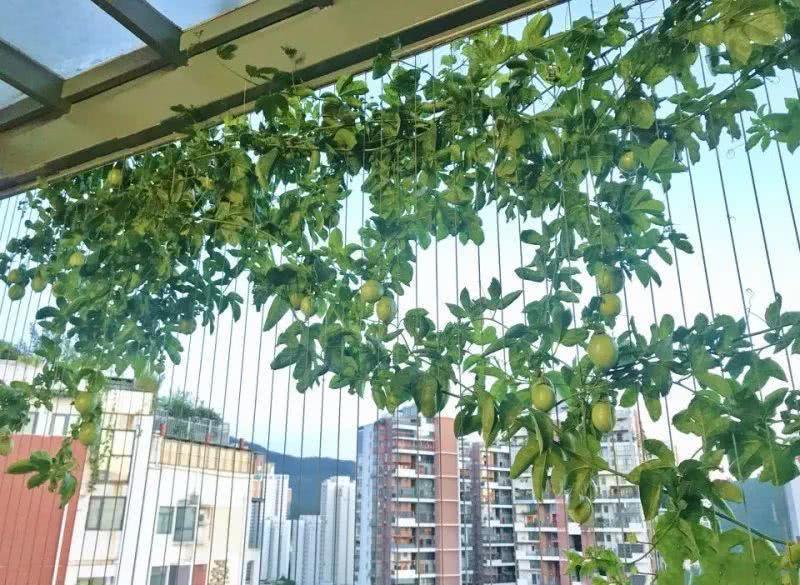
Once the weather turns hot, flowers get harder and harder to grow. Are you still worrying about why your flowers have wilted again, while others are already eating fruit grown on their own balconies? Don't just envy them - it's not too late to plant now! The varieties below climb fast enough to provide shade, and they flower and fruit with ease!
Passion fruit
Yang Hua Da Quan
Passion fruit is sold in supermarkets now, and it isn't cheap, so you might as well grow it yourself. It can cover the security grilles of a small balcony completely.
Temperatures in the north are relatively low, which affects fruiting, but it can still be grown as a climbing flowering vine. Passion fruit is actually related to clematis - not only are its flowers beautiful, its leaves are lush too.
1. Propagation by cuttings
It is best to propagate by cuttings. The seeds left over after eating passion fruit can sprout but won't grow large. Cut a 15-20 cm long passion fruit stem (with 2-3 growth nodes) and insert it into moist sandy soil.
The stem takes about 20 days to root. During this time, keep it in a semi-shaded spot, away from direct sunlight, and keep the potting soil moist.
2. Repotting and changing soil
Once rooted, the passion fruit can be moved to a larger pot. When repotting, be sure to dig it out together with the soil around the roots. The new potting soil is best made of nutrient-rich peat soil and leaf mold mixed with garden soil.
3. Light, water, fertilizer
Passion fruit loves light, so it is very suitable for growing on a balcony. Only with sufficient light can it flower and fruit normally.
Although passion fruit likes water, it fears waterlogging, so don't water too much - about once every 1-2 days. Summer temperatures are high, so it is best to water in the morning (before 9 o'clock) and in the evening (after 8 o'clock).
Fertilizing can make passion fruit bear more fruit. Ordinary agricultural compound fertilizer is enough, or you can make your own compost. It counts as a crop, so it isn't picky about fertilizer.
4. Points to note
Passion fruit grows very fast, so set up a good trellis to guide its growth. It is also quite dense, so the trellis is best made of netting that can bear weight.
Poor pollination may affect fruiting. Besides relying on bees and butterflies to pollinate, you can also hand-pollinate it - just touch the upper and lower stamens together.
Passion fruit has a very long flowering period, so fruit appears batch after batch. When you see the fruit turn red or purple, it is fully ripe.
Whether eaten directly or mixed into honey water, it is a super nutritious summer treat!
Cherry tomatoes
Yang Hua Da Quan
Cherry tomatoes are the common cherry tomatoes we all know. Plant a few at home - they suit both north and south, and even without spraying pesticides they bear abundant fruit!
1. Propagation by sowing
Scatter the seeds in loose, moist soil and place in a cool spot. The weather is hot now, so they sprout in about 3-5 days, and in around 10 days they grow to over ten cm tall.
2. Thinning and staking
Some gardening friends sow seeds densely, so the seedlings crowd together. It is best to keep the strong seedlings and plant them singly. The seedlings are quite thin, so insert stakes in advance and gently tie them to set their shape.
3. Light, water, fertilizer
Cherry tomatoes love light, so it is best to put them somewhere on the balcony with good light.
Water every day and keep the potting soil slightly moist. During the flowering and fruiting periods, increase the amount of water.
Cherry tomatoes grown at home generally don't need fertilizing. These days we mostly use nutrient soil for flowers to plant them, and the fertility is already enough. If fertilizer is needed, just add a little slow-release fertilizer to the pot.
4. Points to note
When growing cherry tomatoes, be sure to give them plenty of sun and ventilation, otherwise they easily get yellow leaves and disease. If this happens, don't panic - give them full sun!
Luffa and cucumber
Yang Hua Da Quan
Even though luffa and cucumber can grow so tall, they can actually be grown in just an ordinary flower pot. Not growing a few on a terrace or balcony in summer is simply a waste.
1. Sowing
Luffa and cucumber can still be sown now. Just like tomatoes, scatter the seeds in moist, loose soil, spray water now and then to keep it moist, and they sprout in 3-5 days.
2. Thinning and staking
If sowing was fairly dense, pick out the strong seedlings and transplant them into a large pot. When transplanting, keep soil around the roots so they establish better. After planting, set up bamboo poles and the luffa and cucumber will climb around them.
3. Light, water, fertilizer
Luffa and cucumber are not afraid of sun. The more sun they get, the better they flower and fruit.
Water every day, but be careful not to let water accumulate and waterlog the pot. When flowering or fruiting, it is best to water once in the morning and once in the evening.
You can mix crushed eggshells into the potting soil as fertilizer, and you can also water with fermented rice water or milk diluted with water. With plenty of fertility, the gourds grow larger.
Grapes
Yang Hua Da Quan
It seems everyone's childhood had a small courtyard covered in grapevines. Even though we now live in high-rise buildings, a small balcony is enough to grow one!
1. Planting
Buy grape seedlings. When bringing them home to plant, choose ceramic or wooden pots with good breathability. Plant them in garden soil mixed with nutrient soil. It is best to put a layer of clay pebbles on the surface of the pot - breathable and moisture-retaining.
2. Light, water, fertilizer
Grapes love light, so it is best to grow them on a south-facing balcony with full sun. They are drought-tolerant, so water once every 3-5 days; once they have fruit, water once every 2-3 days, and don't let the potting soil get waterlogged.
When growing grapes on a balcony, it is best to repot once a year and add fertilizer in spring and autumn. Homemade fruit-peel fertilizer and decomposed kitchen-waste fertilizer are both amino-acid fertilizers very suitable for grapes.
3. Points to note
Grapes tend to attract birds, so after they fruit, protect them. You can put breathable non-woven bags over the grapes to keep birds from pecking at them.
After seeing these beautiful and delicious climbing vines
aren't all you gardening friends craving them
It's still not too late to grow them now
So get moving right away
?