How is Astragalus (Huangqi) grown? These key technical points need to be mastered
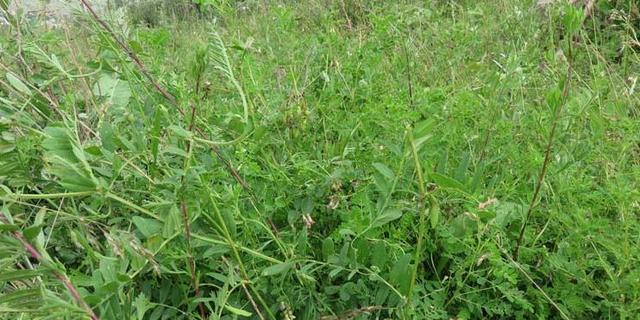
Key technical points for growing Astragalus
1. Seed selection and treatment. Planting high-quality seeds not only gives high yields and good quality, but also strong disease resistance and fewer pests and diseases. It is best to choose plump, brown, glossy seeds for sowing. Astragalus seed coats are hard, and the seeds do not germinate easily after sowing. To improve the germination rate, the seeds can be pre-treated before sowing: soak the seeds in 40°C warm water for 12 hours so they fully absorb water, then take them out, put them in a gunny sack to sprout, and sow. Alternatively, rubbing the seed coat with sand can also speed up germination. Treated seeds germinate quickly and emerge evenly.
2. Site selection and land preparation. Astragalus is drought-tolerant and cold-tolerant, but afraid of waterlogging. Its main root grows downward, so it is best to choose neutral or slightly alkaline sandy soil or semi-sandy soil that is deep, highly permeable and well drained. Flat land or sunny hillsides are both suitable.
3. Fertilizing and plowing. Astragalus likes fertile soil. Before sowing, apply 2500-3000 kg of manure and 50 kg of NPK compound fertilizer per mu. Use the broadcast method, spreading the fertilizer evenly over the ground, then use large machinery or a small tractor to deep-plow the land more than 30 cm so the fertilizer and soil are fully mixed. Then level and harrow finely, and make beds 1.3-1.8 m wide so drainage runs smoothly.
4. Sowing. Astragalus can be direct-sown or raised as seedlings and transplanted. Generally, spring sowing is done in mid to late March, and autumn sowing in mid to late October. Drilling gives high yields and is easy to manage. Before sowing, first mix the seeds with a Chinese medicinal herb continuous-cropping agent, then sow; this can increase yield, strengthen the seeds' disease resistance, and reduce pests and diseases.
5. Field management. (1) Thinning: seedling beds generally do not need thinning; in direct-sown fields, thin when the seedlings are 5-7 cm tall, as long as they are not crowded. If there are gaps, fill them by transplanting small seedlings with soil, or re-fill with sprouted seeds. (2) Cultivation and weeding: during the seedling stage of Astragalus, to prevent soil compaction and poor seedling development, loosen the soil and weed, mainly scratching the surface layer to avoid damaging the roots. (3) Topdressing: Astragalus likes fertilizer. In the mid-growth stage, apply 50 kg of superphosphate and 10 kg of urea; one topdressing in the mid-growth stage is enough, to prevent excessive vine growth without root growth. Water after fertilizing, and pay attention to drainage in the rainy season to prevent lodging and root rot. (4) Flower removal: flowering consumes a large amount of nutrients in Astragalus. If seeds are not being saved, the flowers can be removed to promote root development. Manual flower removal is not only labor-intensive but also hard to do thoroughly. According to field surveys, spraying a flower bud inhibitor can inhibit flowering and promote root development; the effect of removing flowers is significant and increases yield.
6. Economic benefit analysis
6.1. Cost input. (1) Seed cost: generally about 2.5 kg of seed is needed per mu, and the seed price is 100 yuan/kg, so 250 yuan is needed. (2) Land rent: 600 yuan per mu. (3) Fertilizer cost: generally 2500-3000 kg of decomposed farmyard manure and 50 kg of NPK compound fertilizer are needed per mu, about 400 yuan per mu. (4) Labor cost: watering, planting, digging, management and other costs, calculated at 500 yuan per mu. Total cost per mu is about 1750 yuan [Jishan Huayao].
6.2. Income analysis. Astragalus yields 350-400 kg of dry product per mu. At present, the selling price of Astragalus is 15-26 yuan/kg, so income per mu can reach 5250-10400 yuan. After deducting costs, net income per mu is 3500-8650 yuan, so the economic benefit is very considerable. If growers save their own seed, the benefit will be even higher.
7. Harvesting and processing
Generally, harvesting can be done in both spring and autumn. In spring, harvest when the soil has just thawed; in autumn, harvest after the leaves wither. Among these, autumn digging gives good quality. After Frost's Descent is the best harvesting period for Astragalus: the dry matter rate of the root is high, the root is firm, the quality is good, and the yield is high. When harvesting, be careful to use tools to dig out the whole root without bruising the outer skin or breaking the root. First remove the soil from the dug roots, cut off the rhizome head while fresh, trim off the fibrous roots, and sun-dry until half dry, then pile for 1-2 days; then spread out to dry in the sun, repeatedly piling and drying until completely dry; finally straighten the roots and tie them into small bundles, and they become the medicinal commodity Astragalus. The best commodity quality is thick strips, few wrinkles, a yellow-white cross-section, sufficient starchy character and a sweet taste.
8. Planting suggestions
In general, in actual production, Astragalus can be intercropped in Astragalus woodland, but the Astragalus should keep a distance of 30-50 cm from the intercropped plants to avoid damaging the roots during harvesting. In addition, Astragalus seeds can also be mixed with rapeseed, flax or buckwheat seeds and sown together. Because rapeseed, flax and the like emerge and grow quickly, after they are harvested that year, Astragalus can still grow alone for a period, which both reduces weed growth and improves land utilization.