A vicious weed in cornfields, its leaves are a top-grade wild vegetable, and chewing 3 flowers can also treat toothache
In rural wild areas, the most abundant thing is wild grass. Whether in front of or behind houses, by roadsides, along field edges, or in wild mountains and forests, all kinds of wild grass grow. Toward these wild grasses, farmer friends both love and hate them. What they love is that quite a few wild grasses can be eaten as wild vegetables and used as herbal medicine. What they hate is that quite a few wild grasses also like to grow in crop fields and harm the crops. Below, the author will introduce to everyone just such a wild grass, one that makes farmer friends both love and hate it.
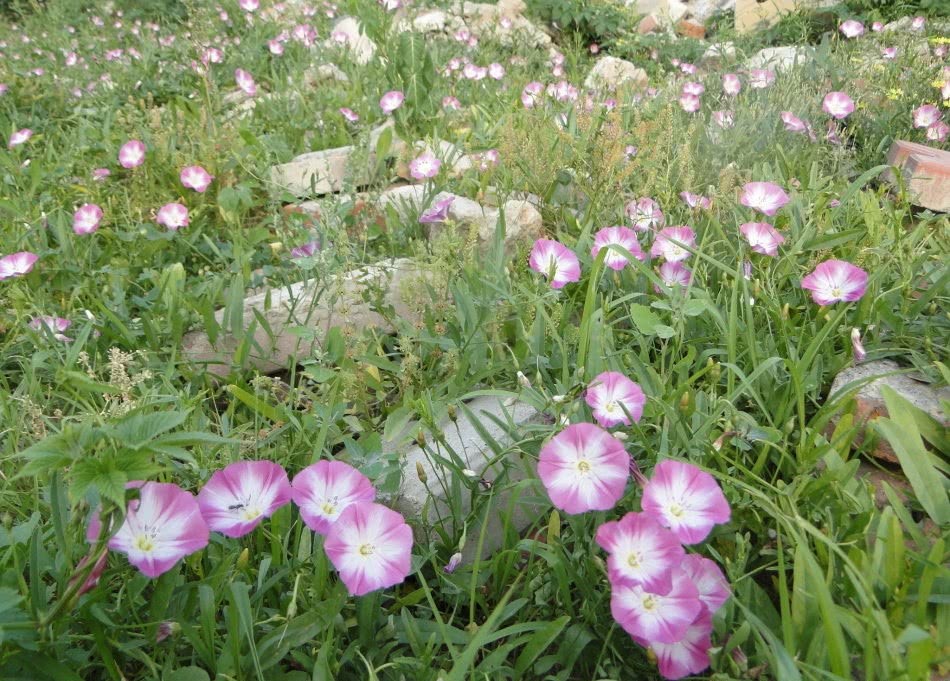
On an afternoon when I took my child to play near the farmland, near a cornfield, I saw a sea of flowers. The purple-white flowers were very beautiful, and the child liked them very much too. As for this kind of wildflower, friends who have lived in the countryside should all be familiar with it. It is "field bindweed." Quite a few friends always mistake field bindweed for hedge bindweed. Field bindweed is indeed very similar to hedge bindweed, but there are some subtle differences. The flower color of field bindweed is purple-white, while the flower color of hedge bindweed is pink-white, and the leaves of field bindweed are narrower than those of hedge bindweed.
Many friends actually like field bindweed very much, because its flowers are beautiful when they bloom, but many farmer friends hate it deeply, because field bindweed is a kind of "vicious weed."
Field bindweed has strong vitality, reproductive capacity, and adaptability. It is also a climbing plant. It likes to grow in wheat fields, cornfields, cotton fields, soybean fields, and orchards. When field bindweed grows in large amounts, it often grows in patches, densely covering the ground, twining around crops as they grow, strongly inhibiting crop growth and causing crops to lodge. Therefore, many farmer friends greatly dislike field bindweed. As soon as they see it growing near farmland, they cut it all down.
However, although field bindweed is highly harmful to quite a few crops, many farmer friends still like field bindweed very much, because field bindweed also has great uses.
The first is that the tender leaves of field bindweed are a top-grade wild vegetable. They are relatively rich in nutrients and have a unique taste. Whether stir-fried or boiled in soup, the flavor is quite good.
The second is that field bindweed has a relatively high protein content, low crude fiber, and a relatively comprehensive and balanced amino acid content, making it very suitable for feeding livestock such as sheep, camels, and cattle.
The third is that field bindweed is also a kind of wild grass with medicinal value. The whole plant of field bindweed can be used as medicine. It has the effects of dispelling wind and relieving itching, and relieving pain. It can be used to treat symptoms such as damp painful obstruction, toothache, and neurodermatitis. Especially its flowers: pick 3 flowers, add one Sichuan pepper, put them on the painful tooth area and chew them, but do not swallow, and it can treat toothache.
The author reminds: field bindweed is slightly toxic, so the author does not recommend eating it or using it medicinally, to avoid problems.
Dear friends, do you like field bindweed? You are welcome to leave a message and exchange views.