It looks like agate, takes 15 years to bear fruit, and costs 10 times as much as red bayberry; farmers are reluctant to eat it
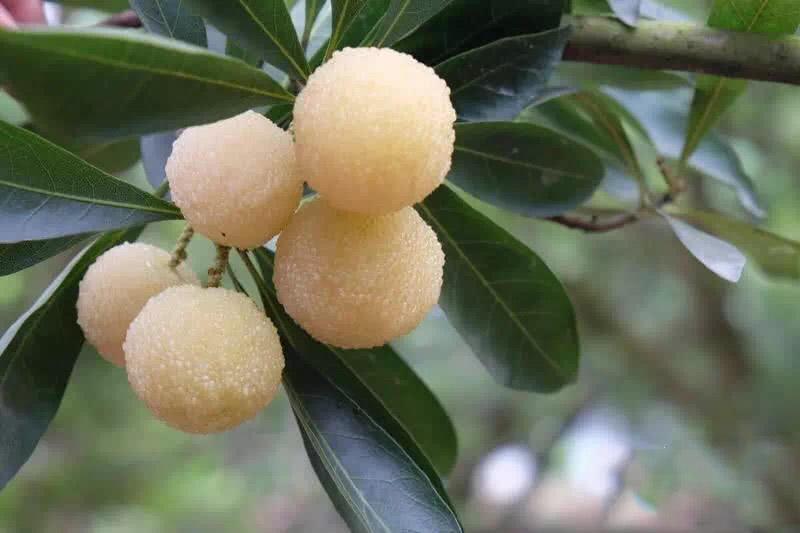
The most popular fruit of early summer is certainly red bayberry. It ripens in early June, and with its delicate shape and sweet-and-sour taste it has captured a huge number of fans. Every time red bayberry season comes around, people are especially envious of those in the Jiangsu-Zhejiang-Shanghai area, who get to eat fresh red bayberries picked straight from the tree first, and can also eat the rare white bayberry seldom seen on the market. White bayberry is a rather rare red bayberry variety; it looks like agate, pinkish through the white, and compared with red bayberry it is like a "clear stream," extremely eye-catching.
Generally speaking, red bayberry trees have a fairly long economic life: they begin bearing fruit 4 years after planting, enter full production after 8 years, and a single tree can yield more than 300 jin a year. White bayberry is different: it takes 15 years after planting to bear fruit, and its yield is not high either, with most trees producing less than 100 jin, which makes it seem especially precious. There is another reason too: white bayberry tastes on the sour side, and its sweetness falls short of the high-quality red bayberries on the market, so many growers do not plant white bayberry. White bayberry planting bases exist in only a few places in Zhejiang, so white bayberry is rarely seen on the market.
As a rare variety, white bayberry is mainly sold to hotels and high-end fruit shops in major cities, as well as through the internet, so its price is relatively expensive. White bayberries with individual fruit weight of around 10 grams, after being packed in exquisite gift boxes, can sell for 198-398 yuan per one-jin box (about 50 berries), roughly 10 times more expensive than red bayberry. But rarity makes things precious, and many people are still willing to pay for this agate-like white bayberry. Growers generally cannot bring themselves to eat such expensive white bayberries.
June's red bayberry is not only delicious but also highly nutritious. According to Li Shizhen's "Compendium of Materia Medica," "Red bayberry can quench thirst, harmonize the five internal organs, cleanse the stomach and intestines, and dispel restlessness and foul qi." Red bayberry is best at promoting body fluids and quenching thirst, and at relieving summer heat and aiding digestion. Although red bayberry is somewhat sour, it is in fact a genuinely alkaline food, so it is very friendly to the spleen and stomach; people with minor stomach complaints might as well eat some red bayberry. Besides being eaten fresh, red bayberry is also very suitable for infusing in liquor: red bayberry infusion cuts greasiness, while white bayberry infusion nourishes the stomach.
Dear readers, if you see white bayberry on the market, would you be willing to buy some to eat?