Schefflera Cultivation Techniques: Propagation Methods and Pest and Disease Control
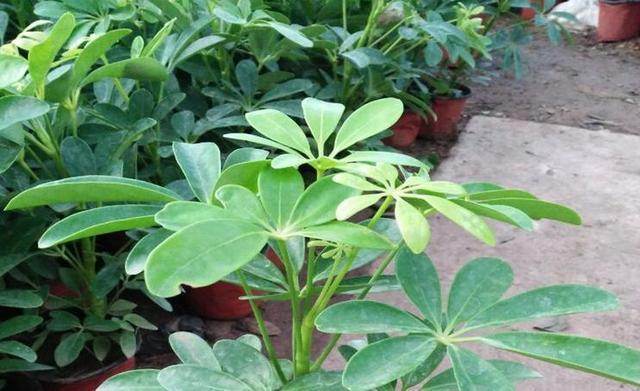
Schefflera Propagation and Pest and Disease Control Cultivation Techniques
1 Growth Habit Characteristics
Schefflera prefers moisture and fears dryness, and dislikes direct strong sunlight. The suitable growth temperature is 16-27 °C. Under conditions of high air humidity and sufficient soil moisture, the stems and leaves grow luxuriantly. The ideal growing soil is fertile, loose, and well-drained sandy loam.
2 Landscape Ornamental Value
Schefflera has full-shaped leaves and is evergreen year-round. It is a green plant with high ornamental value, suitable for placement in hotels, museums, and other places, used to embellish rooms, beautify halls and public social venues, presenting a natural and harmonious green environment; it can also be used to decorate family living rooms, studies, and bedrooms, adding natural scenic charm and benefiting physical and mental health. In addition, Schefflera leaves have a strong ability to absorb toxic gases such as nicotine, making them particularly suitable for placement in the home for air purification.
3 Propagation and Cultivation Methods
Schefflera propagation methods include professional propagation and home propagation, 2 types [[Jishan Huayao]].
3.1 Professional Propagation Two methods are commonly used: cuttings and seeding. Before propagation, the soil should be deeply plowed and mixed with 50% fine sand, debris removed, finely raked and leveled, the soil disinfected with carbofuran to kill underground pests, and the ground made into seedbeds 20 cm high, gently compacted and scraped level, with a shade frame set up over the bed surface, with a height exceeding the cuttings by 10 cm.
3.1.1 Cutting Propagation Divided into 2 methods: stem cuttings and aerial cuttings. Stem cuttings are carried out from April to September. Cut one-year-old terminal branches, 8-10 cm long, remove the lower leaves, insert into a sand bed, keep moist, and maintain room temperature at around 25 °C. In daily greening production, cutting seedlings are generally prepared around the Spring Festival. Cuttings are mostly taken after the plant blooms, because at this time the cuttings have accumulated more nutrients, which can improve the cutting survival rate. Roots can form 30-40 d after insertion.
Aerial cutting involves spreading the cuttings on the seedbed and using misting and heating to create a high-temperature, high-humidity environment, promoting wound healing and rooting of the cuttings, which can shorten the time to seedling formation. In the mist chamber, the temperature is generally maintained at 25-30 °C, and the relative air humidity is above 90%. When summer temperatures are too high, reed curtains are needed for shading and cooling. Because temperature, humidity, and other conditions can be controlled artificially, this cutting method is not limited by external conditions and can be carried out throughout the year.
3.1.2 Seed Propagation From April to May, indoor pot sowing is used. The suitable germination temperature is 20-25 °C. The potting soil is mostly a mixture of peat soil, leaf mold, coarse sand, plus 1/3 perlite. Keep the potting soil moist. Germination occurs 15-20 d after sowing. When the seedlings are 5-8 cm tall, transplant them into 4 cm pots, and they can be planted out the following year.
3.2 Home Propagation The cutting time should be in late spring and early summer. Usually, one-year-old branches 6-8 cm long are cut from the growing mother plant as cuttings, the leaves on the inserted portion are removed, and they are inserted into a plastic flower pot with a diameter of 15-20 cm using perlite that has been soaked in water beforehand as the substrate [2]. Insert 3-5 plants per pot. After insertion, keep the soil moist. When the perlite is slightly dry, spray water, spraying the base and leaf surfaces, while increasing sunlight exposure. Roots can form in about 45 d.
4 Growth and Maintenance Management
4.1 Potting When new plants have taken root and grown to a certain size, they need to be transplanted into pots. Before potting, choose a suitable flower pot according to the size of the plant. When potting, first cover the drainage hole at the bottom of the pot with broken tile pieces, then fill in coarse-grained potting soil to facilitate drainage. Place a small amount of soil-based base fertilizer in the flower pot, then cover it with potting soil, plant the seedling in the center of the pot, lift the flower pot, and tap it firmly on the ground. Remember not to press with your hands, so as not to damage the young roots.
4.2 Watering Schefflera grows well in an environment with high air humidity and sufficient soil moisture. In summer, it needs more water; water once a day to keep the potting soil moist. In spring and autumn, water once every three or four days. Under low-temperature conditions in winter, water should be appropriately controlled, following the principle of not watering when the pot sounds dull when tapped and watering when it sounds crisp.
4.3 Fertilizing After young plants take root, nutrient solution should be applied. Add liquid once a week to the pot, 100 mL each time. During the summer growing period, fertilize once a week. Granular fertilizer with equal amounts of nitrogen, phosphorus, and potassium can be applied after loosening the soil, or from May to September, apply 20% cake fertilizer water twice a month. After fertilizing, Schefflera leaves become thick and fleshy, deep green, of good appearance, and strong disease resistance [Jishan Huayao].
4.4 Shading Schefflera prefers a warm and humid environment and dislikes scorching sun. To ensure good appearance, 70% shade netting is needed for shading in summer.
4.5 Shaping and Pruning Growing-season pruning is carried out in spring, summer, and autumn. The pruning amount is small; only excess branches and stems or residual leaves are pruned, as long as it does not affect the ornamental appearance. Dormant-season pruning is carried out from late autumn to before germination the following spring. First, it is used to prepare cutting seedlings; second, pruning stimulates the branches and stems to promote the sprouting of new shoots.
4.6 Pest and Disease Control The main diseases are leaf spot and anthracnose, which mainly harm leaves and stems, and in severe cases cause branches and stems to die. In the early stage of disease, 50% benlate wettable powder 1,000 times solution can be used for control. During the growing period, 50% carbendazim wettable powder 500-600 times solution can be used for control, once every 7 d, for three or four consecutive treatments. In addition, during home maintenance, dead leaves, rotting leaves, and diseased leaves in the pot should be cleaned up in time, and ventilation and drainage in the pot should be kept unobstructed, so as to prevent the disease from infecting healthy plants and forming continuous patches, leading to the death of the entire pot.
The main pest is scale insects. During the nymph stage, 20% omethoate emulsifiable concentrate 500-800 times solution can be sprayed to kill them. During the growing period, 50% malathion 800-1,000 times solution can be sprayed to kill them. For home control, you can first wipe with a towel or brush the root and stem area with a soft brush until the skin breaks, and then spray with pesticide to kill them.