Detailed Explanation of High-Yield and High-Efficiency Cultivation Techniques for Flue-Cured Tobacco and Japonica Rice in Xiajiang County, Jiangxi Province
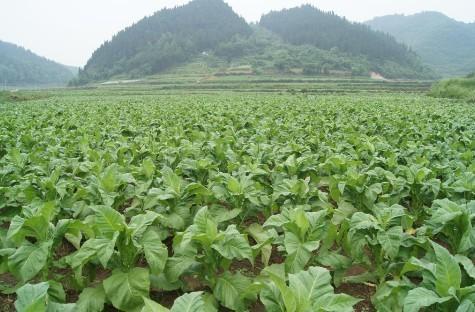
High-Yield and High-Efficiency Cultivation Techniques for "Flue-Cured Tobacco - Japonica Rice" in Xiajiang County, Jiangxi Province
In recent years of planting structure adjustment and the demonstration work of "indica to japonica" conversion, Xiajiang County, Jiangxi Province, combining the advantages of the local high-quality tobacco leaf specialty industry, began exploring the high-yield and high-efficiency cultivation technique of "flue-cured tobacco - late japonica rice" rotation in 2014, with the demonstration area expanding year by year. In 2017, using Yunyan 87 and the late japonica rice Yongyou 1538 as demonstration varieties, large tobacco-growing households were selected, and on the basis of 25.0 hm2 demonstrated in 2016, 45.3 hm2 were demonstrated, of which the contiguous core demonstration area covered 21.3 hm2. Demonstration surveys and yield measurements showed that the "flue-cured tobacco - late japonica rice" (hereinafter referred to as "tobacco - japonica") high-yield and high-efficiency cultivation model can fully utilize the light and temperature climate resources of Xiajiang County and the surplus nutrients in the soil after tobacco, with very obvious yield and income increases. The late rice yield increased by 211.2 kg/667 m2 compared with the "flue-cured tobacco - late indica rice" (hereinafter referred to as "tobacco - indica") model, and by 70.3 kg/667 m2 compared with the "early indica rice - late japonica rice" (hereinafter referred to as "indica - japonica") model; the economic benefit was high, with a total net income increase of 2,326 yuan/667 m2 compared with the traditional "early indica rice - late indica rice" (hereinafter referred to as indica - indica) model. The total field growth period of this cultivation model increased by about 50 d compared with the traditional "indica - indica" model, and it can also improve soil structure, build soil fertility, reduce pests and diseases, and improve rice quality. Through several years of trial planting and demonstration, a set of high-yield and high-efficiency cultivation techniques for "tobacco - japonica" rotation has been explored, and the majority of farmers are becoming more and more interested in japonica rice planting, especially the "tobacco - japonica" planting model.
1 Characteristics of the cultivation model and rotation
advantages
1.1 Characteristics of the cultivation model The "tobacco - japonica" high-yield and high-efficiency cultivation model in Xiajiang County makes use of the pre-year sowing of flue-cured tobacco, the cold tolerance of japonica rice at the heading stage, and the long grain-filling and maturation period after full heading, fully leveraging the light and temperature climate resources of the central Jiangxi region and the fertile fields of the flue-cured tobacco base. By adopting large arch shed seedling raising and under-film transplanting techniques, flue-cured tobacco transplanting is advanced to early-to-mid March, about 40 d earlier than early rice, and can be fully harvested and cured before July 20; while late japonica rice can be sown after June 25 to early July. After tobacco leaves are picked, the field is promptly prepared and seedling throwing is done in time, with the maturation period delayed to late October to early November, about 10 d longer than ordinary late indica rice. The total field growth period of this cultivation model is about 50 d longer than that of "indica - indica," and delaying the sowing and maturation periods of japonica rice can improve the ecological conditions in the middle and late stages of japonica rice cultivation, increase japonica rice yield, improve rice quality, and reduce pests and diseases.
1.2 Tobacco field soil matches japonica rice cultivation requirements Xiajiang County is generally a hilly region, and its cultivated land is characterized by shallow topsoil and being acidic, compacted, and infertile, while the selected high-quality tobacco production bases are all good fields, that is, rice paddies with loose, deep, and fertile soil that can be both irrigated and drained. It can be said that the 6,600 hm2 of rice paddies within the planned area of Xiajiang County's high-quality tobacco leaf production base are the best choice for japonica rice planting fields.
1.3 Full utilization of surplus nutrients in tobacco fields According to recent years of japonica rice introduction trials and demonstrations, japonica rice requires more fertilizer than indica rice, especially increased application of phosphorus and potassium fertilizer. The fertilization level for flue-cured tobacco is relatively high, generally applying 9.0 kg/667 m2 of pure nitrogen, with an N:P:K ratio of 1:1:3, of which organic fertilizer nutrients should account for 30% of the total, and especially a large amount of potassium fertilizer is applied. The organic fertilizer and phosphorus and potassium nutrients applied to the preceding flue-cured tobacco are much higher than those in early rice fields, and the surplus nutrients in the soil after harvest can be fully utilized by the subsequent japonica rice. Compared with early rice fields as the preceding crop, planting japonica rice in tobacco fields can reduce potassium chloride application by 5.0-7.0 kg/667 m2.
1.4 The large-panicle, many-grain high-yield potential of late japonica rice is brought into play In this demonstration area, comparative trial fields with different planting models were set up, and observations, surveys, and sample testing results showed that the rice plants in the "tobacco - japonica" model grew better than those in the "indica - japonica" model area, with faster tillering, more effective panicles, and larger panicles with more grains (see Table 1). The increase in effective panicles and grains per panicle is the main reason why late japonica rice is more high-yielding under the "tobacco - japonica" model than under the "indica - japonica" model.
Table 1 Sample testing results of "flue-cured tobacco - late japonica rice" comparative demonstration fields
Note: The comparative trials were all sown on June 26, thrown-transplanted on July 14, with 14,800 hills per 667 m2 (established seedlings).
1.5 Tobacco-japonica rotation benefits japonica rice pest and disease control This model carries out paddy-upland rotation, which benefits japonica rice root development, makes rice plants robust, and relatively reduces diseases compared with continuous late rice fields. According to research, returning flue-cured tobacco's lower leaves and stalks to the field, their nicotine has an insecticidal effect. At the same time, tobacco-japonica rotation also prevents the influence of volunteer seedlings from the preceding crop on late japonica rice mixtures.
1.6 "Flue-cured tobacco - late japonica rice" rotation has high yield and good benefits According to expert group yield measurements of the "tobacco - japonica" model core demonstration area, the average yield of late japonica rice was 722.7 kg/667 m2, an increase of 211.2 kg/667 m2 over late indica rice in the surrounding "tobacco - indica" model, an increase of 70.3 kg/667 m2 over late japonica rice in the "indica - japonica" demonstration field, and an increase of 251.2 kg/667 m2 over traditional "indica - indica" late rice. According to investigation and analysis of other rice stubble cultivation models in Xiajiang County (see Table 2): the core demonstration area sold 143.8 kg/667 m2 of commercial tobacco at an average price of 27.20 yuan/kg, with an output value of 3,911.36 yuan/667 m2; after deducting expenses of 1,610.00 yuan/667 m2 for purchasing tobacco seedlings, agricultural materials, coal and electricity, mechanical tillage, and temporary hired labor for picking tobacco and loading it into the curing barn (excluding tobacco farmers' own labor), the income reached 2,301.36 yuan/667 m2. Adding the late japonica rice income of 1,049.00 yuan/667 m2, the total income of the "tobacco - japonica" planting model reached 3,350.00 yuan/667 m2; this is an increase of 2,326.00 yuan/667 m2 over the traditional double-cropping indica rice planting, an increase of 2,045.00 yuan/667 m2 over the "indica - japonica" model, and an increase of 375.00 yuan/667 m2 over "tobacco - indica." The above demonstration yield measurements and economic benefit surveys show that the late rice yield of the "tobacco - japonica" cultivation model reached as high as 722.7 kg/667 m2, and the total income reached as high as 3,350.00 yuan/667 m2.
Table 2 Production benefits of different planting models in Xiajiang County in 2017
Note: Early rice grain price 125.00 yuan/50 kg, late rice grain price 130.00 yuan/50 kg, average tobacco leaf selling price 27.2
2 Flue-cured tobacco cultivation techniques
2.1 Variety selection Tobacco leaf is a product with strong state monopoly planning, and according to the needs of counterpart cigarette industrial enterprises, the main planted variety Yunyan 87 or K 326 should be selected, and "one township, one variety" planting should be achieved.
2.2 Professional seedling raising Flue-cured tobacco production in Xiajiang County has fully realized commercialized and specialized seedling raising. The standard for strong seedlings in wet seedling raising is a seedling age of about 70 d, with stem height of 8.0-10.0 cm and stem thickness of 0.5-0.7 cm at the seedling stage. The stems have good toughness, well-developed root systems, light green leaf color, uniform tobacco seedlings, and no pests or diseases. When tobacco seedlings are removed from the tray, the substrate does not remain or scatter.
2.3 Balanced fertilization
2.3.1 Fertilization amount For medium-fertility fields, the fertilization amount should control pure nitrogen at 8.0-9.5 kg/667 m2, with N:P2O5:K2O controlled at 1.0:(0.8-1.2):(2.6-3.0), organic fertilizer nitrogen supply ratio at 20%-30%, and nitrate nitrogen ratio at about 40%. Individual fertilization amounts for each tobacco-growing household can be selected according to regional soil test results and fertilization reference tables. Special attention should be paid to not arbitrarily adding fertilizer, especially nitrogen fertilizer, so as not to cause tobacco leaves to stay green and affect quality and late japonica rice transplanting.
2.3.2 Fertilization method For base fertilizer, apply in strips: 15-20 d before transplanting, open a deep ditch of more than 15.0 cm in the ridge center, mix organic fertilizer, calcium magnesium phosphate fertilizer, and tobacco-specific fertilizer evenly, then apply uniformly in strips in the ditch, and then restore the ridge shape. For split topdressing, within about 35 d after transplanting, apply 4 times in combination with hilling, with amounts increasing from small to large. Finally, before topping the tobacco plants, apply 7.0-10.0 kg/667 m2 of potassium sulfate dissolved in water to ensure potassium supply for upper tobacco leaves.
2.4 Transplanting and planting
2.4.1 Mulching and waiting for transplanting Fully implement plastic film mulching. Before the year, complete deep plowing, ridging, and ridge formation for tobacco fields according to high ridge single row, ensuring ridge height above 40.0 cm, straight ridges, and fine soil particles.
2.4.2 Timely early transplanting In general years, around March 8, seize favorable weather for concentrated transplanting. Each farmer household is required to complete transplanting within 3 d, and each township within 5 d. Transplanting density depends on soil fertility. Generally, for medium-fertility rice paddies with convenient irrigation and drainage, the row spacing is 120.0 cm x 55.0 cm, that is, 1,010 tobacco plants per 667 m2. When transplanting tobacco seedlings, moderately deep planting is required, with the growing point exposed at 1.0-2.0 cm as appropriate.
2.5 Field management
2.5.1 Film removal and major hilling Generally at about 45 d after transplanting, that is, after the tobacco plants enter vigorous growth and before topping and suckering, promptly remove the film, clean ditches, hill up, earth up, and tidy ridges, hilling up to a ridge height above 45.0 cm.
2.5.2 Topping and bud removal When 30%-50% of tobacco plant central flowers open, remove leaves shorter than 20.0 cm at the top. After topping, promptly suppress suckers, and fully promote chemical sucker control.
2.5.3 Removal of unsuitable tobacco leaves Under the premise of adhering to 30%-50% one-time topping, remove 3-5 unsuitable lower leaves 5 d after topping.
2.5.4 Pest and disease control Mainly control cutworms, aphids, tobacco cutworms, and other insect pests, as well as bacterial wilt, brown spot, and other diseases.
2.6 Scientific curing Fully promote intensive curing barns. This curing technique is carried out under the premise that the temperature and humidity sensor or dry-wet bulb thermometer of a airflow-descending intensive curing barn is hung in the middle position of the middle layer, referring to "one category, one line" and selecting the corresponding curve according to differences in fresh leaf quality for curing. The curing process must strictly implement control at key temperature points, ensuring that tobacco leaves reach the target state at each stage, guaranteeing drying, yellowing, and aroma development, and highlighting the aroma type characteristics of the tobacco leaves.
3 Japonica rice cultivation techniques
3.1 Variety selection Select Yongyou 1538, which has passed provincial approval, as the main planted variety.
3.2 Timely sowing The sowing time should be based on a seedling age of 20 d, with a maximum limit of no more than 25 d, and timely early sowing depending on the maturity of the preceding crop. Adopt sufficient soaking in water, sufficient aeration, and patient cold germination acceleration, sowing between June 25 and 30. For seedling throwing, the field seeding rate is 1.5 kg/667 m2, using 60 trays of 435-hole plastic trays, germinated seeding, and wet seedling raising.
3.3 Timely seedling throwing Since the completion period of flue-cured tobacco harvesting is generally 7-10 d later than the early rice harvest period, after flue-cured tobacco is picked, promptly irrigate, fertilize, and till and level the field, and promptly throw seedlings for transplanting, achieving "harvest one tobacco plot, throw seedlings on one rice plot." Tobacco fields with late harvesting and curing must also take measures to ensure seedling throwing is completed before July 25. Throw about 17,000 hills per 667 m2.
3.4 Field management
3.4.1 Formula fertilization The total fertilizer amount per 667 m2 of field is 40.0 kg of ternary compound fertilizer, 17.5 kg of urea, and 10.0 kg of potassium chloride. The application method is: before seedling throwing, apply all the compound fertilizer in combination with stubble removal and field preparation; 5-7 d after seedling throwing, apply 8.5 kg of urea as topdressing in combination with chemical weeding; at about 20 d after seedling throwing (before August 20), after field drying and rewatering, apply 9.0 kg of urea plus 10.0 kg of potassium chloride as topdressing. After heading, depending on seedling conditions, spray grain fertilizer in combination with pest and disease control [Jishan Huayao].
3.4.2 Scientific water management Throw seedlings in muddy water, establish seedlings in thin water; maintain a water depth of 3.0-5.0 cm for about 5 d during the first topdressing and herbicide application; expose the field once about 15 d after seedling throwing; when the number of stem and tiller seedlings reaches 80% of the planned panicle number, that is, 180,000 stem and tiller seedlings, begin field exposure and drying, advocating light drying and more exposure; begin rewatering when the second-to-last leaf tip emerges, with deep water nurturing the young panicle and shallow water for heading; after full heading, irrigate once every 7-10 d, and irrigate again after the field water naturally drains, achieving alternating dry and wet conditions to plump the grains. Prevent stopping water too early; generally stop water 7 d before harvest.
3.4.3 Pest and disease control Highlight key prevention of rice false smut and sheath blight; other pests and diseases should be controlled according to local pest and disease information. Prevent rice false smut in advance at the critical point, that is, spray 7-10 d before heading, using the same pesticide as for sheath blight, with 75% trifloxystrobin·tebuconazole 20 g/667 m2 diluted in 30 kg of water for spraying; prevent again after an interval of 10-15 d, using 1% shenqinmycin 70-80 mL diluted in water for spraying; after heading, if there is much rainy weather, prevent once more after full heading.