Effects of Tea Fertilization Methods on Quality
Effects of Fertilization Methods on Tea Quality
1 Experimental Methods
1.1 Experimental Site
The test tea garden was the Wenshan Tea Garden in Rizhao City, located in Donggang District, Rizhao City, Shandong Province; the test tea garden was the Huangshan population.
1.2 Reagents and Equipment
Main reagents: hydrochloric acid, sulfuric acid, ninhydrin, Folin-Ciocalteu reagent, anhydrous sodium carbonate, methanol, etc.
Analytical instruments: DWF-20 electric plant grinder, UV-1800PC ultraviolet-visible spectrophotometer, HH-4 digital display constant-temperature water bath, DHG-9023A electric thermostatic forced-air drying oven, BSA224S electronic balance (readability 0.1 mg), TDL-80-2B low-speed benchtop centrifuge, microwave oven, 0.1 g readability pan balance, etc.
1.3 Sample Analysis Methods
Caffeine: ultraviolet spectrophotometry, GB/T8312-2002 "Tea-Determination of caffeine content". Tea polyphenols: Folin-Ciocalteu reagent colorimetric method, GB/T8313-2008 "Determination of tea polyphenols and catechins content in tea". Amino acids: ninhydrin colorimetric method, GB/T8314-2002 "Tea-Determination of total free amino acids content". Water extracts: GB/T8305-2002 "Tea-Determination of water extracts content".
1.4 Experimental Treatments
1.4.1 Experiment on Different Fertilization Times In the autumn of 2011, an experiment was conducted on the effect of basal fertilizer application time on tea yield and quality. The basal fertilizer amount was 2 000 kg of sheep manure, 100 kg of cake fertilizer, 25 kg of superphosphate, and 10 kg of potassium sulfate per 667 sq m, applied in furrows 20 cm deep between tea rows, then covered with soil. Tea fresh leaf samples were collected 20 d after the spring tea harvest began, fixed by steaming, and then analyzed for main chemical components. The experiment had 4 treatments, namely treatment 1: fertilization at White Dew; treatment 2: fertilization at Autumn Equinox; treatment 3: fertilization at Cold Dew; treatment 4: fertilization at Frost Descent.
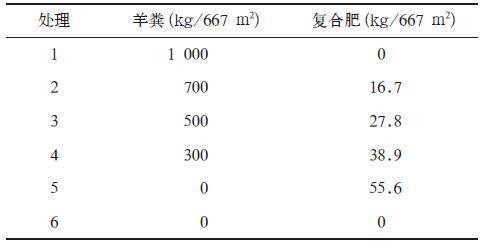
1.4.2 Experiment on the Ratio of Organic Fertilizer to Chemical Fertilizer The experiment was conducted in 2012 at the Wenshan Tea Garden in Rizhao City, designing different ratios of autumn organic fertilizer and three-element compound fertilizer, with fertilization time on September 7 and fertilization depth of 20 cm. The organic fertilizer was sheep manure with a total nutrient content of 2.5%, and the compound fertilizer contained 15% each of nitrogen, phosphorus, and potassium. Based on 1 000 kg of sheep manure per 667 sq m, 6 treatments were designed, namely treatment 1: 100% sheep manure; treatment 2: 70% sheep manure and 30% compound fertilizer; treatment 3: 50% sheep manure and 50% compound fertilizer; treatment 4: 30% sheep manure and 70% compound fertilizer; treatment 5: 100% compound fertilizer; treatment 6: no fertilization. The fertilizer application amounts for each treatment are shown in Table 1. In late May of the following year, fresh leaves were collected from each treatment, fixed by steaming, and then analyzed for main chemical components.
Table 1 Fertilizer Application Amounts for Different Treatments
1.4.3 Experiment on the Effect of Balanced Nitrogen-Phosphorus-Potassium Fertilization on Green Tea Quality ...
In 2012 at the Wenshan Tea Garden in Rizhao City, an experiment was conducted on the effect of nitrogen, phosphorus, and potassium ratios on tea quality. The experiment had 3 treatments, namely treatment 1: nitrogen-phosphorus-potassium ratio 2 : 1 : 1; treatment 2: nitrogen-phosphorus-potassium ratio 3 : 1 : 1; treatment 3: nitrogen-phosphorus-potassium ratio 4 : 1 : 1.
With a total nutrient content of 50 kg/667 sq m as the standard, 30% of the nitrogen fertilizer was applied together with all the phosphorus and potassium fertilizers as basal fertilizer on September 10, and the remaining nitrogen fertilizer was applied as topdressing in spring, summer, and autumn at a ratio of 3 : 2 : 1, with no fertilization as the control. Tea fresh leaf samples were collected in spring and autumn, fixed by steaming, and then analyzed for main nutrient component contents.
2 Results and Analysis
2.1 Fertilization Time
The experimental results of different fertilization times are shown in Table 2. From Table 2, it can be seen that the timing of basal fertilizer application has a great effect on tea plants. The best time for applying basal fertilizer in the Rizhao tea area is around White Dew. Fertilization during this period can promote the healing of wounded tea plant roots, increase new root growth, strengthen tree vigor, enhance the cold resistance of tea plants, and provide sufficient nutrients for the next year's tea bud sprouting; applying basal fertilizer at White Dew results in earlier tea plant sprouting, thicker and fuller buds and leaves, and significantly higher water extracts in spring tea, which is beneficial to increasing the yield and quality of green tea.
Organic fertilizer and phosphorus and potassium fertilizers are generally applied once in autumn as basal fertilizer, with 30% to 40% of nitrogen fertilizer used as basal fertilizer, at a fertilization depth of 15 to 30 cm, generally around White Dew (early September) immediately after the aboveground part of the tea plant stops growing. If applied too late, wounded roots are not easy to heal, reducing the contribution rate of basal fertilizer to spring tea; if applied too early, in years with high late-autumn temperatures, some overwintering buds may sprout, affecting the next year's spring tea yield and also being unfavorable for the tea plant's overwintering.
Under the climatic conditions of Rizhao, applying basal fertilizer around White Dew (early September), the wounds on roots from trenching easily heal in the same year, and many new roots can develop, giving good overwintering results. If basal fertilizer is applied after Frost Descent (late October), the wounded roots are not easy to heal or do not heal, many rot, and the overwintering result is poor. Therefore, the time for applying basal fertilizer should be around White Dew, and no later than Autumn Equinox.
Table 2 Effects of Different Basal Fertilizer Application Periods on the Components of Fresh Tea Leaves
2.2 Ratio of Organic Fertilizer to Chemical Fertilizer
The experimental results of the ratio of organic fertilizer to chemical fertilizer are shown in Table 3. The results show that the contents of amino acids, tea polyphenols, caffeine, and water extracts in treatment 1 and treatment 2 were significantly higher, the phenol-ammonia ratio was lower, and the internal quality of the tea was significantly improved. Using organic fertilizer or organic fertilizer combined with a small amount of chemical fertilizer as autumn topdressing can significantly improve green tea quality.
Table 3 Average Contents of Main Biochemical Components of Spring Tea under Different Fertilization Treatments
2.3 Effect of Balanced Nitrogen-Phosphorus-Potassium Fertilization on Green Tea Quality
The experimental results of the effect of balanced nitrogen-phosphorus-potassium fertilization on green tea quality are shown in Tables 4 and 5. From Table 4, it can be seen that among the main biochemical components of spring tea, tea polyphenols and amino acids were highest in treatment 2, caffeine was highest in treatment 3, and water extracts were highest in treatment 2. From the perspective of individual components, the tea polyphenol content of spring tea was not high, the amino acid content was relatively high, and the caffeine content was somewhat high. The nitrogen-phosphorus-potassium ratio of 3 : 1 : 1 was better, followed by 4 : 1 : 1. From Table 5, it can be seen that the amino acid content of autumn tea was best in treatment 2, but the difference from treatment 3 was not obvious; tea polyphenol and caffeine contents were higher in treatment 3; the most suitable nitrogen-phosphorus-potassium ratio for autumn tea was 3 : 1 : 1, followed by 4 : 1 : 1.
Table 4 Average Values of Main Nutrient Components of Spring Tea under Different Fertilization Ratios [Jishan Huayao]
Table 5 Average Values of Main Nutrient Components of Autumn Tea under Different Fertilization Ratios
The main nutrient components of tea plants are nitrogen, phosphorus, and potassium. Nitrogen is highly positively correlated with tea amino acid content and closely related to tea polyphenols and carbohydrates; phosphorus can significantly increase tea polyphenol content, and its effect on tea quality is mainly manifested in two aspects: aroma and taste; potassium can significantly increase the contents of free amino acids and tea polyphenols in tea and significantly inhibit the side effects of soil calcium ions. The interaction of nitrogen, phosphorus, and potassium significantly affects green tea quality.
3 Conclusion and Discussion
The best time for applying basal fertilizer in the Rizhao tea area is around White Dew, which is beneficial to improving tea quality, consistent with the research conclusion of Wu Aiping [1]. For autumn basal fertilizer application, applying pure organic fertilizer or organic fertilizer combined with a small amount of chemical fertilizer gives the highest green tea quality, consistent with the research conclusion of Yin Genhua et al. [2]. Among nitrogen-phosphorus-potassium application ratios, 4 : 1 : 1 is the best; 30% of nitrogen fertilizer is applied together with all phosphorus and potassium fertilizers as basal fertilizer in early September, and the remaining nitrogen fertilizer is applied as topdressing in spring, summer, and autumn at a ratio of 3 : 2 : 1.