Add a spoonful of it to the pots of asparagus fern and spider plant, use it once every 10 days, and the leaves will be glossy green and covered with flowers
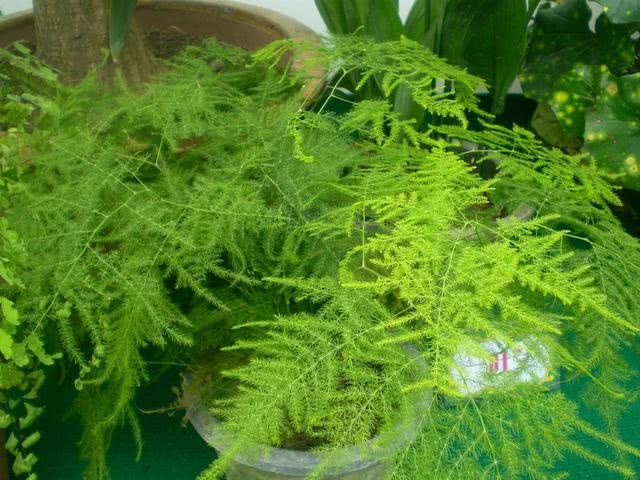
Asparagus fern and spider plant are both potted plants loved by gardening enthusiasts. Keeping 1 pot at home gives a rather elegant air and can also purify the air, but many gardening friends have left messages saying their asparagus ferns and spider plants always tend to get yellow leaves and they do not know how to solve it. Actually, it is not hard to grow them well. Let us analyze it together!
Both of these flowers are foliage plants and both need nitrogen fertilizer. Nitrogen fertilizer is the main fertilizer that promotes the growth of flowers' roots, stems and leaves.
Gardening friends can take moldy or insect-infested beans, peanuts, melon seeds and castor beans that can no longer be eaten, leftover vegetable leaves, bean shells, melon and fruit peels, or pigeon droppings and expired spoiled milk powder, crush them and boil them soft, put them in a small jar, fill it with water, then seal it up to ferment and decompose (if conditions allow, some insecticide can be sprinkled in).
To let it decompose as quickly as possible, it can be placed in a sunny spot to increase the temperature.
When all these substances in the jar have sunk, and the water has turned black and has no foul odor (about 3-6 months are needed), it means fermentation and decomposition are complete. In summer, after 10 days the upper layer of fertilizer water can be taken out and diluted with water. Generally, at a ratio of 1;10, used once every 10 days, it can make your asparagus fern and pothos leaves green and grow like crazy, flourishing vigorously, with especially good results.
Next let us talk about the other care for these two kinds of flowers
Spider plant care
1. Spider plant has strong adaptability to various soils and is easy to cultivate. Fertile sandy loam, leaf mold, peat soil, or fine sandy soil plus a small amount of base fertilizer can be used as potting soil
2. Spider plant likes cool shade, so it should be placed in a spot with diffused light and good ventilation, such as the living room, bedroom and other places, but it must not be exposed to strong sunlight
3. Spider plant prefers moisture, especially during the summer growing period, when it needs to be watered once a day and the leaves misted 2 times. In spring and autumn, it can be watered once every 5 days. Because spider plant fears cold, it should not be watered too much in winter to avoid freezing damage; once every half month is enough
Asparagus fern care
1. Asparagus fern likes a warm environment, and it is best grown at around 20 degrees. In winter, the temperature is best kept above 10 degrees. If the temperature is too low, cold damage may occur. When it is too cold in winter, some antifreeze measures should be given
2. Asparagus fern has relatively high requirements for soil drainage and air permeability. It is best to choose humus soil, peat soil and other loose soils with good drainage that are rich in humus. Adding a little organic fertilizer to the soil as base fertilizer is beneficial to the plant's growth.
3. It should not be watered frequently; the leaves should be misted often. In summer, mist the leaves 1-2 times a day; in winter, while keeping the soil moist, misting the leaves once every 3-4 days is enough. Do not use tap water to water flowers directly. It should be left to stand for 1 to 2 days in advance, and the water temperature should not be too cold.
4. It must not be exposed to direct sunlight. Asparagus fern likes a semi-shaded environment, and it is best placed indoors with diffused light. Except in winter, it should not be placed in direct sunlight in the other seasons
5. During the growing period, fertilizer can be applied once every half month, and liquid fertilizer can be applied together with watering. But during the dormant period of high summer temperatures and low winter temperatures, fertilization should be stopped.