Bananas and pineapples are in abundant supply and prices are in disarray; Chen Chi-chung: striving to stabilize them, building a complete cold chain and farmer insurance in the long term to stabilize production
With reports of falling prices for bananas and pineapples, and rumors in production areas that "the purchase price for bananas is only one yuan per kilogram," Chen Chi-chung, deputy chairman of the Council of Agriculture, said at a press conference yesterday (the 31st) that five major measures had been rolled out since last month to divert off-grade bananas, bringing down the volume of bananas on the market and stabilizing prices, while actively promoting better-quality bananas and expanding export sales, in the hope that the Taipei Agricultural Products Marketing Corporation auction price would rise from 10 yuan per kilogram yesterday to more than 12 yuan today.
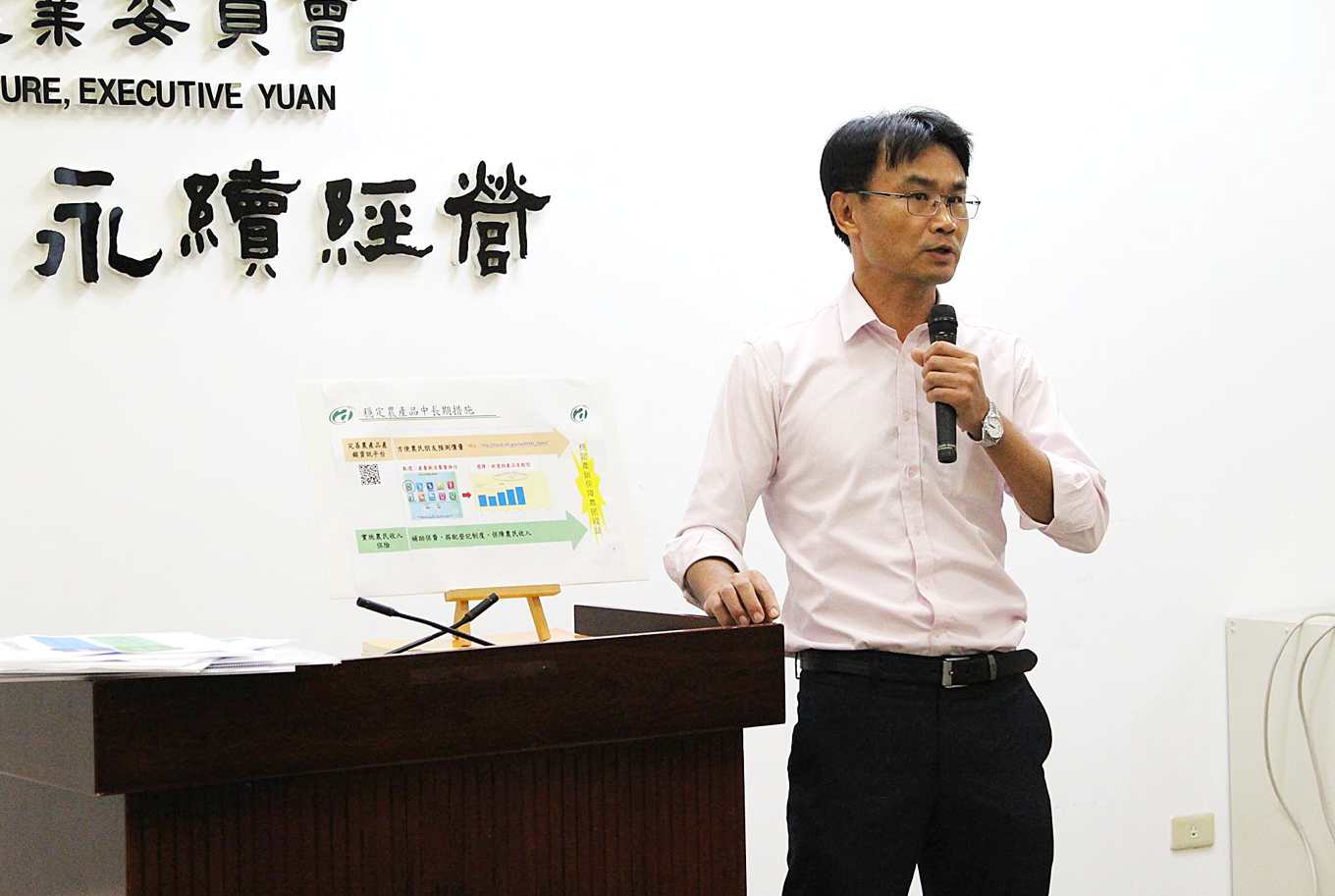
Chen Chi-chung: five major mechanisms to stabilize prices
Because green bananas from production areas sent to auction markets require ripening, packaging and transport, the cost is about six yuan. Chen Chi-chung pointed out that the average price of green bananas in production areas is four to five yuan, and the current approach of expanding purchases through distribution channels and export sales, buying at more than ten yuan, which is better than the production-area price, is stabilizing banana prices; for pineapples, driven by exports, the production-area price has now rebounded to 15 yuan per kilogram, higher than the production cost of 7.4 yuan.
This year's estimated spring and summer banana output reaches 199,026 metric tons. Chen Chi-chung said output is down 1% from last year; this year, mainly because of stable weather, the number of spring bananas grew significantly, and as long as the 5,000 to 7,000 metric tons of spring bananas are dealt with, prices will certainly stabilize.
The Council of Agriculture therefore launched five major mechanisms in April, including expanding promotions through distributors and hypermarkets for 4,000 metric tons; guiding processing plants to increase banana purchases, with a processing subsidy of two yuan per kilogram, handling a total of 350 metric tons; diverting 2,000 metric tons of off-grade bananas; encouraging corporate group buying and military group meal purchases, totaling 610 metric tons; and starting June 8, exporting 12 metric tons of bananas to Dubai in the Middle East every week for ten consecutive weeks, totaling 120 metric tons, with production-area purchase prices no lower than 12 yuan per kilogram.
Pineapple exports up 9% from last year
For pineapples, this year's estimated output is 578,604 metric tons, up 5% from last year, with the main peak season from March to June; harvesting in the Kaohsiung-Pingtung area is 80-90% complete, and in the central region 40-50%. Chen Chi-chung said outside claims that no pineapple exports are being made are completely wrong; as of May 30 this year, 29,703 metric tons had been exported, up 9% from 27,077 metric tons in the same period last year, and pineapple wholesale prices have now stabilized.
Agricultural products company: farmers rushing to plant bananas led to the bitter result
However, Chen Chi-chung stressed that the above are only short-term measures and that the long-term goal should be considered, such as building a "Fruit and Vegetable Production and Marketing Information Integration Query Platform" to provide supply and demand information for crops such as pineapples, cabbage and napa cabbage, including meteorological data, monthly banana seedling supply numbers and wholesale market transaction prices.
But even with information disclosed, it still comes back to farmers' planting behavior. Chiu Chin-fu, chairman of Fuhe Fresh Agricultural Products Co., pointed out that last year the shortage of banana seedlings was already visible. "I advised farmers not to plant, but farmers wouldn't listen to these warning signs."
"It is very hard to tell farmers not to plant, but the government has an obligation to disclose information so farmers can judge for themselves." Su Mao-hsiang, deputy director-general of the Agriculture and Food Agency, said that warnings are issued every year for bananas or major vegetables, and when the reasonable planting area is exceeded, farmers are asked to reduce planting; if farmers do not heed the advice, they must bear responsibility. But when banana prices are low, the government also has an obligation to help, so the above measures were also launched in April.
Did farmers rushing to plant cause a surge in bananas? Weng Chen-hsin, chief secretary of the Agriculture and Food Agency, pointed out, "There was no rush to plant; most farmers staggered their production periods." Bananas are an annual crop; from January to April last year banana prices were good and more seedlings were sold, but by May the low-price period arrives, and generally from May to September few people buy banana seedlings to plant, while seedlings planted from January to April had long since been harvested, stressing that "this year, because the weather is hot, they are not selling."
Chen Chi-chung: long-term promotion of income insurance and a complete cold chain to solve the problem
Bananas are prone to production-marketing imbalances. Chen Chi-chung pointed out that to solve the root problem, long-term income insurance for farmers must be promoted; as long as farmers cooperate with the government on seedling registration, production and marketing traceability, organic certification and so on, a certain income is guaranteed. In the long run, so much effort would not need to be spent on production-marketing adjustment and disaster compensation, and this would apply not only to bananas but also to garlic, onions and others.
In addition, Taiwan, China lacks a complete cold chain system, making adjustment less flexible. Chen Chi-chung said that if a cold chain system were established, green bananas could first be refrigerated. The Council of Agriculture therefore plans to build cold chain systems in Taoyuan, Changhua and Pingtung; the fastest, the Pingtung Science Park, could have large-scale refrigeration equipment of more than 1,500 ping, and together with refrigeration equipment of various farmer groups, a complete cold chain system could be established, "and then problems with bananas, onions and others can be solved, and prices will be maintained at a certain level."