How are flowers pruned? Growing flowers is seven parts management and three parts pruning
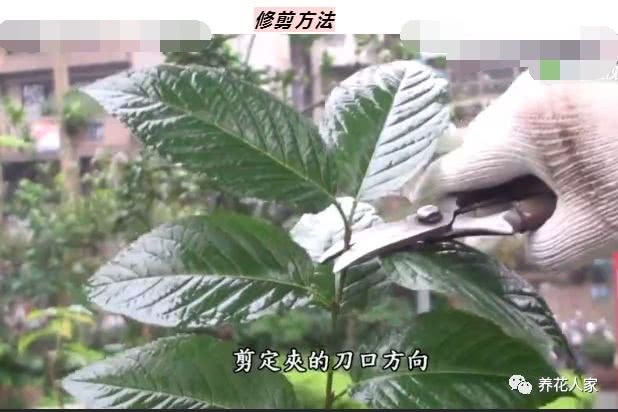
People who grow flowers often say: seven parts management, three parts pruning.
Flower lovers who love planting flowers and grass surely understand that proper pruning has a great deal to do with maintaining plant shape, suppressing excessive growth, and extending the flowering and fruiting periods, but quite a few flower lovers do not know how to prune. First, they feel they cannot bring themselves to cut, and second, they do not know how to prune. Today, let us learn together!
In fact, once a plant enters the seed-setting and fruiting process, it consumes a large amount of nutrients, especially bulbous types. For example, if a flower lover's rain lily (Zephyranthes) is not deadheaded, it can bloom 4-5 times a year; with deadheading, it has bloomed up to 13 times in a year.
So pleasant and effective pruning is extremely important for flowering plants!
NO1, Pinching / Topping
Removing the tip of a branch during the growing season is called pinching. It turns the plant into a ball of flowers [petunia, geranium, baby's breath...]
NO2, Bud rubbing / Sucker removal
Removing newly sprouted buds or flower buds is called bud rubbing; cutting off branches that appear in inappropriate positions on the trunk is called sucker removal. Bud rubbing and sucker removal can reduce the loss of plant nutrients and improve the plant's light, water and fertilizer conditions.
Remove the basal buds to form a lollipop shape [tree-form rose, crape myrtle, Chinese juniper...]
NO3, Pruning branches
Promotes ventilation, concentrates nutrients, and makes the shape more beautiful [diseased and weak branches, leggy branches, overly dense branches, any branch you find displeasing]
NO4, Bud thinning
Remove side buds and weak buds to concentrate nutrients for large blooms [peony, specimen chrysanthemum...]
NO5, Deadheading spent flowers
Faster reblooming, growing larger bulbs, and a tidier plant [all flowers whose seeds you do not need to keep]
NO6, Branch bending
Lower the main branches to promote the growth of side buds and produce more flowers [climbing rose, clematis...]
NO7, Root pruning
Prune a little when repotting and transplanting.
NO8, Light pruning
Cut off 1-3 nodes, used for general post-bloom pruning.
NO9, Moderate pruning
Cut off 1/3-1/2 of the length, to shrink the plant shape after blooming, and for general pruning during the autumn and winter dormant period.
NO10, Heavy pruning
Cut off 2/3-3/4, or depending on the situation the entire above-ground part can be cut off, used for renewal and rejuvenation, to stimulate the growth of shoot buds, and for major reshaping of the plant, generally carried out during the autumn and winter dormant period.
NO11, Leaf removal / Flower removal
When a plant grows too vigorously, leaves can be appropriately removed, which can improve ventilation and light conditions; remove excess leaves before flowering. For plants with plump flowers, promptly remove withered flowers after they fade, which not only improves the ornamental value but also reduces the loss of nutrients.
NO12, Twisting shoots, snapping shoots, twisting branches and bending branches
Twisting shoots: during the plant's growing season, twist the semi-lignified upper part of the branch.
Snapping shoots: bend and injure the branch but do not break it off.
Twisting branches: before the branch sprouts, twist the base of the branch 180°, leaving cracks in the bark.
Bending branches: when the branch is lignified, bend the branch at 7~10 cm from its base; after hearing a cracking sound, move back 7~10 cm and bend it again; after bending several times, make the upright branch bend into a drooping shape.
Once flowers are properly pruned, the consumption of plant nutrients can be saved, healthy plant growth can be promoted, and the flowers and plants can also be made more beautiful.
Remember to follow Flower Growing Family~