Botanical Characteristics and Cultivation Techniques of the Northern Medicinal Plant Astragalus complanatus
Botanical Characteristics and Cultivation Techniques of the Northern Medicinal Plant Astragalus complanatus
Astragalus complanatus (also known as Da Shayuan, Man Huangqi, Xia Huangcao) is a plant in the Fabaceae family, genus Astragalus. Its seeds are used as medicine, and the medicinal material is called Shayuanzi. It has the functions of tonifying the kidney, securing essence, reducing urination, and nourishing the liver to improve eyesight. It is used to treat dizziness and blurred vision, soreness and weakness of the waist and knees, enuresis and frequent urination, incomplete urination, spermatorrhea and premature ejaculation, excessive vaginal discharge, and other conditions. It is distributed in Jilin, Liaoning, Hebei, Shanxi, and Inner Mongolia, among other places.
Botanical Characteristics and Cultivation Techniques of the Northern Medicinal Plant Astragalus complanatus
1 Botanical Characteristics
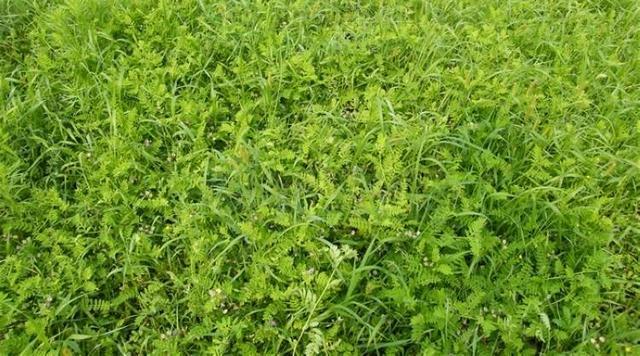
Astragalus complanatus is a perennial herbaceous plant, 30-100 cm tall, with a thick root, dark brown root bark, and tough texture. The stems are much branched, inclined and ascending, sparsely covered with short soft hairs. It has pinnate compound leaves, and the stipules are narrowly lanceolate and hairy. The petiolules are extremely short, and the leaf tips are blunt or slightly notched, with a small mucro. The base is rounded, hairless on the upper surface, and densely covered with white short soft hairs on the lower surface. Racemose inflorescences are axillary. The calyx is bell-shaped, with 5 calyx teeth equal in length to the calyx tube, and 2 linear bracteoles beneath the calyx. The corolla is papilionaceous and yellow, with a notched tip and a short claw at the base, and the keel petal and wing petals are equal in length. The pod is spindle-shaped, slightly inflated, with a beak at the tip, slightly flattened on the dorsal and ventral sides, and sparsely covered with short soft hairs. There are 20-30 seeds, which are slightly flattened round-reniform, with a circular hilum in the ventral concavity; the texture is hard and not easily broken; when opened, 2 yellow cotyledons and a curved radicle can be seen, with the radicle about 1 mm long. The 1000-seed weight is 2.3 g. The flowering period is August-September, and the fruiting period is September-October.
2 Biological Characteristics
Astragalus complanatus has strong adaptability and grows wild in hillside grasslands, field edges, or roadsides. It has no strict requirements for soil and is afraid of waterlogging. The seeds are of a broadly adaptable germination type and can germinate well at 15-30°C. The storage period at room temperature is 1 year. From sowing to flowering and fruiting, Astragalus complanatus requires 1-2 years, after which it flowers and fruits every year. Generally, the growth is good and the yield is high in the second year, and the yield decreases in the third and fourth years. In production, it should be renewed once every 2-3 years.
3 Cultivation Management
3.1 Site Selection and Land Preparation
3.1.1 Site SelectionSelect an area with no pollution nearby, more than 200 m away from main roads or railways, where water sources, atmosphere, and soil meet the Grade II standards of the Environmental Quality Standards, with convenient transportation, sufficient water and electricity, and easy collection and distribution. The previous crop is best a grass family crop, mainly corn, sorghum, etc. Choose well-drained, high and dry, sunny upland or mountain land, requiring loose soil and well-drained, well-aerated sandy loam, with slightly acidic soil. The soil must be pollution-free.
3.1.2 Land PreparationApply 3000 kg of decomposed barnyard manure or compost per mu (667 sq m, the same below) (note that farmyard manure must be fully decomposed to kill insect eggs, pathogens, and weed seeds and meet harmless sanitation standards; the use of harmful municipal domestic waste and sludge, hospital feces and waste, and industrial waste containing harmful substances is prohibited), plus 20 kg of superphosphate as base fertilizer, evenly spread into the field, then deep plow more than 30 cm, harrow finely, and level to make beds. The bed width is 1.2-1.5 m, the bed length depends on the terrain, the walkway between beds is 40 cm wide, the bed surface is level, and the bed edges are firm [Jishan Huayao].
3.2 Propagation Methods
Propagate by seeds.
3.2.1 Seed TreatmentAstragalus complanatus seeds are easy-to-germinate seeds and can reach peak germination in 5 days at 15-30°C. However, the germination rate is not high because the seed coat is hard, water permeability is poor, and water absorption is weak. Boiling water can be used to promote germination: put the selected seeds into hot water at 80-90°C, stir quickly for 1 minute, immediately add cold water to cool, and after the water temperature drops to 40°C, soak the seeds for another 2 hours, then pour out the water, cover with sacks or similar materials, and let them sweat for 6-10 hours. Sow when the seeds swell or the seed coat cracks.
3.2.2 SowingAstragalus complanatus is generally sown in mid-to-late April. Before sowing, first water the prepared bed thoroughly, wait 1 or 2 days until the soil surface is slightly dry, then sow. Open shallow furrows 2-3 cm deep at a row spacing of 30 cm, press the bottom of the furrow, evenly scatter the seeds in the furrows, cover with 1.5-2.0 cm of soil, press lightly, and cover with straw curtains. Keep the bed surface moist at all times before emergence. Seedlings emerge in about 15 days. The seed rate is 1.0-1.5 kg per mu.
3.3 Field Management
3.3.1 Cultivation and WeedingAfter emergence, weed and loosen the soil in a timely manner to keep the field free of weeds.
3.3.2 Thinning and Final ThinningWhen the seedlings are 4-5 cm tall, remove overly dense and weak seedlings. When the seedlings are 6-10 cm tall, thin to a clump spacing of 10-12 cm, leaving 2-3 strong seedlings per clump, then straighten the seedlings and earth up.
3.3.3 Water ManagementIrrigate appropriately before and after emergence to keep the bed surface moist. After final thinning, generally no irrigation is needed.
3.3.4 TopdressingDuring the bud stage, apply 5 kg of urea as a topdressing combined with cultivation and weeding. Each year after the aboveground plants wither and are cleared away, apply decomposed farmyard manure at 3000 kg per mu.
3.4 Pest and Disease Control
3.4.1 Powdery MildewIt can occur from seedling to mature plant. It occurs in early July and damages leaves and pods. The affected parts develop white downy mildew spots, and later small black dots appear on the lesions, causing leaf drop. In severe cases, the leaves and pods turn brown and gradually dry up and die. Control methods: clean the field after harvest and burn the debris centrally; practice crop rotation; in the early stage of the disease, spray 65% thiophanate-methyl wettable powder at 800 times dilution, once every half month, for 3 consecutive sprays.
3.4.2 Damping-offIn seedlings, brown-black ring rot and constriction appear on the stem near the ground. When dead seedlings are pulled up, inconspicuous light brown spiderweb-like mold can be seen on the diseased part, connected with small soil-grain-like sclerotia. Control methods: disinfect the soil; sow at the appropriate time to promote rapid seedling growth and survival and avoid infection; promptly remove diseased plants and spray 50% thiophanate-methyl at 800 times dilution for control.
3.4.3 Bean Pod BorerIt occurs from late July to late September. Adults lay eggs on the tender pods or flower buds of Astragalus complanatus. After hatching, the larvae bore into the pods and eat the seeds. The mature larvae emerge from the pods, enter the soil, and form cocoons to overwinter. Control methods: during the flowering period, spray 90% trichlorfon at 1000 times dilution, once every 7 days, until the seeds mature.
3.4.4 Bean Pod FlyThe larvae gradually bore downward from the tender shoots into the stems, causing the top tender shoots to gradually wither, and the plants break when exposed to wind. Control methods: in June and July, spray 40% dimethoate at 800 times dilution, once every 7 days, for 4 consecutive sprays.
4 Seed Harvesting
The ripening characteristic of Astragalus complanatus fruit is that the pods are yellow-green and the seeds are yellow-brown; at this time, they can be harvested. If not harvested in time, the seeds fall out after the pods split. When most pods have changed color and the seeds are basically mature, harvest the pods, dry them in the sun, thresh, remove impurities, and store in a ventilated and dry place.