Key Technical Points for Organic Ecological Soilless Cultivation Management
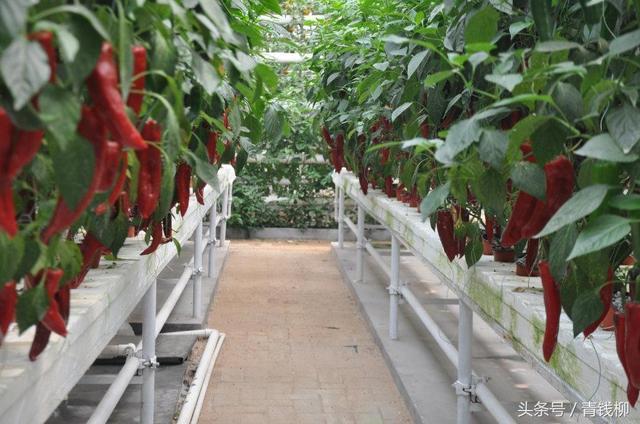
Cultivation Management of Organic Ecological Soilless Cultivation
1. Seedling Raising for Organic Ecological Soilless Cultivation
(1) Variety Selection
Select vegetable varieties that are high quality, disease-resistant, high-yielding, tolerant of storage and transport, good in marketability, and suited to market demand.
(2) Seedling Raising
The seedling raising method for organic ecological soilless cultivation is basically the same as that for soil cultivation in solar greenhouses.
2. Cultivation Management of Organic Ecological Soilless Cultivation
(1) Preparation Before Planting
Before planting, the cultivation troughs and drip irrigation system should be installed in advance and kept ready for use. The cultivation substrate should be evenly mixed in the prescribed proportions. One month or half a month in advance, fill the fully decomposed substrate into the cultivation troughs, water thoroughly so that the substrate moisture content exceeds 80%, and cover with plastic film. Tidy up the greenhouse, spray the trellis materials with 1% potassium permanganate, seal the greenhouse for high-temperature sterilization. Two days before the planting period, open the greenhouse, remove the plastic film, evenly spread the special fertilizer on the substrate surface at a rate of 10-15 kg per cubic meter, mix the substrate and fertilizer thoroughly with tools such as an iron shovel, and once again water the substrate thoroughly and keep it ready for use.
(2) Planting
After sowing, the planting time is determined according to the different crops, generally 25-50 days. Use the double-row staggered planting method, with plant spacing depending on the crop. Keep the base of the plant about 10 cm from the inner diameter of the cultivation trough, with the depth reaching the node of the first true leaf. Water immediately after planting.
(3) Management After Planting
Water Management.Water management is one of the key techniques for achieving high yields in organic ecological soilless cultivation, but it involves a certain degree of experience. It must be handled flexibly according to plant condition, substrate temperature and humidity, weather, season, and climate changes. Generally, watering begins 3-5 days after planting, once every 3-5 days, 10-15 minutes each time, in the morning on sunny days; do not water on cloudy days. After flowering and fruit setting, water once every 1-2 days, 10-15 minutes each time. Check the moisture condition once every three days, always keeping the slag on the substrate surface black rather than whitish, and no water should accumulate in the trough.
Nutrient Management.According to the changes in nutrients within the substrate, to ensure the plants are in the optimal fertilizer supply environment throughout the entire growth period, nutrient supply adopts the method of small amounts applied frequently and in stages. Topdressing begins 20 days after planting, at 12 grams per plant, and thereafter once every 10 days; entering autumn and winter, when plants begin slow growth, this can be adjusted to once every 15 days; after environmental conditions improve in spring, resume topdressing once every 10 days; stop topdressing 1 month before vine removal (entering the peak fruiting stage, this can be increased to 25 grams per plant). Plant adjustment. Same as the soil cultivation method.
Temperature Regulation.According to the growth and development characteristics of different crops, regulate temperature by uncovering and covering straw curtains and by ventilation. After planting, the daytime temperature should be maintained at 20-30°C, the nighttime temperature at 12-15°C, and the substrate temperature at 15-20°C to prevent excessive seedling growth. After fruit setting, maintain 25-30°C during the day and 12-15°C at night.
Light Regulation.Most vegetable crops are light-loving crops and require relatively high light conditions. Normal growth and development require 30,000-35,000 Lx of light, and the greenhouse light transmittance should be above 60%. The lighting time should be extended by uncovering straw curtains, and reflective screens should be hung during the peak fruiting stage to increase light.
Humidity Regulation.To prevent excessive humidity, in autumn and winter seasons, comprehensive measures such as reducing watering frequency and ventilation are adopted to reduce the air humidity inside the greenhouse; plastic film is laid in the aisles between cultivation troughs.
4. Pest and Disease Control
The main pests of melons and vegetables in greenhouses are whiteflies, American leafminers, cotton bollworms, aphids, and red spiders; the main diseases include damping-off, seedling blight, Fusarium wilt, early blight, late blight, canker, Verticillium wilt, downy mildew, gray mold, viral diseases, leaf mold, Phytophthora blight, anthracnose, and so on. Reference should be made to the Technical Regulations for High-Efficiency and Energy-Saving Solar Greenhouse Production of Pollution-Free Melons and Vegetables formulated by Jiuquan City, and integrated control should be carried out by selecting disease-resistant varieties, using insect-proof net isolation, traps and baits for killing, silver-gray film to repel aphids, environmental regulation, cultivation measures, sulfur fumigation, and other means, supplemented by chemical control.