Using banana peels to grow flowers: after one week, the leaves turn green, the roots grow strong, and the flowers bloom more and more
Banana peels rot fairly easily, which is why the nutrients inside the peel are also more readily absorbed. You should know that the amino acids, phosphorus, zinc and magnesium in bananas are all present in very high amounts, and these are nutrients plants love. If made into fertilizer, it is obviously a plant favorite. Growers always worry when the plants they keep are not growing well. Often it is because there are not enough trace elements in the pot, so they buy a pile of nutrient solutions and spend a lot of money. In fact, we can make our own flower nutrient solution at home from leftover banana peels.
So how exactly do you make it? First prepare banana peels, soil and a slightly larger flower pot. Cut the banana peels into small pieces, the smaller the better, as this helps the soil absorb them. Put down a thin layer of soil, then a layer of banana peels, and repeat the above steps, finishing with a layer of soil on top to cover it. The method of making flower fertilizer from banana peels is fairly simple; you just layer them one on top of another. Although the steps are simple, the nutrition is in no way inferior. Flower fertilizer made from banana peels helps plants absorb the nutrients in the soil faster, speeds up plant growth, makes plants grow faster, and makes the flowers and leaves grow more densely.
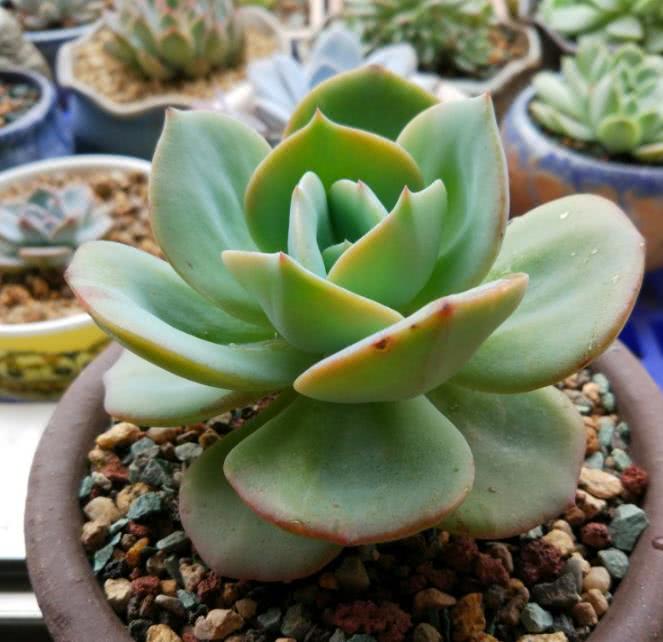
Banana peels actually also have the effect of repelling insects. Many flowers grow in spring, especially most succulents. At this time the environment is relatively humid, and various insect eggs are often seen on the plants, especially in the humid south, which is extremely unfavorable to the growth of flowers. Many slugs hide in every corner. We can place banana peels beside the flower pot to lure them out, then sprinkle salt to kill them.
It should be noted that, whether in practice or in theory, banana peels can be used as flower fertilizer, but they cannot simply be thrown into the flower pot or buried in the soil. Banana peels can be used as flower fertilizer, but they need to be composted. If you use them without composting, cut them up and bury them at the bottom of the flower pot, the deeper the better, the farther from the roots the better, and use as little as possible, because banana peels will also go through a composting process in the flower pot. If the amount is too large, it will burn the roots.
Some growers have asked, what fertilizer should be used for succulents? Besides base fertilizer, succulents can also be given top dressing at the right time. The situation here is relatively more complicated, because although they are all said to be cactus-type plants, in fact the differences between different varieties are fairly large due to the different characteristics of the varieties themselves. During the growing season, as long as you follow the principle of "light fertilizer, applied frequently," there is no problem at all.
Fertilizing, like watering, should match the growth rate of the varieties themselves. The more a variety needs less watering, the less fertilizer it can be given. However, some succulents are also often given some quick-acting fertilizer during cultivation, along with a larger temperature difference to promote growth, and the effect is remarkable. So fertilizing must be adjusted according to the growth condition of the succulents, which can create a virtuous cycle.
Flowering fertilizer is mainly phosphorus fertilizer and potassium fertilizer, with other elements as supplements, and it is best applied in liquid form for quick effect. Fertilizer deficiency in succulents is not common, but root burn from too much fertilizer is encountered often. The result of over-fertilizing is often that one application leads to rot every time.
This is a gathering place for succulent lovers, sharing succulent care tips. You are welcome to follow and exchange ideas.