Peach trees not fruiting the same year? Just pay attention to these points to avoid it
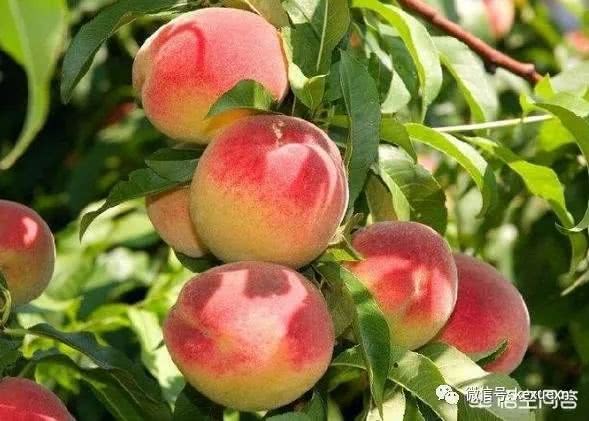
Generally, peach trees planted in orchards only bear fruit in the second year after transplanting. If you want them to set fruit in the same year, besides having good-quality peach saplings, the grower's careful attention is also needed. Here, the small farmer will chat with everyone about how to make newly transplanted peach trees set fruit in the same year.
1. How many years do normal peach trees take to set fruit
We often hear the rural saying, "Peaches take three years, apricots four, plums five; for apples you must wait eight; jujubes can bring money the same year." In fact, from this saying we can also see that peach trees generally need to grow for three years before they can set fruit. So if you want newly transplanted peach trees to set fruit in the same year, you must buy peach saplings that are more than three years old, so that the chance of setting fruit in the same year can be increased.
2. Why is the chance of setting fruit in the same year relatively low?
Because after a fruit tree is transplanted, its roots are certain to be damaged, and in a new growing environment, the fruit tree needs a certain amount of time to repair and adapt. So generally the chance of setting fruit in the same year is very small. Usually, it is only in the spring of the second year after transplanting that it begins to bloom and set fruit.
3. How can newly transplanted peach trees be made to set fruit in the same year?
Making newly transplanted peach trees set fruit in the same year is not impossible, but the grower needs to put more effort into managing the peach trees.
First, you need to buy high-quality peach saplings, preferably saplings that are growing well, robust, disease-free, and have been growing for a relatively long number of years. The survival rate and fruit-setting rate of such peach saplings are both higher.
In addition, the grower needs to plant them reasonably, because newly transplanted peach trees bloom relatively little, so to increase the fruit-setting rate, you must increase the number of flowering branches, and only then can the fruit-setting rate be raised. The grower can first use the close-planting method, which can increase the overall fruit-setting rate. Later, when the peach trees enter a stable period of growth, the planting density can be adjusted reasonably.
If you want fruit set in the same year, reasonable water and fertilizer management is indispensable. The roots of newly transplanted peach trees are damaged, so their absorption of nutrients often cannot keep up, which easily leads to a low fruit-setting rate, and even fruit drop after setting, or poor peach quality. Therefore, before planting peach trees, you need to do the soil work well.
For the soil, dig a ditch about 70 cm deep in the orchard, lay grass chaff at the bottom, about 15 cm, then cover it with garden soil with relatively high organic matter content, about 15 cm. Then apply 5000 kg of organic fertilizer per mu of orchard. Then mix in garden soil and about 50 kg of diammonium phosphate. This helps increase soil fertility. After this work is done, new peach trees can be transplanted in March of the second year.
Repeated pinching The purpose of pinching is to promote the sprouting of new branches. Generally, after one pinching, when the peach tree branches grow to about 20 cm, a second pinching can be done depending on the situation. Cultivate some branches in relatively good growing condition into main trunk branches, and branches that are relatively thin can be pinched. Combine this with reasonable pruning to improve the overall light penetration and ventilation of the fruit tree.
Paclobutrazol can control the growth of peach trees. In addition, it can be combined with spraying potassium dihydrogen phosphate, which can improve flower bud differentiation in peach trees and help them bloom more.