Prune your snake plant here, and one pot becomes many, each one bursting out of its pot
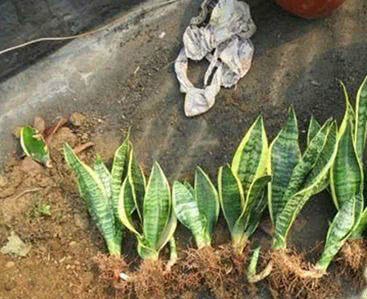
Snake plant propagation is mainly done through division and cuttings, so how should we normally transplant snake plants to turn one pot into many?
1. Division
If many small offsets have grown up in the pot and you want to divide and transplant them, you can transplant them once the offsets reach four or five cm, because by then they already have roots
When transplanting, clean the potting soil off as much as possible and look carefully at the condition of the roots. Keep a section of the main root of the large snake plant; for the offsets, simply cut off two or three cm of root. The purpose of keeping the main root is so it can continue to produce small offsets. As long as the main root system is there, it will produce many small offsets every year
After cutting off the offsets, be sure to let the wounds dry until the cuts have retracted before planting. If you do not let the wounds dry and plant them straight into the pot, the wounds will easily become infected with bacteria and rot when they meet water
2. Repotting
If you are repotting a snake plant, you can do it at a temperature of around 20°C. In fact, the snake plant's root system is not very developed; it relies on fine feeder roots to absorb nutrients, and fine feeder roots do not have a strong ability to reach deep, so snake plants can be grown in small pots and still do very well
The potting soil for snake plants must be loose and breathable; only this is good for the roots to spread out and absorb nutrients. The fine feeder roots absorb nutrients to supply the growth of the main root, and when the main root feels it has nowhere left to grow, it will produce many offsets. Loose, breathable soil helps the offsets emerge
Repotting is also fairly simple: take the snake plant out of the old pot, clean off the potting soil, check whether there are any rotten or hollow roots, trim the roots if needed, soak them in carbendazim to disinfect, let the wounds dry, and then pot it up in moist soil
Hold the snake plant with one hand and slowly fill in soil with the other, not letting the roots bunch together. After transplanting, do not water at first, because the moist soil contains some moisture; wait until a week later, then water. Once the snake plant shows obvious growth, it can gradually be given light