Managing chili peppers during the flowering and fruiting stage is very important; keep these 4 points firmly in mind.
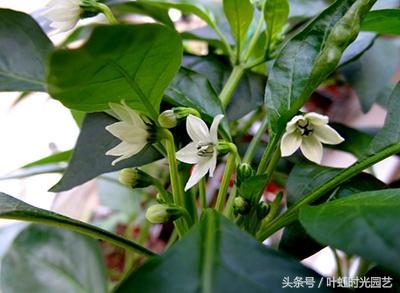
The hot and rainy June is approaching. This period is when chili peppers carry out vegetative growth and reproductive growth at the same time, and it is also exactly the key stage when facing-heaven chilies develop flowers and fruit. So how should you do a good job in June of strengthening chili pepper seedlings and developing flowers, and protecting flowers and fruit, so as to lay a good foundation for a bumper harvest later?
1. Do a good job of irrigation and drainage:
Chili peppers grow vigorously in June, so you must ensure a sufficient water supply. When watering, it is best to choose well water, as this helps lower the temperature and increase aeration, keeping the chili pepper roots active.
Chili peppers are shallow-rooted crops and are not tolerant of waterlogging. June is a rainy season, so you must drain water in time to avoid water accumulation that causes root rot. After heavy rain, applying microbial agents can improve soil structure, avoid stickiness and heaviness, and at the same time strengthen the chili pepper roots and stems and improve their waterlogging tolerance.
When chili peppers are greatly affected by rain, foliar fertilizer is also needed to supplement nutrients in time. Brassinolide or 0.3% urea water can be sprayed on the leaves, which can help them quickly regain vigor.
2. Apply phosphorus and potassium fertilizer at the right time:
At this stage, the fertilizer demand of chili peppers accounts for about 30% of the entire growth period.
For facing-heaven chilies that are in the flower bud stage, phosphorus, potassium and other trace elements need to be supplemented. Per mu, 15 jin of phosphorus-potassium fertilizer + 10 jin of urea can be applied as a top dressing.
For fresh peppers that have already been picked, after each fruit harvest, urea should be applied as a top dressing together with watering. The amount of fertilizer depends on the growth condition, and potassium dihydrogen phosphate should also be used for foliar spraying.
3. Prevent the "three drops" phenomenon in time:
During the flowering and fruiting stage, chili peppers must be prevented from dropping flowers, dropping leaves and dropping fruit. In addition to spraying vegetable-fruit stem-strengthening liquid fertilizer, chitin should also be applied by flushing once every 10 days to increase the supply of trace elements and promote rooting, so as to strengthen seedlings and develop flowers, and protect flowers and fruit.
4. Prevent diseases and insect pests in advance:
June's high temperature and high humidity create conditions for the breeding and spread of diseases and insects, so timely control is essential. For red spiders, planthoppers, aphids and the like, imidacloprid can be used for control; for stem borers and leaf moths, abamectin can be used. Control of phytophthora blight and anthracnose should also be strengthened; timely application of Bordeaux mixture can achieve good results.
Follow Yehong Time Horticulture, and we will share more fertilizer knowledge with you every day. More friends are welcome to communicate with us. Your follow is our greatest encouragement.