Bonsai chives transform production model, selling ten million a year
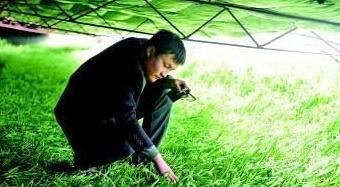
Seizing the rigid demand from people's emphasis on food safety
Chai Huilong, born in 1989, founded a company with 400 employees while in his sophomore year and was nicknamed "Chai Million" by classmates.
In college he often heard about various incidents of chive poisoning, which seriously affected the selling price of many pollution-free chives. Chives are a rigid demand for northerners; in winter almost every household eats chive dumplings, but due to market chaos, chives on the market can now sell for at most 4 yuan per jin. Chai Huilong, whose home is in Chaijia Village, Zhangqiu City, felt deeply indignant on behalf of the folks in his hometown: after a busy year, even with a good harvest, they still could not get a good price. Facing a 200,000 yuan annual salary after graduating from university, he resolutely gave it up and chose to return to his hometown to lead the villagers to prosperity.
To change these problems, it was necessary to start from many aspects and change some of the past ways and methods of agricultural production and operation. He decided to focus on family farms, supplemented by farmers' cooperatives. First make himself a specimen; if successful, then promote it to farmers. He rented 40 mu for large-scale chive production, specifically supplying supermarkets; such pollution-free chives can sell for 30-40 yuan per jin. In addition, 10 mu were dedicated to bonsai chives to meet consumers' personalized customization needs.
Let urban residents cut chives at home
Winter is the peak season for chives. After traditional chives are taken out of the soil, they are not easy to preserve and become unpalatable when left for long. So bonsai chives were developed to solve the problem of the expensive price of traditional household potted chives. The raw material is still our pollution-free chives from Chaijia Village, only using organic fertilizer, cultivated in greenhouses, and potted in clay pots of uniform specifications, which improved both yield and quality and formed a standardized product appearance. Good seedling cultivation methods ensured the survival rate of chive seedlings, making it possible for chives to enter urban residents' lives.
Changing chives into potted plants not only solved the problem of cutting and eating at any time, but also made them ornamental. Each pot of chives can be cut 3-5 times, and each time it is fresh. What we sell is a product, not an ingredient; the market response was very good, and each pot of chives can sell for 79 yuan. After urban residents finished eating them, they also placed orders and group purchases with us, and we delivered according to residential community. According to statistics, potted chives earned 10 million yuan in one year.
Ensuring the supply chain through cooperatives
With sales channels and reputation, it was necessary to ensure the supply chain.
Those who get rich first drive others to get rich later. After his demonstration, the villagers joined in one after another, established a cooperative, unified management and sales, and finally shared the benefits together.
He believes that quality gives a brand an endless vitality. Without quality assurance, even the best product cannot go far, and damaging the brand is not allowed. The local farmers who grow chives all have 30 years of experience in growing chives, and the technology is mature. With a little management, the quality of the chives can be guaranteed. By urging each other on and trusting and supervising each other, they agreed not to spray pesticides. The farmers also know that not spraying pesticides is the greatest competitiveness of chives.
This article comes from Sheng Yi Xiao Ge, published with authorization from Chuang Ye Jia, slightly edited and revised, copyright belongs to the author, and the content only represents the author's independent views.