Detailed Guide to Soilless Cultivation of Noodle Vegetable on Balconies
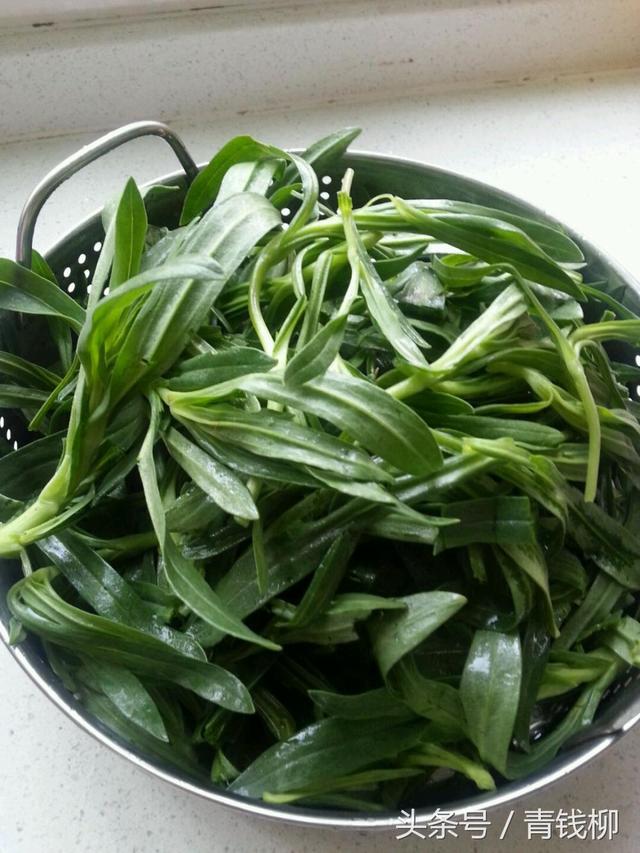
Balcony Soilless Cultivation Techniques for Noodle Vegetable
Using the balcony to grow vegetables and flowers not only decorates the home and beautifies the environment, but also enriches family life, adds specialty vegetables, and lets you eat safe vegetables - truly a measure that achieves multiple benefits at once. There are many kinds of vegetables and flowers suitable for balcony soilless cultivation; the choice should focus on specialty varieties and those that are easy to grow. Below is an introduction to balcony soilless cultivation of noodle vegetable.
Noodle vegetable, a type of wild vegetable, is one of the main weeds in wheat fields, commonly known as Mai Ping Cao, Mi Wa Guan, and Mai Jia Jia. Botanically it belongs to the Caryophyllaceae family. Its tender seedlings are called noodle vegetable and are mostly eaten steamed, though they can also be stir-fried, served cold with dressing, or made into soup, all with excellent flavor. In traditional Chinese medicine it is said to moisten the lungs and stop cough, cool the blood and stop bleeding, and can treat consumptive cough, nosebleed, vomiting blood and other conditions. Its growing environment is similar to that of wheat; it is a low-temperature, long-day plant, and artificial cultivation mainly uses the seedlings grown during the vegetative growth stage as the product.
Preparing the Soilless Substrate
There are many soilless substrate formulas; you can use locally available materials. Commonly used formulas include:
1. Peat soil : furnace slag at 4:6. Peat soil can be bought at a flower market, and furnace slag can be sifted honeycomb coal cinders.
2. Mushroom residue : corn stalks : vermiculite : coarse sand at 3:5:1:1. The corn stalks need to be crushed into 2-3 cm pieces and soaked through with water, then piled with the other substrates for fermentation. During fermentation, add 10 kg of disinfected chicken manure and 1-1.5 kg of diammonium phosphate and potassium sulfate per cubic meter of substrate. The fermentation period should be no less than 20 days, turning the pile once every 7 days.
3. Corn stalks : vermiculite : mushroom residue at 3:3:4.
4. Furnace slag : mushroom residue : sawdust at 3:5:2.
The technical indicators required for soilless cultivation substrate are: organic matter at 50%-60%, carbon-to-nitrogen ratio of 30, pH 5.8-6.4, total nutrient content 3-5 kg/sq m, with the three major elements nitrogen, phosphorus and potassium as the main indicators within the total nutrients.
Preparing Cultivation Equipment
Choose a flower pot with a slightly larger diameter or use a foam box, fill it with soilless substrate, and a thickness of no less than 15 cm is sufficient.
Sowing
First, soak the soilless substrate thoroughly with water, keeping the substrate moisture content at 60%-85%. Then sow the noodle vegetable by broadcasting, covering with 1-2 cm of substrate. Note that the noodle vegetable's suitable growing temperature is somewhat low, generally 15-20°C. After sowing and before emergence, keep daytime at 20-25°C, no higher than 25°C, and nighttime at 10-12°C; seedlings emerge in 5-6 days. Generally, summer is not suitable for sowing; the best sowing seasons are late autumn and early winter. Of course, indoor cultivation can regulate temperature for year-round growing.
Management
For indoor cultivation of noodle vegetable, before and after emergence, water frequently in small amounts or spray the bed surface with a watering can to keep the ground moist and prevent soil compaction from affecting emergence. At the same time, to promote emergence and uniform, strong seedlings, you can add 2% urea solution to the sprayed water, and the seedling growth effect will be very obvious. When the noodle vegetable enters the vigorous growth period, because of the relatively high planting density, it needs more water, so it should be watered frequently to ensure sufficient fertilizer and water supply for stem and leaf growth. When the seedlings grow to 2-3 true leaves, carry out the first topdressing, applying a nitrogen-phosphorus-potassium three-element compound fertilizer with the water, at a rate of 1.5 kg/sq m; after 10-15 days, carry out the second topdressing.
Harvesting
For indoor cultivation of noodle vegetable, about 40 days after emergence, when 10-16 leaves have grown, harvesting can begin gradually along with thinning. Generally, a small knife is used to pick the noodle vegetable. To increase yield and uniformity and extend the supply period, harvesting should follow the principle of taking the large and leaving the small, harvesting carefully and frequently, but this needs to be handled flexibly. Harvest once every 15-20 days, for a total of 3-4 harvests.