Detailed Explanation of Environmental Protection Facilities and Construction Requirements for Soilless Cultivation
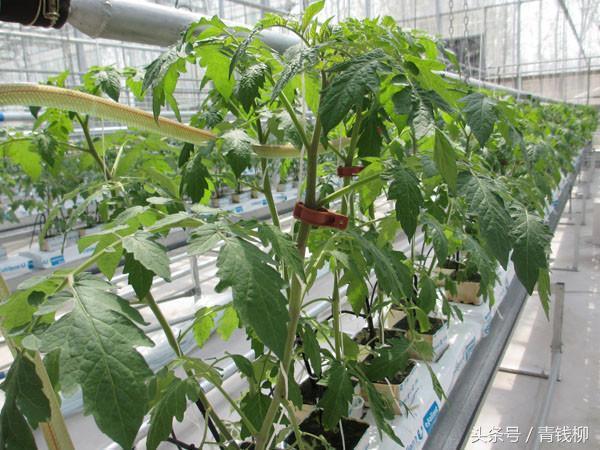
Environmental Protection Facilities and Construction Requirements for Soilless Cultivation
Soilless cultivation is an efficient technique within protected facility cultivation. Its higher yield, superior quality and greater efficiency compared with soil cultivation are due not only to the fact that soilless cultivation facilities themselves have the function of regulating the crop rhizosphere environment, but also to the need for supporting environmental protection facilities such as greenhouses and plastic tunnels, so that the above-ground growth conditions of the crops are in an optimal state just like those below ground. Commercial soilless cultivation is always carried out under conditions of comprehensive environmental regulation within protective facilities.
Soilless cultivation facilities themselves do not have the function of off-season and year-round production of vegetables, flowers and other crops; only when matched with protective facilities such as greenhouses and plastic tunnels can off-season cultivation or year-round supply be achieved, thereby raising the utilization rate of the facilities. Therefore, soilless cultivation facilities and greenhouse facilities are both closely related and two different kinds of facilities. [Jishan Huayao]
Modern agriculture, that is, factory-style agriculture, can create conditions suitable for crop growth such as temperature, humidity, carbon dioxide concentration and light within fixed facilities. In developed countries, the production facilities for soilless cultivation are mostly large multi-span glass greenhouses, which have a large operating scale and high production efficiency.
I.Types and Classification of Environmental Protection Facilities
At present, the environmental protection facilities commonly used for soilless cultivation in China mainly include solar greenhouses, plastic tunnels, modern greenhouses, rain shelters and shade nets. Plastic tunnels are applied on a large scale throughout the country, especially on a relatively large scale in the southern region, and in recent years they have been developing toward multi-span, taller and larger-scale designs; solar greenhouses are mainly promoted and applied in the northern
region at 33°-46° north latitude. In the severe cold regions at -15 to -20°C, they basically achieve winter production of thermophilic fruit vegetables without heating, writing a glorious chapter in the history of protected horticulture development in China; after the 1990s, large modern greenhouses were introduced from abroad, and through learning, digesting and absorbing them, domestically produced modern greenhouse facilities were researched and developed, promoting the scientific and technological progress of greenhouse horticulture and the modernization of agriculture in China, and providing huge space for the development of soilless cultivation technology; summer protective facilities such as rain shelters and shade nets played an important role during the high-temperature summer period, especially in the southern region, in overcoming the stress of disastrous climates and adverse environments such as high summer temperatures, rainstorms, typhoons and frequent diseases and insect pests, and provided a simple and effective new approach to alleviating the supply of horticultural products during the summer-autumn off-season in the southern region, extending the soilless cultivation season from winter and spring to summer and autumn. Because natural, climatic, economic, technical and labor conditions differ from place to place, the facility types, structural materials and scale vary, and selection and positioning should be adapted to local conditions.
Environmental protection facilities refer to a kind of cultivation facility in which the cultivation space is covered with light-transmitting covering materials for regulating environmental factors such as temperature, light, water and air, and which people can enter to operate. According to the different covering materials, they are usually divided into two major categories: glass greenhouses and plastic greenhouses; plastic greenhouses, according to the different covering materials, are further divided into rigid (PC board, FRA board, FRP board, composite board, etc.) plastic greenhouses and flexible plastic (PVC, PE, EVA film, etc.) greenhouses; according to shape they are divided into two categories: single-span and multi-span; according to the form of the roof, they are divided into double-slope roof, single-slope roof, unequal double-slope roof, arched roof and so on.
(1) Solar greenhouse
A solar greenhouse refers to a horticultural protective facility with walls on three sides, a ridge height above 2 m, a span of 6-8 m, and a heat source (including at night) that mainly relies on solar radiation energy. Most use plastic film as the light-transmitting covering material, with solar radiation as the heat source, and rely on maximum light interception, thickened walls and rear slope, as well as a series of lighting, heat-preservation and cold-protection devices such as cold-proof trenches, paper quilts and straw mats to achieve warming and heat preservation, thereby making full use of light and heat resources and weakening the influence of adverse meteorological factors. Generally no heating is carried out, or only a small amount of supplementary heating. Solar greenhouses mainly include forms such as the low rear wall with long rear slope solar greenhouse, the high rear wall with short rear slope solar greenhouse, the piano-string type solar greenhouse, the steel-bamboo hybrid structure solar greenhouse and the all-steel-frame pillarless solar greenhouse (Figure 4-4). The energy-saving solar greenhouse covered with plastic film is the main
form of vegetable protected cultivation facilities in northern China, with low investment and high efficiency, and is suited to the current technical and economic conditions of China's rural areas; it has obvious advantages in lighting performance, heat preservation, low energy consumption and practicality, and is a facility cultivation method that northern farming households are happy to apply, with its area continuously increasing year after year.
(2) Plastic tunnel
A large protective cultivation facility that uses only rods of bamboo, wood, cement or steel as the frame and covers the surface with plastic film is usually called a plastic film tunnel, or plastic tunnel for short. According to the shape of the tunnel roof, it is divided into two categories: arched and ridge-shaped, with arched roofs being the majority. According to the frame material, it can be divided into: bamboo-wood structure, steel frame (pipe) structure, steel-bamboo hybrid structure, concrete-steel frame structure, inflatable type and other types; according to the connection method, it can also be divided into single-span tunnels, double-span tunnels and multi-span tunnels. Plastic tunnels have a simple facility and generally no environmental regulation equipment, relying on natural light for production, and have developed rapidly in the warm southern regions.
At present, plastic tunnels mainly include bamboo-wood structure tunnels, suspended-beam hanging-column bamboo-wood arch frame tunnels, tie-bar hanging-column tunnels, pillarless steel frame tunnels and assembled galvanized thin-wall steel pipe tunnels (Figure 4-5) and other forms. Among them, the assembled galvanized thin-wall steel pipe tunnel has a relatively large internal space, no pillars and convenient operation, belongs to a nationally standardized product, has unified specifications, is convenient to assemble and disassemble, and is easy to cover with film, and is widely used in production.
Figure 4-4 Main forms of solar greenhouses(Unit: m)
1. Piano-string type solar greenhouse 2. Steel-bamboo hybrid structure solar greenhouse
3. Liaoshen Type I solar greenhouse 4. Improved Jiyou Type II energy-saving solar greenhouse
Figure 4-5 Main forms of plastic tunnels(Unit: m)
1. Suspended-beam hanging-column bamboo-wood arch frame tunnel 2. Tie-bar hanging-column tunnel
3. Pillarless steel frame tunnel 4. Assembled galvanized thin-wall steel pipe tunnel
(3) Modern greenhouse
A modern greenhouse is an advanced type of protected horticulture. A large greenhouse in which the environment inside the facility is automatically controlled by computer, is basically unaffected by disastrous weather and adverse environmental conditions under natural climatic conditions, and can carry out horticultural crop production year-round and around the clock. At present, the modern greenhouses introduced into China mainly include the Venlo type glass greenhouse (Figure 4-6) with multiple ridges, multiple spans and small roofs, researched and developed in the Netherlands and later popular throughout the world; the Richel plastic film greenhouse, a popular type researched and developed by the French company Richel; a full open type plastic greenhouse of arched multi-span roll-film design in which the top and side roof films can be rolled up from bottom to top for ventilation; and a full open type glass greenhouse (Future greenhouse) developed by the Italian company Serre Italia. Typical modern self-controlled greenhouses designed and manufactured domestically include: double-layer inflated multi-span plastic greenhouse, double-slope glass greenhouse, North China type large multi-span plastic greenhouse, South China type large multi-span plastic greenhouse, Jinding type multi-span greenhouse, LGP-732 type multi-span greenhouse, XA and GK series greenhouses, FRP (lightweight glass fiber reinforced plastic) multi-span greenhouse (Figure 4-7) and so on.
Figure 4-6 Dutch Venlo type glass greenhouse(Unit: mm)
Figure 4-7 Several configurations of multi-span greenhouses
1. Arched plastic multi-span greenhouse 2. Double-layer inflated plastic multi-span greenhouse 3. FRP multi-span greenhouse
(4) Plant factory
A plant factory refers to a production method in which, within a fully enclosed building facility like a factory, artificial light sources are used to achieve automated control of the environment and to carry out efficient, labor-saving and stable cultivation of plants. According to the different light sources, plant factories are divided into three categories: artificial lighting type, natural lighting type, and combined artificial and natural lighting type. It belongs to "controllable agriculture" and is the highest level of horticultural protective facilities, with its management fully mechanized and automated. Crops are soillessly cultivated and vertically planted within large facilities; changes in environmental factors are transmitted to a computer through sensors, and through computation the operation of various environmental regulation equipment and every link in production can be precisely controlled. The required temperature, humidity, light, water, fertilizer and air are all optimally configured according to the requirements of plant growth, and not only is computer monitoring and control fully adopted, but robots and mechanical hands are also used for fully enclosed production management, realizing assembly-line operations from sowing to harvest and completely freeing itself from the constraints of natural conditions. It achieves rational use of space and facilities, attains economic and efficient production, and realizes all-weather, season-free and pollution-free production. It has the characteristics of high integration, efficient production, high marketability and high input.
Here we introduce a medium-sized double-span glass greenhouse provided by the Japanese M-type Hydroponics Research Institute (Figure 4-8). It is 60 m long, 50 m wide and 4 m high, with each unit area being 3000 sq m. In terms of environmental control, indoor and outdoor sensors carry out monitoring, including a sunlight sensor (measuring sunshine duration), an outdoor temperature sensor and an indoor temperature sensor, and these sensors, together with a wind speed and wind direction sensor and a rainfall sensor, jointly control the opening and closing of skylights, side windows and thermal screens as well as the operation of heating and cooling supply units. Humidity sensors control the operation of fine mist sprayers and dehumidifiers. The supply of nutrient solution requires the aid of nutrient solution tank groups (4 of them) and water pumps. A conductivity meter, a pH meter, a liquid temperature sensor and a water level gauge control the nutrient solution composition, liquid temperature, pH value and balanced timed supply of solution. A carbon dioxide sensor is used to measure the carbon dioxide concentration in the greenhouse and transmit signals to a carbon dioxide generator to maintain the carbon dioxide concentration in the greenhouse. The above data are all input into an electronic computer, and various parameters are set according to the crop species being cultivated, realizing fully automated control. The similar greenhouse introduced into China is the soilless cultivation greenhouse of the Nanjing Institute of Vegetables.
Figure 4-8 M-type Hydroponics Research Institute soilless cultivation tomato double-span fully automatic computer-controlled greenhouse
1. Sunlight sensor 2. Temperature sensor 3. Skylight and opening device 4. Mist spray humidifying device 5. Side window and opening device 6. Outdoor air temperature sensor 7. Rainfall sensor 8. Wind direction and wind speed sensor 9. CO2 sensor 10. Humidifying unit 11. Computer control cabinet 12. Nutrient solution pump 13. Four fertilizer solution tanks 14. Nutrient solution tank 15. Heating and cooling air control 16. Room temperature sensor 17. CO2 generator 18. Nutrient solution heating device
(5) Rain shelter and shade net installation
Summer has a lot of rain and is prone to strong light exposure and high temperature stress, with frequent diseases and insect pests, which inhibits the growth of vegetables and other crops and makes production unreliable. Using the tunnel frame and covering only the top screen (sky screen) while removing the side film (skirt screen) allows rain protection in summer while providing ventilation on all sides; this is the simplest rain shelter cultivation. If a silver-gray or black shade net is then covered over the top screen, strong light exposure can be weakened, causing the substrate temperature inside the tunnel to drop by 8-12°C at midday in summer, effectively reducing the harm of high temperature, and enabling off-season cultivation of leafy vegetables and root vegetables in summer. As summer auxiliary facilities for other protective facilities, the existence of shade nets and rain shelters enables plastic tunnels and solar greenhouses to also carry out soilless cultivation in summer. Over-summer rain-sheltered cultivation of tomatoes, cucumbers, melons, lettuce, spinach and so on, which are difficult to cultivate in summer, has become a reality.
II. Structure and Performance of Main Environmental Protection Facilities
(1) Solar greenhouse
1. Structure of the solar greenhouse The solar greenhouse belongs to the single-slope-roof greenhouse, commonly known as the "winter-warm tunnel", and is the largest protected production facility in the area north of the Huaihe River in China. The frame of the solar greenhouse consists of the rear wall, rear slope, front roof and two gable walls. The length, width, size, thickness and materials of each part determine its lighting and heat preservation performance, and the overall requirements are good lighting, good heat preservation, low cost, easy operation and high efficiency. Table 4-7 shows the structural parameters of common solar greenhouses in China.
Table 4-7 Structural parameters of the main types of solar greenhouses in China(Unit: m)
Table 4-8 Horizontal distribution of light intensity inside different types of solar greenhouses
The basic structure of the solar greenhouse generally adopts an orientation facing south with the length running east-west, having a relatively large light-receiving surface and light-entry angle, and using solar energy as the main energy source of the greenhouse. To improve heat preservation, the north side and the east and west gable walls of the solar greenhouse can adopt a hollow wall structure, and the rear roof can also be built as a heat-preserving structure from multiple layers of composite materials. First-generation solar greenhouses were mostly built from bamboo, wood and earth walls, with a relatively low cost and internal pillars (front pillars, middle pillars and rear pillars), generally one row every 3 m, which is called one bay. Second-generation solar greenhouses are mostly built from steel and brick walls, with no internal pillars, enlarged space, better operability, a firm structure, improved wind and snow resistance compared with the first generation, and a longer service life; the construction cost is higher, but the depreciation cost is lower. There are also various forms such as steel-bamboo hybrid structures and GRC frame structures.
2. Performance of the solar greenhouse The characteristics of the solar greenhouse are mainly reflected in heat preservation. Structurally, less light enters than in a plastic tunnel, especially less scattered light entering the interior, and the indoor light distribution is uneven, stronger on the south side and noticeably lower on the north side (Table 4-8); at the same time, the covering of heat-preserving straw curtains affects the light exposure time, and in winter can reduce the light exposure time by more than 2-3 h/d. The straw curtains are generally covered when the temperature drops to around 18°C (around 16:00) and are uncovered around 8:30 the next morning; the minimum temperature can be maintained at 8-13°C, with an average cooling rate of 0.4-0.6°C/h, far lower than the cooling rate of a plastic tunnel (1°C/h), making the daily temperature difference in the solar greenhouse significantly lower than that in the tunnel, with the minimum temperature greatly raised (5-8°C), and the crop growth period can be advanced (spring) or delayed (autumn) by 35-45 d each compared with plastic tunnels. The humidity inside the solar greenhouse is similar to that in a plastic tunnel; because the volume is small, the air temperature and humidity are greatly affected by changes in radiation, and during the rapid warming stage in the morning the humidity drops rapidly, even to around 15%, while during the rapid cooling stage in the afternoon the relative humidity rises rapidly, exceeding 80% around 16:00; on evenings when the temperature drops rapidly, fog often forms indoors and condenses on the plants, inducing disease occurrence, which is also one of the important reasons why diseases are severe in solar greenhouses and plastic tunnels and why pollution-free production is difficult to achieve. At the same time, because the indoor temperature distribution is uneven, there is a certain local humidity difference, and the south side, which loses heat faster, has higher humidity in the morning and evening.
In soilless cultivation, substrate cultivation of fruit vegetables is more common, but low solar greenhouses have limited space for crop growth, which affects the growth of large-sized crops.
(2) Plastic tunnel
1. Structure of the plastic tunnel The structure of the plastic tunnel is relatively simple. The frame mainly includes arch frames, longitudinal beams, columns, gable columns, frame connection clamps and doors, and because the construction materials differ, the structure of the frame components also differs. The arch frame is the main component of the plastic tunnel that bears wind and snow loads and supports weight; according to the different construction, arch frames mainly have two forms: single-rod type and truss type; the longitudinal beam is the component that ensures the longitudinal stability of the arch frames and connects the arch frames into a whole, and longitudinal beams also have two forms: single-rod type and lattice type; if the cross-section of the arch frame material is relatively small and insufficient to bear wind and snow loads, or the span of the arch frame is relatively large and the structural strength of the tunnel body is insufficient, then columns need to be set inside the tunnel to directly support the arch frames and longitudinal beams, so as to improve the overall load-bearing capacity of the plastic tunnel; gable columns are the tunnel-end columns, commonly upright type, while in windy and strongly windy areas the round-arch type and diagonal-brace type are suitable; the connections between the frame components of the plastic tunnel, such as between the arch frame and the gable columns, between arch frames, and between the longitudinal beams and the tunnel-end arch frames, are fixed, except that bamboo-wood structure plastic tunnels use cord and wire binding, while assembled galvanized steel pipe structure plastic tunnels and steel bar-glass fiber reinforced cement structure plastic tunnels are connected by specially prefabricated clamps; the door of the plastic tunnel is both the entrance and exit for management and transport and can also serve as a ventilation opening. The door of a single-span tunnel is generally set at the center of the tunnel end. For heat preservation, the tunnel door can be opened at the south end; after the temperature rises, to strengthen ventilation, another door can be opened at the north end. The forms of the tunnel door include hinged doors, hanging-rail sliding doors and so on. As a plastic tunnel for soilless cultivation, it should have a firm structure, strong wind and snow resistance, a certain growth space and a relatively large area, and at the same time be easy to ventilate and carry out environmental regulation. Generally, a steel structure tunnel with no pillars or few pillars is preferable, with a span of 8-12 m, a length of 40-60 m and a ridge height between 2.4 and 3.0 m. At present, assembled galvanized thin-wall steel pipe tunnels are the most common.
Plastic tunnels already had standardized products in the 1980s, mainly including the GP series developed by the China Agricultural Engineering Design Institute and the PGP and other series developed by the Shijiazhuang Institute of Agricultural Modernization, Chinese Academy of Sciences. The main product specifications are shown in Table 4-9.
2. Performance of the plastic tunnel The plastic tunnel is characterized by being covered with plastic film and has the features of good lighting, uniform light distribution, easy entry of shortwave radiation while longwave radiation is relatively difficult to pass through, and good airtightness.
(1) Light The vertical light intensity inside the tunnel gradually decreases from high to low, with the lowest near the ground. As for the horizontal light intensity inside the tunnel, a tunnel extending north-south is relatively uniform, while in a tunnel extending east-west the south side is higher than the middle and the north side. A single-span steel and rigid plastic structure tunnel receives light better, while a single-span bamboo-wood structure tunnel and a multi-span tunnel have poorer light conditions. In addition, the larger the span of the tunnel and the higher the frame, the weaker the light inside the tunnel.
(2) Temperature In clear weather, the temperature rises rapidly during the day and there is also a certain heat preservation effect at night. Even so, because of the lack of nighttime heating measures, there are obvious daily and seasonal temperature changes, and because of the lack of necessary environmental regulation equipment, most only regulate temperature and humidity changes through ventilation windows, so the environmental factors inside vary widely. On sunny days, 1-2 h after the sun comes out, the rapid warming period begins, and after 8-10 h the linear warming period begins, with the temperature rising 5-8°C per hour; from 11:00 to 13:00 the warming rate gradually slows and reaches the maximum temperature, which can be more than 20°C higher than in the open field, and then begins to decline; after 15:00-17:00 it enters the rapid cooling stage, with an average cooling rate of 5-6°C per hour; as the temperature difference between inside and outside narrows, the nighttime cooling rate rapidly becomes smaller, about 1°C/h, and by midnight the room temperature is only 3-5°C higher than in the open field. Sometimes the indoor temperature is even lower than the outside temperature, which is called an "inversion phenomenon", and inversion phenomena mostly occur in early spring or late autumn, on clear and slightly windy early mornings.
(3) Humidity Because the film has good airtightness, the humidity inside the tunnel is obviously greater than in the open field, increasing by 35-40% on a daily average (Table 4-10). In the northern regions with four distinct seasons, because the low-temperature period in winter is long and the usable time is limited (only about 1 month earlier or later than the open field), the development of plastic tunnels is relatively slow, while they are used more in the warm southern regions or areas with a mild climate. In soilless cultivation, substrate cultivation mainly focuses on fruit vegetables with a longer growth period, while hydroponics mostly produces leafy vegetables with fast growth and a short cycle.
Table 4-9 Specification table of GP and PGP series plastic tunnel frames
Table 4-10 Daily variation of air humidity inside and outside the tunnel
(3) Modern greenhouse
A modern greenhouse can achieve comprehensive control of various environmental factors to meet the requirements for suitable crop growth and development. Plastic tunnels and solar greenhouses can be said to be protective facility forms that "utilize nature", while modern greenhouses are protective facility forms that "create nature". In addition to the relatively large main structure, the interior has various environmental regulation equipment, including a heating system, heat preservation system, cooling system, humidifying or dehumidifying system, CO2 application system, forced ventilation system and natural ventilation system, supplementary lighting or shading system, fertilizer and water supply system, drainage and rainwater collection system, protection system (insect-proof net, snow removal equipment), weather station, power system, control system and so on. Because the composition of the systems differs and the equipment selection differs, the construction cost varies greatly. Expanding the scale of the greenhouse is the main way to reduce the equipment cost per unit area, and making single-span greenhouses into multi-span ones is an effective way to expand the greenhouse scale; large-scale development is the trend for greenhouses.
Modern greenhouses mostly have a service life of 20-50 years, mostly use hot-dip galvanized steel or aluminum profiles as structural materials and concrete as foundation material, and adopt truss structures. They generally run east-west with the length extending north-south, giving a large light-receiving area and more light entry in winter; while running north-south with the length extending east-west gives uniform indoor temperature and light. Because different countries and different regions have different climatic characteristics, especially different disastrous weather conditions such as wind, snow and hail, there are relatively large differences in greenhouse design. The greenhouse structures produced by different countries and some domestic manufacturers are shown in Table 4-11.
Modern greenhouses generally have a relatively large building area and strong environmental regulation capacity, but their indoor ventilation and summer cooling capacity are relatively low. Research shows that when the total span of a greenhouse exceeds 40 m, a high-temperature "closed" zone appears in the middle, affecting CO2 transport and plant growth; therefore, forced ventilation equipment or micro-spray systems and cooling systems (shading or misting) need to be added. In addition, large multi-span greenhouses find it difficult to implement external insulation, cool rapidly at night, and consume much energy for heating in winter, so internal insulation systems are often used for energy saving. In the cultivation of flowers and some fruit vegetables, light regulation is needed to adjust the flowering period, so supplementary lighting equipment should be added to the greenhouse. To control disease occurrence, the ground needs to be covered with film to reduce air humidity, and in soilless cultivation the ground is often hardened, which leads to a lack of CO2 sources, so it must be supplied through CO2 generators to meet the needs of photosynthesis. To prevent insect pests from invading, insect-proof nets (nylon nets of about 30 mesh) should be installed at the greenhouse ventilation openings and entrances and exits. To maintain a long-term stable environment, ventilation, humidity regulation and heating systems with matching power also need to be installed. Comprehensive environmental regulation is a complex systems engineering task, and manual control and mechanical control are difficult to meet the requirements of economic production; computer control systems are the main form adopted by modern greenhouses.
Table 4-11 Greenhouse structural specifications produced by some domestic and foreign manufacturers
The equipment of modern greenhouses is relatively complete, and the greenhouse environmental factors can be controlled according to the requirements of crop growth and development, achieving year-round production and enabling greenhouse crop production to maintain stable, high and high-quality yields. However, the construction cost of greenhouses is relatively high, and combining them with soilless cultivation technology can better bring out the production efficiency of greenhouse facilities; they are the main site for the development of soilless cultivation.
III. Overall Requirements for Constructing Solar Greenhouses for Soilless Cultivation
1. When selecting the site for greenhouse construction, in addition to paying attention to comprehensive conditions, the convenience of irrigation and drainage should be considered, and special attention should be paid to the flow direction and treatment of disinfectant liquids to avoid causing public harm.
2. When building the greenhouse, in addition to paying attention to lighting and heat preservation performance, there should also be good ventilation conditions, preferably with cooling facilities.
3. When determining the height, span and orientation of the greenhouse, it should be determined according to the method of nutrient solution cultivation. A greenhouse for nutrient solution seedling raising can adopt an east-west orientation with the light-transmitting surface facing south; to facilitate multi-layer shelf seedling raising, the greenhouse height can be appropriately increased or a semi-underground type can be adopted (60-80 cm below ground level). For nutrient solution cultivation in plastic tunnels, it is still better to run north-south, and the span size should be comprehensively considered according to the design requirements of the cultivation bed and factors such as building materials.
4. The design of the facility must pay attention to strengthening the greenhouse effect and optimizing the tunnel structure so that it can absorb, accumulate and utilize solar radiation energy as much as possible. In the region of 35°-40° north latitude, the solar greenhouse should face due south, and the lighting angle should not be less than 25°. To reduce the loss rate from light reflection, the front roof is best built as a spherical surface with a ratio of rise to span greater than or equal to 0.4663, and the three walls are best made of heat-insulating materials or thick earth layers to facilitate heat preservation. Plastic tunnels should run north-south, with a ratio of rise to span of about 0.3, and should use heat-preserving tunnel film and be covered with heat-preserving paper quilts, straw mats, cotton quilts and the like. In addition, facilities for nutrient solution cultivation are generally fixed, so the greenhouse or tunnel should also be fixed. This is because nutrient solution cultivation generally does not have continuous cropping obstacles like soil cultivation, such as soil salt accumulation and increased soil-borne infectious diseases, which is advantageous for the use of fixed facilities.