The Complete Guide to Plant Feng Shui: How to Tell Auspicious Plants from Inauspicious Ones
Whether a plant is auspicious or inauspicious, good or bad, cannot be judged by one blanket rule when it comes to people.
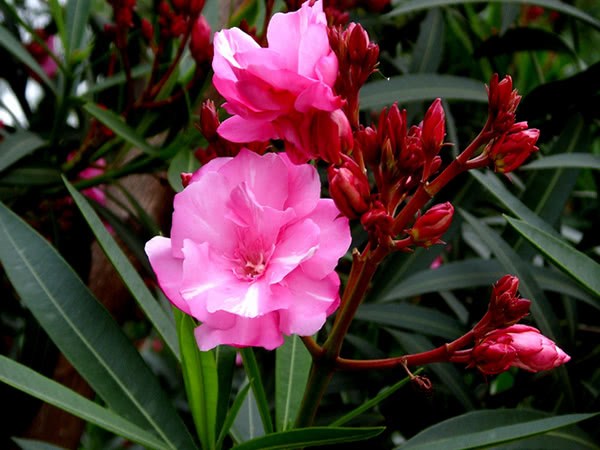
Oleander (Nerium oleander)
Some plants are not suitable for growing in the home environment, but in certain specific settings they can work wonders. For example, everyone knows oleander is toxic and should not be planted at one's own front door, but when used for highway landscaping it has an excellent effect on absorbing toxins and blocking dust.
Alocasia (Alocasia macrorrhizos)
So the auspicious and inauspicious classification in this article refers only to the home and courtyard environment.
So how do you tell auspicious plants from inauspicious ones in the home environment? There are the following common standards:
Datura (Datura stramonium)
1. Whether it is toxic.Plant toxicity falls into three types.
First, toxic if eaten by mistake.With strongly toxic plants, once eaten by mistake, life may be in danger, like poisonous mushrooms. With the more common ones, eating them by mistake causes symptoms such as chest tightness, numbness and vomiting. Plants like Alocasia, narcissus, datura and oleander must never be eaten.
Narcissus
Second, toxic through contact with the sap.This kind of poisoning directly irritates the skin; the sap causes uncomfortable reactions such as redness, swelling and stinging. This type of toxicity generally comes and goes quickly and has little effect on adults, but special caution is needed with young children and even infants whose immunity is lower. For example, pothos, Chinese evergreen, Alocasia, narcissus and the like should not be rubbed on the body.
Chinese evergreen (Aglaonema)
Third, toxic through smell.Some plants release oxygen during the day but compete with people for oxygen at night; some plants release toxic gases, and after sleeping a night you feel mentally numb. Plants like datura, night-blooming cestrum and tulip must absolutely not be placed in the bedroom.
Night-blooming cestrum (tuberose)
2. Look at appearance.Plants whose appearance is not dignified and well-formed, or whose growth is abnormal, are inauspicious. In the home environment, dead or withered plants are taboo; once such a plant is found, it should be moved away as soon as possible.
Tulip
3. Look at symbolic meaning.Businesspeople like to grow money tree at home, because it symbolizes "bringing in wealth"; scholars love to grow bamboo, because it symbolizes "rising higher step by step"; but generally no one grows cypress at home, because cypress is generally used in cemeteries - that is the reasoning.
Money tree (Pachira aquatica)