How to Propagate Roses from Cuttings? A Detailed Guide to the Practical Key Techniques
Rose Cutting Propagation Techniques
Roses combine ornamental, medicinal and culinary uses, with effects of refreshing the mind and soothing the spleen, promoting blood circulation and removing blood stasis, and beautifying the appearance, and they have remarkable effects on treating cardiovascular and cerebrovascular diseases. As people's living standards improve, the market demand for roses is growing larger and larger, and especially in recent years a situation of supply falling short of demand has appeared.
Existing rose planting methods include sowing, cutting, grafting, layering and division, with cutting being the main method. It uses leafy rose branches treated with growth hormones and then inserted into sandy soil, but existing methods have problems such as a relatively low survival rate.
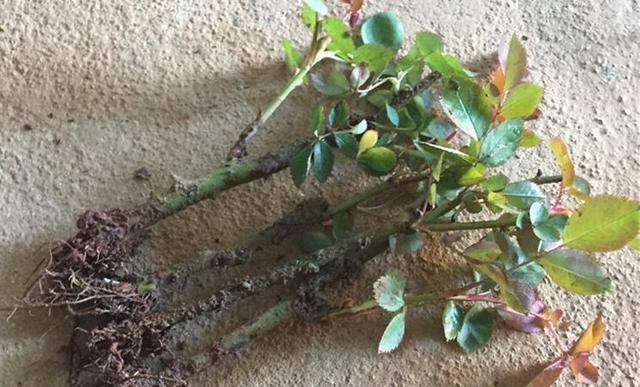
Thisseedling raisingmethod of rose cutting propagation can form callus in 7-10 days, take root in 10-15 days, and reach a root length of 1-3cm in 18-25 days, with a survival rate as high as over 85%.
1. Collect rose branches from mid-February to mid-March, cut the cuttings diagonally, leave 4 buds on each cutting, with the topmost bud 1.5cm from the top cut, and the cutting length is 30cm;
2. Soak the cut ends in a potassium permanganate solution with a mass percent concentration of 0.2% for 10 minutes to obtain treated cuttings; [Jishan Huayao]
3. The nutrient substrate is made from the following raw materials in parts by weight: 20 parts peat, 20 parts perlite, 10 parts vermiculite and 20 parts perlite. Disinfect the nutrient substrate with a KMnO4 solution with a mass percent concentration of 0.5%, then put it into a cutting container, and the height of the nutrient substrate accounts for 2/3 of the height of the cutting container;
4. Insert the treated cuttings obtained in step (2) into the nutrient substrate in the cutting container to a depth of 5cm, water thoroughly, and place them in a plastic film arched shed, with a double-layer shade net covering the arched shed, a temperature inside the arched shed of 25°C, an air humidity of 45%, and a soil pH of 5.5.