Detailed Explanation of the Key Techniques for Raising Wufu Persimmon Seedlings
Wufu Persimmon Seedling Raising Techniques
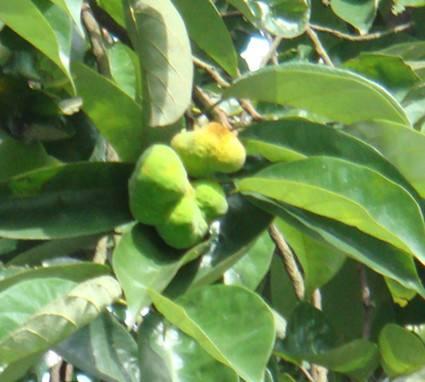
Wufu persimmon, botanical name Beijing persimmon, originated in Beijing. Its fruit surface has five protrusions, hence the name Wufu persimmon. At present, only two Wufu persimmon trees remain in China. One grows in Beijing, planted inside Yonghe Temple, the largest Tibetan Buddhist temple in Beijing, but this one no longer flowers; the other was brought from Beijing to the south in the 60th year of the Kangxi reign by Mr. Hui Shiqi, teacher of Emperor Qianlong, and planted at Nanyan Ancient Temple in Puning, Guangdong. It has now stood for nearly three hundred years. During the Great Leap Forward steelmaking campaign in 1958, half of the trunk of the Wufu persimmon tree at Nanyan Ancient Temple was split off with an axe and it narrowly escaped destruction; axe marks remain on the trunk to this day. As the ancient Wufu persimmon tree ages, the species is at risk of extinction.
In the 1960s, experts from the Guangdong Academy of Agricultural Sciences were stationed at Nanyan Ancient Temple in an attempt to propagate Wufu persimmon. However, after exhausting every method, the final result of the experiments was this: Wufu persimmon seeds were difficult to propagate, cuttings would not root, and grafting could not survive. The research activity ultimately ended in failure. Afterwards, agricultural science personnel at various levels also tried aerial seedling raising and cell tissue culture to breed Wufu persimmon seedlings, all of which were declared failures. Therefore, choosing a suitable method to propagate Wufu persimmon seedlings is extremely urgent and crucial.
The aim is to overcome the problem in the above-mentioned prior art that Wufu persimmon seedlings are difficult to propagate, and to provide a Wufu persimmon seedlingraising technique。
1. In the Wufu persimmon maturity season (around mid-August), pick plump, well-developed fruits. After washing and disinfecting them, place them in a 20°C controlled-temperature room; when the fruit peel turns from green to yellow, take the seeds out of the fruit, bury them in wet sand for 3 days, then take them out and soak them in a 300-fold dilution of 50% carbendazim wettable powder for disinfection. After ten minutes, remove them.
2. Collect the flesh of the Wufu persimmon fruit. Weigh sucrose, flesh, and water at a ratio of 1:1.5:8, put them into a glass container, add probiotics at 0.1% by weight, then seal it, and place it in a 25°C controlled-temperature room for three days to make fruit enzyme. Finally, filter the fruit residue out of the fruit enzyme, and mix the fruit residue with humus soil at a ratio of 1:12 to make nutrient soil.
3. Put the seeds treated in step 1 into the fruit enzyme with the fruit residue filtered out. After soaking for 24 h, remove them, sprinkle them on the nutrient soil, and cover the seeds with a layer of wet sand.
4. Continue to seal the fruit enzyme that soaked the seeds in step S3 in the glass container. When watering the seeds, pour out the fruit enzyme and mix it with water at a ratio of 1:20 for spraying, once a day.
5. When the seeds begin to germinate (about two weeks later) [Jishan Huayao], adjust the mixing ratio of fruit enzyme to water to 1:10 and spray twice a day; when the Wufu persimmon seedlings have rooted and grown to five leaves, transplant the seedlings into pots or set them out in the field.