Summer is the perfect time to plant rain lilies, so why not plant a pot of them
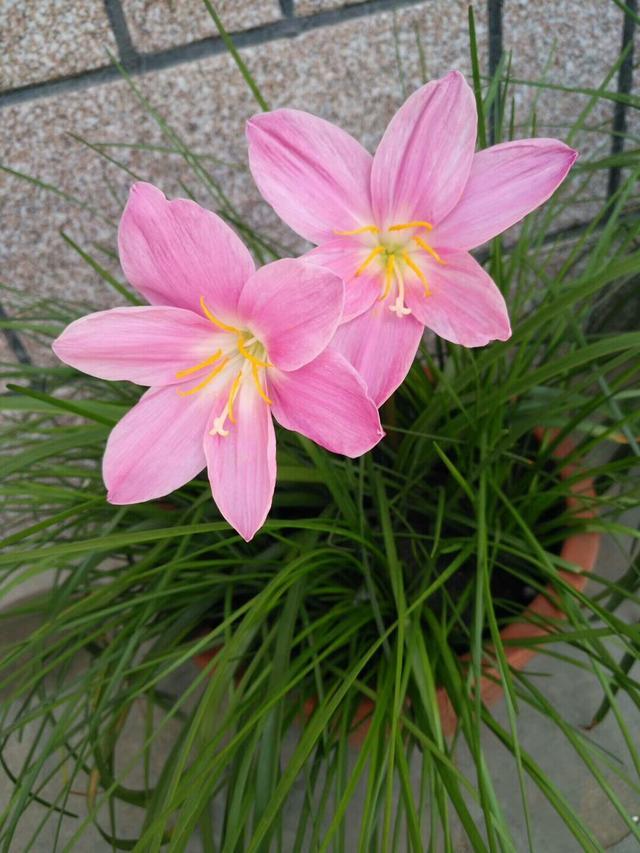
Flowers need not be expensive, just beautiful to bring joy. They bloom without a fixed schedule, fragrant in summer. An obscure, ordinary flower, smiling to welcome wind and rain, then bursting into bloom afterward.
The scientific name of the rain lily should be jiu lan (Zephyranthes carinata) or cong lan (Zephyranthes candida). The one named jiu lan is well known, its leaves shaped like chives, its flowers pink; the one named cong lan has leaves like scallions, its flowers pure white.
Both jiu lan and cong lan are rain lilies. They often burst into bloom suddenly after heavy rain in spring and summer, and that is how they got their name.
Rain lilies are extremely easy to care for. Just plant them in sandy soil and they will survive, and the small bulbs multiply very vigorously. Plant a few in spring, and by autumn the pot will be bursting full. Repot the following spring and you can divide the clumps, turning one pot into two, two pots into four, multiplying endlessly.
After rain lilies bloom in summer, their leaves wither on their own in late autumn and early winter. Simply keep the potted bulbs indoors and they will overwinter safely; repot, change the soil, divide and replant in spring, and they will sprout and bloom.
Although the rain lily is called a "lan" (orchid), it does not actually belong to the orchid family. There are many such cases, such as junzi lan (clivia), zhizhu lan (spider lily), cong lan, xiezhao lan (Christmas cactus), jian lan (gladiolus), mi lan (Aglaia odorata), and diao lan (spider plant). People give them all the title "lan," but they are not true sisters of the orchid family.
Rain lilies are not very demanding about water and fertilizer. Even when the potting soil is extremely dry, the plants can still grow, and they need no heavy fertilizer. Add some organic fertilizer when planting, and you need not top-dress afterward; if you apply a nitrogen-phosphorus-potassium fertilizer once every three months, the plants will grow even better and bloom even more brilliantly.
Rain lilies are rather fond of light, so potted plants should be placed in a spot with ample sunlight. Insufficient light affects flower growth and is unfavorable for the growth of the bulblets. The suitable growing temperature is between 22-30°C.
In short, rain lilies grow robustly, and once planted they are almost in a state of wild, untended growth.
To save yourself some worry and add a bit more beauty to summer, plant a pot of rain lilies!