Pomegranate bonsai pruning appreciation: these few pots fully show the skill of an expert
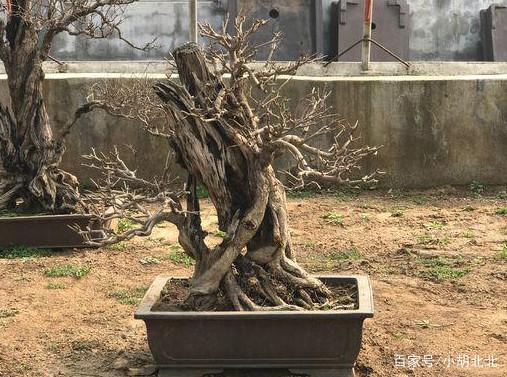
Pomegranate 1-year-old new shoots 2-3, spring shoots many, summer shoots few, autumn shoots few. Flowering branches sprout from last year's fruiting wood. The terminal bud of the parent branch is relatively plump, and some lateral buds below the terminal bud are very full; the primordia of branches and leaves are all in the buds, as are the primordia of the flower organs. After bud break, the flower buds can bloom, so the buds are called mixed buds. Do not cut them short in late autumn or early spring of this year. Otherwise, the mixed buds will be cut off and will not bloom.
When a new branch does not bloom in one year, some of the new branches stop growing, and the terminal bud and several lateral buds begin to differentiate into mixed buds; this forms the fruiting of the parent branch and prepares for the next year. Such fruiting wood should be kept as much as possible rather than cut off. When nutrients are insufficient, some new lateral branches grow to a certain extent, then stop growing and do not form terminal buds; the cluster of leaves at the tip of the branch often interferes with the shape of the tree and affects ventilation. In the three seasons of summer and autumn, two branches and three branches cannot stop, but they cannot form mixed buds. They cannot produce fruiting branches in the coming year. Therefore, they are called long branches. New fruiting wood is produced each year to prepare parent branches.
In addition to the above 3 types of branches, some branches of the pomegranate tree also grow into thorns, with no terminal buds and no lateral buds. These branches are very short; if they are not too dense, they should be kept as auxiliary branches, using their dense leaves for photosynthesis and to produce more nutrients. If this branch is too dense, some branches can be thinned out to facilitate ventilation and light penetration.
The entire pomegranate plant is naturally shaped, because the inner space is empty and ventilation is good. Therefore, according to the above pruning method, a natural happy shape is gradually formed. After pruning, prune dead branches, weak branches, long branches, dense branches and basal branches. Because pomegranate has reliable fruit set on spring shoots, short-branch pruning is generally not suitable, and no shaping is needed.