Master clematis growing techniques and your balcony can also be covered in blooms
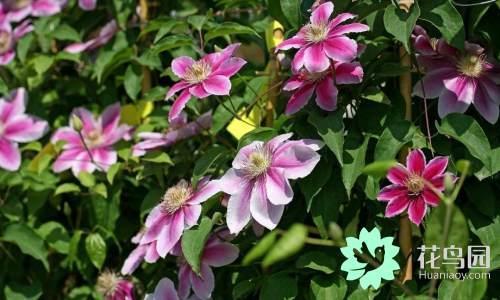
Clematis is an ornamental flowering plant with many varieties and flower colors, and its blooming period is generally in spring and autumn, making it very good for home decoration and display. Today we will look at clematis growing techniques, and share what should be noted if you want to grow clematis at home.
1. Selecting clematis
Choosing the clematis to grow is a very important part. First, you should choose the type well. Some types are relatively delicate and harder to keep alive, so for beginners this is undoubtedly a challenge, which means you should choose carefully. Pick some relatively vigorous types to try growing first, then gradually try those difficult-to-grow types.
2. Choosing the soil for planting
The two most important points when choosing soil for growing clematis are breathability and moisture retention, so if you want to check whether the soil is suitable for growing clematis, you can judge by how water moves through it. If the water poured in can be absorbed by the potting soil very quickly, this shows that the potting soil is good. If clematis is planted in spring, it should be planted shallowly, because the air humidity in spring is relatively heavy, and roots floating on the surface of the potting soil can better absorb moisture from the air.
To prevent bacteria from attacking the roots on the surface, you can cover the potting soil with some crushed ceramic stone. This not only improves the appearance of the potting soil but also provides protection, but you must not put too much, otherwise the spring heat and dampness will instead harm the roots. By autumn, clematis should be repotted and the soil turned, and at this time you can change it to deep planting and place some base fertilizer at the bottom of the potting soil. This allows the roots to grow roots in multiple layers, promotes plant growth, and also helps wilted clematis recover growth faster.
3. Pruning methods
There are no fixed rules for pruning clematis. Overall, pruning is generally done after flowering. As long as you do not need to save seeds, you can cut off the branches below the flowers for cuttings. In winter, clematis enters a dormant state, so pruning should be done before it goes dormant to avoid harming the clematis during dormancy. For young clematis seedlings, you can cut them flat at soil level. For large clematis plants, the branches need to keep strong stems, and weak, thin branches should all be pruned away to avoid dividing the nutrients.