Household ivy always turning yellow and dropping leaves? Bury this in the soil, and its branches will grow and leaves will flourish with a glossy shine.
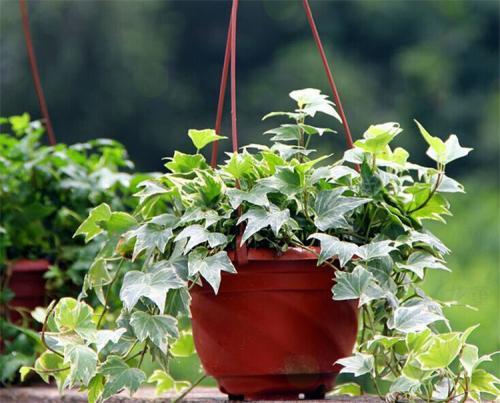
Ivy has dense branches and leaves and tolerates pruning, making it suitable for any shape you like. It stays evergreen all year round and is a climbing foliage plant with great ornamental value, deeply loved by flower growers.
Some flower growers report that their ivy leaves often turn yellow and drop, leaving only bare branches. Today, Huar will share with everyone some tips for caring for ivy.
The causes of this are mostly related to fertilizer, light and watering:
1. Fertilizer
Ivy needs relatively more fertilizer during its growing period, but you should not apply too much nitrogen fertilizer just to make it grow, as this will cause leggy growth and reduce its ornamental value. If it lacks fertilizer, it will stop growing and develop yellowing and leaf drop. Each month you can give it one application of diluted, decomposed cake fertilizer water, then dig a few small holes at equal spacing around the edge of the pot soil, about 3-5 holes, and bury 2-3g of bone meal in each hole, which is even better for keeping the leaves green and glossy.
Note that these two fertilizer applications must not be done at the same time; there should be at least ten days between them, otherwise the fertilizer and water will be too abundant and speed up stem growth, affecting the plant's form.
2. Light
Ivy prefers a semi-shaded environment. Under strong direct sunlight, the leaves will turn yellow and fall off, and in more serious cases the branches may even dry up. Especially as summer approaches, you must shade it even more. You can move it to a south-facing balcony, an east-facing windowsill or another place with more scattered light. Note one thing: if it is a variegated variety of ivy, light that is too strong or too weak will make the variegation disappear and turn green, so adjust the light intensity according to the actual situation.
3. Watering
Ivy likes a warm and humid environment. When water is insufficient, the leaves will turn yellow, dry up and fall off. You need to ensure a long-term water supply and keep the pot soil moist. Especially in summer, besides watering frequently, you should also spray some water mist on the leaves and around them every day to increase humidity and make the leaves glossier.
Besides these 3 points that can cause ivy leaves to turn yellow and drop, there is also the natural phenomenon of some ivy branches aging. So prune it irregularly, cutting away messy branches, weak branches and old branches to reduce excessive consumption of nutrients and promote the sprouting of new buds and the growth of side buds.
That is all for ivy care. If flower growers have other additions, you can share them with everyone in the comment section below. If you want to learn more about flower growing, you can follow Huajianke.