How to care for a pomegranate bonsai in winter? These key points you need to master
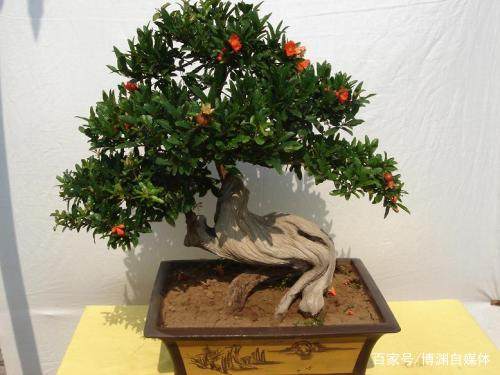
The pomegranate is a deciduous fruit tree. To keep a pomegranate bonsai growing, flowering and fruiting normally, it must shed its leaves and go dormant in winter, just as people must sleep in order to work better the next day. The main producing areas of the pomegranate tree are Shaanxi, Jiangsu, Anhui, Zhejiang, Beijing and other provinces and municipalities, and it is now cultivated in most regions. In the south, in places such as Yunnan and Guangzhou, plants grown outdoors generally do not shed their leaves. They belong to the evergreen fruit trees. However, snow in the south in winter has become common recently. After a severe snow disaster, leaf drop is also normal. It is the plant's self-protection; shedding leaves reduces the harm done to the plant itself. Homes in the south have almost no heating indoors, and even when it is cold the temperature is only 5-8 degrees. Winter light is rather weak, and with prolonged low temperatures, indoor-grown plants will shed their leaves.
In Beijing, Hebei and other places, when pomegranate trees are grown outdoors, by the time winter temperatures reach zero degrees their leaves have basically all fallen. It is a deciduous small shrub or tree. But with today's home cultivation, heated rooms in winter stay at an almost constant 20-28 degrees. Those who are especially keen on flowers even build winter greenhouses for them. There are also specialized greenhouses and plastic tunnels for cultivating pomegranate bonsai. In such an environment, the pomegranate bonsai will not shed its leaves and will keep growing. Around the Spring Festival in winter, plants with fruit are still brought to market. Relatively speaking, in such an environment, woody flowering plants and trees have their normal dormancy broken, and their flowering and fruiting times become inconsistent. They will not flower at a fixed time between April and July. The fruit sets and ripens between September and October.
Winter care for a pomegranate bonsai is very simple; it favors stillness over activity. You only need to place it outdoors in a sheltered, sunny spot (with a minimum temperature not lower than -15°C) or indoors in a bright, well-ventilated place (it must not be placed in a draft) for care. When overwintering indoors, the temperature should preferably not be higher than 10°C, so that it cannot enter dormancy normally and consume nutrients. Depending on how dry the air is, water once every ten days to half a month. Keep the potting soil on the dry side but not excessively dry; do not water until it is dry, water thoroughly when you do, and never give a half watering. In winter the pomegranate bonsai is in a dormant state, its growth is basically at a standstill, and it is generally not fertilized.
If you really want to do something, you can shape and prune it on a sunny day. According to the design of the shape, cut off thin and weak, diseased or dead, overly dense and other messy branches that affect growth, fruiting or the beauty of the shape. Because pomegranate flower buds are borne at the tips of the branches, shortening branches must be chosen with care. In addition, you can also make some preparations for repotting and changing the soil of the pomegranate bonsai before budding in early spring (once every 1-2 years), such as preparing fertilizer, mixing and disinfecting the potting soil, and so on.