Corn Poppy Care Guide: How to Monitor Hydrogen Sulfide
Corn Poppy Care Guide for "Monitoring Hydrogen Sulfide"
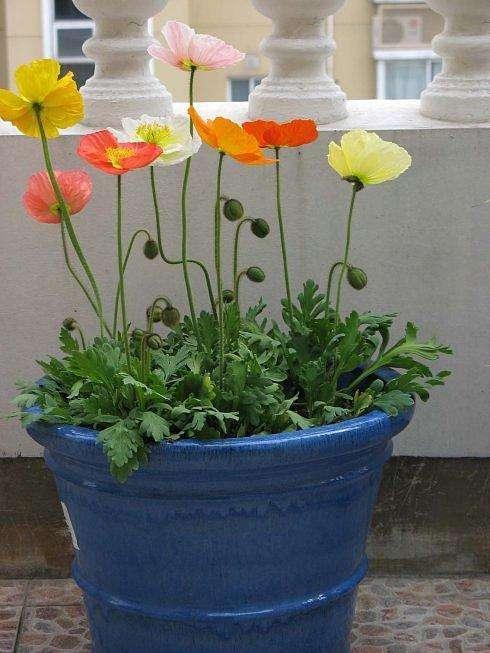
The corn poppy is also known as the rival peony, the amusing beauty, the beauty of spring, the brocade quilt flower, and butterflies filling the garden in spring. Before the flower opens, the bud is egg-shaped, wrapped in two sepals, and the sepals are green with white edges; the flower stalk is slender and upright, slightly drooping, and the flower has 4 petals with unusual colors. Du Fu praised it in a poem: "Of all the grasses competing in spring splendor, the beauty of spring should be the finest." The picture shows a potted corn poppy.
1. Monitoring Function
The corn poppy mainly detects hydrogen sulfide. Once hydrogen sulfide gas is present in the air, the leaves of the corn poppy will scorch and develop spots, and even the flower buds show a reaction.
2. Care Guide
(1) Light The corn poppy likes sun and needs ample light, so when indoors, be sure to ensure good light, but shade it during the early transplant period; after it becomes established, gradually expose it to sunlight, then gradually extend the light duration.
(2) Temperature The corn poppy fears extreme heat but has a certain cold resistance and prefers a warm environment; the temperature should be controlled at 15-28°C. In winter it enters dormancy, at which time it can tolerate slightly low temperatures.
(3) Watering Water potted corn poppies once every 3-5 days; usually there is no need to water too much. During the growing period, that is, around the Beginning of Spring, the frequency of watering can be appropriately increased to maintain soil moisture, but waterlogging must be strictly avoided; winter is the dormant period, so just make sure the soil does not become excessively dry, and watering must not be frequent.
(4) Fertilizing The corn poppy suits fertile soil. During the growing period, apply fertilizer once every 2-3 weeks, using decomposed urine diluted with 5 times water, and apply one more top dressing before flowering.
(5) Propagation Generally speaking, the corn poppy is suitable for propagation by sowing, and it can be sown in both spring and autumn.
(6) Pinching When the corn poppy seedlings grow 6-7 leaves, pinching should be carried out, in order to make the seedlings branch. If seeds are not to be kept, promptly cut off the remaining faded flowers during the flowering period to ensure the plant's nutrients, which can make later flowers more vivid and also extend the flower
(7) Placement The corn poppy has vivid flowers and a graceful posture. Potted corn poppies grown at home are suitable for placement in the living room, balcony, windowsill, and other well-lit, ventilated places, and can also be made into cut flowers in a vase and placed in the living room, study, or dining room. [Jishan Huayao]