Ginkgo Green-Branch Grafting Technique and Key Operation Points
Ginkgo Green-Branch Grafting Technique
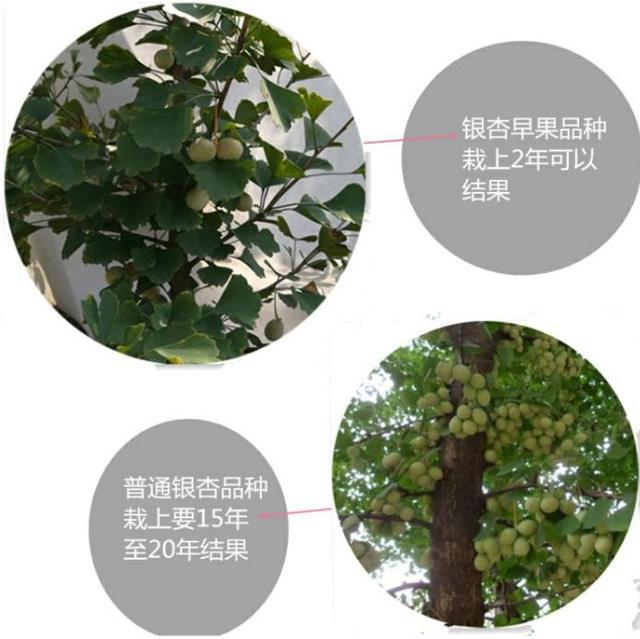
Ginkgo can be propagated by several methods, but seedling propagation is costly, the trees have a long juvenile period and bear fruit late; while cutting propagation has a relatively low survival rate; hardwood grafting must be carried out in spring, with a survival rate of about 80%. If the green-branch grafting method is used during the growing season, the survival rate can be raised to over 95%. The key points of the green-branch grafting technique are described below:
I. Grafting Time
It can be done from late May to late August. However, grafting cannot be done in hot, dry weather, especially at noon on sunny days, and rainy days should also be avoided.
II. Collecting Scions
Collect sun-facing, vigorous current-year branches from the middle and upper parts of superior ginkgo mother trees, cut off every leaf on the scion leaving only the petiole, cut into sections of 2 to 3 buds each, then soak the lower ends of the scions in water or wrap them in warm cloth for later use. It is best to graft right after collecting; scions not used up on the same day can be stored in a refrigerator or cold storage. [Jishan Huayao]
III. Rootstock Selection
Select ginkgo seedling trees at least two years old that are vigorous, have straight trunks and strong resistance as rootstocks.
IV. Grafting Position
It depends on the future use of the sapling. For future use as street trees, graft at a trunk height of 2.5 m; for courtyard planting, graft at a trunk height of 1.5 to 2 m; for use as an early-maturing, densely planted, high-yield plantation, graft at a trunk height of 0.6 to 1 m.
V. Grafting Methods
Both cleft grafting and cut grafting can be used. 1. Cleft grafting: first cut off the rootstock at the required height and make a vertical split down the center of the cut surface to a depth of 2 to 2.5 cm; on both sides of the lowest bud of the scion, cut one smooth inward-sloping face each, with the cut face about 2.5 cm long, so that the lower end of the scion is wedge-shaped (the side with the bud is thicker), then quickly insert it into the cleft of the rootstock so that the cambium layers of the two are aligned, and tie immediately. It is especially required to seal the upper cut of the scion to ensure the survival rate. However, the tying should not be too tight, so as not to break the tender branch. 2. Cut grafting: when cutting the scion, cut a smooth long sloping face about 2.5 cm long from one side of the lower end of the scion. Cut off the rootstock, and on one side of the cut surface at a place the same width as the scion interface, cut vertically downward to a depth of 2 to 2.5 cm; insert the scion with its long face inward and its short cut face outward into the cut, so that the cambium layers of the rootstock and scion meet or one side is aligned, then bind.
VI. Management
Check the survival rate after 2 weeks; a fresh bud indicates survival. While checking, loosen the binding and remove sprouts within 30 cm below the grafting site. Re-graft in time those that have not survived. Apply light fertilizer frequently, water at the right time, and spray pesticides promptly to control pests and diseases.