June care guide for wild-collected orchids, the perfect season to grow strong seedlings
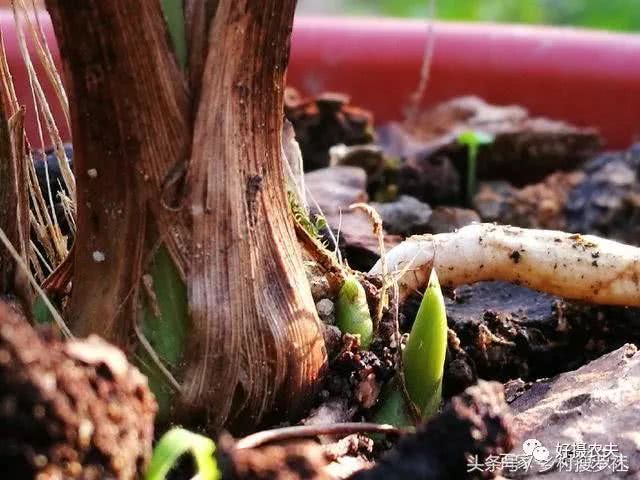
May is almost over, and the Jiangnan region has officially entered summer mode, with rising temperatures and abundant rain. This season is the peak growth period for new orchid shoots. Whether this season's orchid shoots can be managed well so they grow into robust orchid seedlings determines whether the orchids will bloom normally in the second half of the year.
New shoot of Cymbidium goeringii (spring orchid)
Growing orchids, especially wild orchids, actually does not require much fuss. But why do wild-collected orchids become less resistant and more prone to disease after being grown at home? This has to start from when the orchid comes down from the mountain. Orchids grow very well on the mountain - why? Simple! Wherever the orchid seed lands, it sprouts and takes root there. If the place is not suitable for it, then even if it takes root and sprouts, this orchid still will not grow big, and you will not notice it. So when we find very robust orchid seedlings on the mountain, we can be sure this place is very suitable for its growth. This is the law of survival of the fittest in nature.
New shoot of Cymbidium goeringii (spring orchid)
After coming down from the mountain, because its environment, planting medium, temperature and so on have been changed by people, the orchid is no longer naturally selected but passively surviving. At this point its resistance naturally weakens. So how should we care for orchid shoots this season? Haoshe Farmer believes there are the following points.
New shoot of Cymbidium goeringii (spring orchid)
During the shoot stage, imitate the wild environment as much as possible. Do not place them indoors; you can build a shade outdoors to mimic the sunlight index of a broadleaf forest. Do not fertilize during the new shoot stage, to prevent fertilizer burn on the shoots. Do not be afraid of rain; wild orchids grow up in the rain on the mountain.
New shoot of Cymbidium faberi (Faber's cymbidium)
After transplanting, the environment is different. Watch out for pests. Many pests like to bite the tender shoots of orchids, and once the new seedlings suffer pest damage they are finished (for pest control you can use pyrethroid-type pesticides). Spray fungicides regularly (carbendazim, thiophanate-methyl, mancozeb, etc.), and use multiple fungicides in rotation scientifically.
New shoot of Cymbidium faberi (Faber's cymbidium)
There is another operation that harms shoots the most: pulling out weeds. Some orchid growers, when they see weeds in the orchid pot, diligently pull them out. At this time the new shoots are still very inconspicuous, and weeding very easily pulls up the orchid's new shoots. The tender orchid shoots are injured at the slightest touch, and injured seedlings easily become stunted. So it is better to weed a little later.
To thank everyone for their support of this official account, Haoshe Farmer has nothing to repay you with, so he is specially offering the charcoal-dried white gongju (chrysanthemum) grown at home last year as a gift, with a fan draw held on 2018-06-18. The number of draw winners is tentatively set at 80, and each winning fan will receive the chrysanthemums gifted by Haoshe Farmer free of charge.
The specific draw details will be announced on June 17. Please stay tuned and do not miss it.