Kalanchoe summer care takes only three minutes: no root rot, vigorous growth, and a winter full of flowers
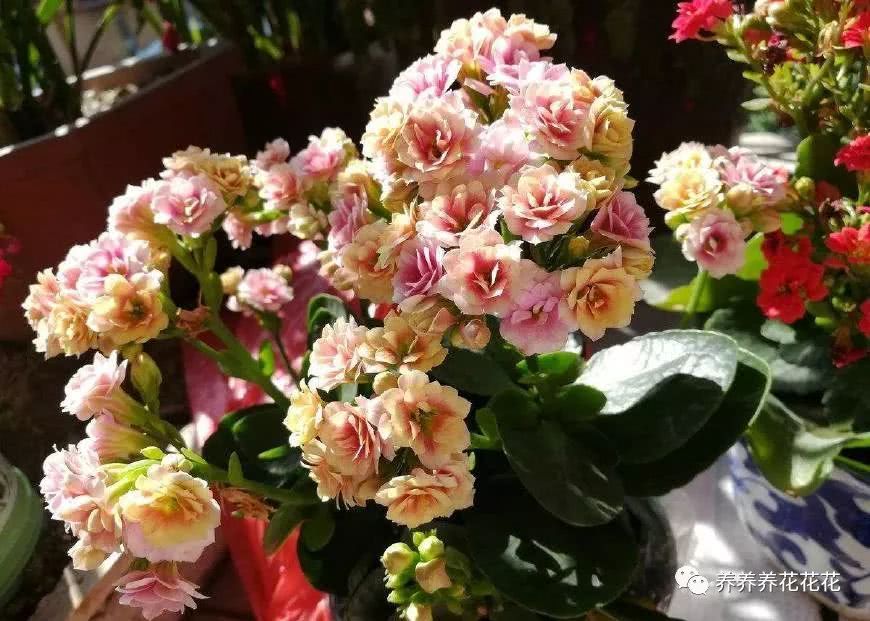
Does kalanchoe have a dormant period? How can it safely get through summer?
Kalanchoe basically has no dormant period all year round; it only has two stages of slow growth. When summer temperatures rise above 30 degrees, its growth will be inhibited, that is to say, growth slows down, not dormancy without growth. The other is when winter temperatures drop to 5 degrees, its leaves turn red, growth slows, and the flowering period is delayed. Therefore, in winter, try to keep the temperature above 10 degrees, and it will be able to grow and bloom normally.
Now let's talk about how it can safely get through summer. In summer, if the temperature is above 30 degrees, at this time we must put it in a cool and ventilated place, and it must not be placed under the sun, especially at noon when the temperature is high and the light is very strong. If it is directly exposed to the sun, its leaves will turn yellow; if it lacks water, the whole plant will wilt, and the root system will be damaged. We can put it on the west side or the east side, either side is fine, and use a shade net or something similar to shade it. If it is outdoors, you can frequently splash water on the ground to maintain air humidity, which can help lower the temperature. Another point is that ventilation must be good. If there is no ventilation in summer, after watering, its root system will suffocate and rot.
When watering kalanchoe in summer, follow the principle of watering thoroughly after the soil has dried thoroughly. That is, when the soil of the kalanchoe has completely dried out, you must water it thoroughly. No matter what plant it is, getting through summer has one prerequisite: its potting soil must be loose and breathable. When the potting soil is loose and breathable, after watering, the water can drain away in time and will not remain in the potting soil to form a waterlogged state, leaving the soil in a wet state. This can give the roots enough space to breathe, so that the roots will not rot. No matter when you water, even if you water too much, it will not cause root rot.
In summer, if you really keep it, try to choose the evening for watering when possible. At night, ventilation is better and the temperature is relatively lower than during the day, so watering at this time allows the roots to absorb some water, and with ventilation, by the time daytime high temperatures arrive, part of the water in the potting soil can also dry up, making root rot less likely. If you are growing it on a balcony, it is recommended to water it in the morning, after opening the window for ventilation. If it is a sealed balcony with poor ventilation, you can find an electric fan and blow air on it in advance, put it in a place where it can get light in the morning, water it thoroughly, and use the electric fan to blow so that part of the water in the potting soil is quickly consumed, keeping it in a moist state. After 10 o'clock, do not let it get sunlight.
In summer, be sure not to fertilize it, because its growth is very slow, and a little nutrients remaining in the potting soil are enough for its growth. It mainly relies on water to keep the plant from wilting and to grow slowly. This is the best. When the temperature drops below 30 degrees, fertilize and water normally. After autumn, use phosphorus and potassium fertilizer. Then it will be able to bloom abundantly in winter.
Xiao Qi likes growing flowers and updates flower-growing videos and knowledge every day. If you also like growing flowers, follow Xiao Qi, help forward and support, Xiao Qi thanks everyone here.
If you like growing flowers, followOfficial account: Yang Yang Yang Hua Hua Hua (hcqzj521)More flower-growing knowledge is waiting for you
Click below“Read the original text”Go directlyXiao Qi's shop