How strong is the lure of a bubble? Understanding bubble phenomena in agriculture
By: DaDa
Everyone knows tulip is the name of a flower, but who ever imagined that a tiny tulip once set off a huge economic wave.
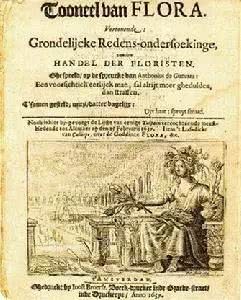
This book, titled "Tulip Mania," records an auction held in the 17th century in the Netherlands that caused a sensation throughout the entire city.
In 1637, a bar owner in the city of Alkmaar in the northern Netherlands died, and his 7 children were taken in by the church orphanage. Although the children were unfortunate, their father left behind a fortune - 99 tulips, which at the time in the Netherlands was a huge wealth. For the children's livelihood, the orphanage decided to auction these tulips. After this news spread, it immediately caused a sensation throughout the entire city.
Tulips were highly sought after by royalty and nobility in Europe. In 1593, the first tulip was introduced to the Netherlands and immediately became a symbol of fashion, wealth, status and position. The Dutch at the time were called the "sea coachmen"; they possessed a massive fleet, shuttled between the major oceans, and at one point controlled trade between East and West, monopolizing 40% of world trade. They also established the first joint-stock company and the earliest stock exchange. Due to the development of shipping, trade and stock trading, the wealth in the hands of the Dutch grew rapidly. Because once people have money they pursue status, people began to chase tulips that could show off identity and status.
Because demand for tulips exceeded supply, their prices kept rising, and the merchants who sold tulips early made money, thus attracting more merchants to rush in. In the end, even ordinary citizens were drawn into the tulip speculative business. At this time, tulips were no longer a symbol of identity, status and fashion; they became a tool and means for people to realize wealth. Tulips transformed from a luxury consumer good into a frenzied speculative object. Tulip trading swept across the Netherlands, and almost all cities set up tulip trading markets. The prosperity of the trading markets was enough to make people believe that all wealth would converge in the Netherlands. Capital from all over Europe poured into the Netherlands and also joined the tulip speculative trading.
It takes 7 years for a tulip to go from planting to blooming, and speculative merchants, eager for quick success, also put unbloomed bulbs up for trade. Thus the tulip futures market appeared. In that era of madness for tulips, people believed that only tulips could be called true wealth.
On the day of the auction, people poured in one after another. After round after round of fierce bidding, the 99 tulips were finally sold for 90,000 Dutch guilders. 90,000 Dutch guilders, for an ordinary family at the time, was equivalent to the sum of three hundred years of income. This auction in the city of Alkmaar was later confirmed as the peak of the tulip bubble, and the most famous speculative bubble in financial history thus appeared.
On the second day after the auction, a piece of news began to circulate in the market: there was a pond of white tulip bulbs offered at 1,250 Dutch guilders, but there was no buyer. People suddenly realized that the tulips or bulbs in their hands might never have another buyer, and this panic began to spread through the market. Everyone, whether flower growers, flower sellers or speculative merchants, was eager to sell off the tulips in their hands, and in just 6 days, the market collapsed across the board.
(The image above is a price trend chart of the tulip market at the time. This cliff-like price collapse appeared again and again in later asset trading markets. This chart can also be used to describe the Great Depression of 1929 and 1933; the Asian financial crisis of 1997 and 1998; the bursting of the U.S. internet bubble in 2000 and 2001; and China's A-share market in 2007.)
The bursting of the tulip bubble made the Dutch pay a heavy price. Many people lost their entire fortunes, and it took ten years for the Dutch economy to gradually recover.
The tulip bubble is like a fable. When speculative capital meets human greed, it can make people rich overnight, and it can also make wealth vanish in an instant. The story of the tulip bubble shows human greed and fear; this is the root cause of irrational rises and falls in the investment market. Any item, once it becomes a tradable asset and monetized wealth, will continuously transform amid the impulses of the crowd into the swelling and bursting of asset bubbles, repeating endlessly.