How to Tell a Parlor Palm from a Buddhist Pine? Detailed Guide to Container Care
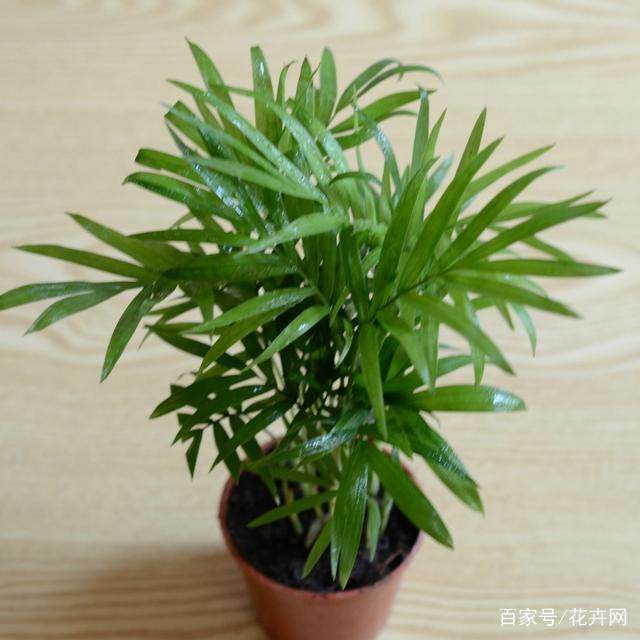
The parlor palm and the Buddhist pine are both foliage plants beloved by gardening enthusiasts. Both are houseplants relatively well suited to indoor care, not only helping to purify the air but also beautifying the living environment, making them excellent bonsai specimens. Both plants have fairly deep green leaves, giving a tropical feel, and both are quite tenacious in vitality. Yet despite being so similar, as potted plants they are quite different! What exactly distinguishes the parlor palm from the Buddhist pine? These care tips will help you sort it out!
The parlor palm (Chamaedorea elegans) is an evergreen small shrub. As a potted plant it stays short, with a fairly upright main stem and very few branches. Its leaves and stems are dark green, and the leaves carry irregular markings. Most of the leaves grow at the top of the stem, shaped as feather-like segments, with a glossy leaf surface that somewhat resembles artificial foliage. When it reaches its flowering period, ginger-yellow berries can be seen, and the leaves become much flatter, with mature leaves taking on an umbrella-like form.
The parlor palm prefers a semi-shaded environment. Under strong sunlight its leaves show signs of yellowing and withering, but if it is placed in a spot with insufficient light for a long time, its branches become thin and spindly. So for indoor care, the best position is a bright spot by a window.
The parlor palm grows well in relatively moist potting soil. Whether during the growing season or the dormant period, you must keep the potting soil moist and also maintain air humidity.
The Buddhist pine (Podocarpus macrophyllus) is an evergreen needle-leaved tree, fairly tall, and when grown as a bonsai it can be pruned and shaped freely, making it a fairly ideal home decoration. The plant's bark is darker in color, appearing brown, and its leaves grow densely, with the upper leaf surface deep green and the underside lighter in color.
The size of the pot affects the growth of the Buddhist pine. If the pot is too small, once the plant matures it will grow poorly. Because the plant likes moisture, during cultivation you should meet the plant's daily water needs, but never let waterlogging appear, or it will instead harm the plant. The potted plant should be placed in a well-ventilated spot, which not only effectively prevents pests from emerging but also helps the plant grow more robustly.
The Buddhist pine is a fairly large plant, so shaping and pruning are essential steps. Because the Buddhist pine is quite malleable, its form can be freely designed according to your own preferences.
Although both plants are fairly attractive in form and tenacious in vitality, it is still not easy to grow them well, so during care everyone should pay extra attention to the care points mentioned above to avoid the plants showing unhealthy signs.