Those years of growing succulents: the pots stayed the same, but the plants changed year after year
Follow Follow the Encyclopedia · Meet Beauty (WeChat ID: duoroubaike) The main text begins: Thanks to the author [Yao] for the original submission and sharing Submission date: 2018-04-26 Edited and compiled by: Encyclopedia Jun Location: Changde City, Hunan Province Hard to say how it...
Follow
Follow the Encyclopedia · Meet Beauty (WeChat ID: duoroubaike)
The main text begins:
Thanks to the author [Yao] for theoriginal submissionsharing
Submission date: 2018-04-26
Edited and compiled by: Encyclopedia Jun
Location: Changde City, Hunan Province
I can't really say how I fell into this hobby. It seems I was led into it by a college roommate. One photo, with plump little leaves, instantly melted my heart. As a result, I fell into the pit and couldn't pull myself out, while she jumped out and ran away, and to this day she still hasn't grown a single succulent she can be proud of!!! I'll omit ten thousand words of disdain here
Getting to the point...
In these years of growing succulents, batch after batch has died, and new succulents have come in one after another. To borrow a fellow succulent lover's words, it's "year after year the pots look alike, year after year the succulents are different"! It is simply the truth.
After round after round of spring, summer, autumn, and winter, although the succulents have gone through rot from overwatering, black rot, root rot, pest damage, mouse damage... as long as they don't die, there will surely be a day when they are reborn from the fire and make a stunning comeback. All they need is time. To me, succulents have never disappointed me, and can be considered the only comfort given to me in this lonely world. And all beautiful things are worth waiting for. Waiting for the next better meeting!
In the first two years, as a balcony grower, I raised batch after batch into sorry-looking plants. A succulent friend from Yunnan saw my succulents and blurted out, weeds, weeds? ... My heart shattered! There was no way around it, so I could only control my claw that loved to water randomly. I advise all balcony growers: if you can't provide all-day sunlight and your soil mix has little grit, then try hard to control yourself. After all, spreading out like a big pancake and stretching tall for the sky are not what we're after! In winter, I once went more than half a month without watering, waiting until the succulent leaves softened, and only watered a little when there was sun. The soil mix had only about 30% grit.
A year ago, I went back to my parents' home, and the succulents migrated with me, and thus began a life of pure outdoor growing. Last summer, a batch died in the 40-degree heat. This year during Chinese New Year, there was a winter snow, and all the succulents froze. Fortunately, I moved them indoors to recover for a few days, and only gave them sunlight after half a month. Unfortunately, some delicate varieties still died: Pink Echeveria, Raindrops, Sapphire, Snow Rabbit, Star Prince, and so on and so on. At the end of the article, I've attached a group photo from before the snow, which includes their memorial photos
Now let's first look at the existing varieties. Not many. Recently I haven't bought any new varieties. What I'm growing now are all common mass-market succulents, with no one to care for them carefully, so I can only let them fend for themselves on the rooftop. And they have not disappointed me, easily handling all kinds of environments, proving to me through time one transformation after another!
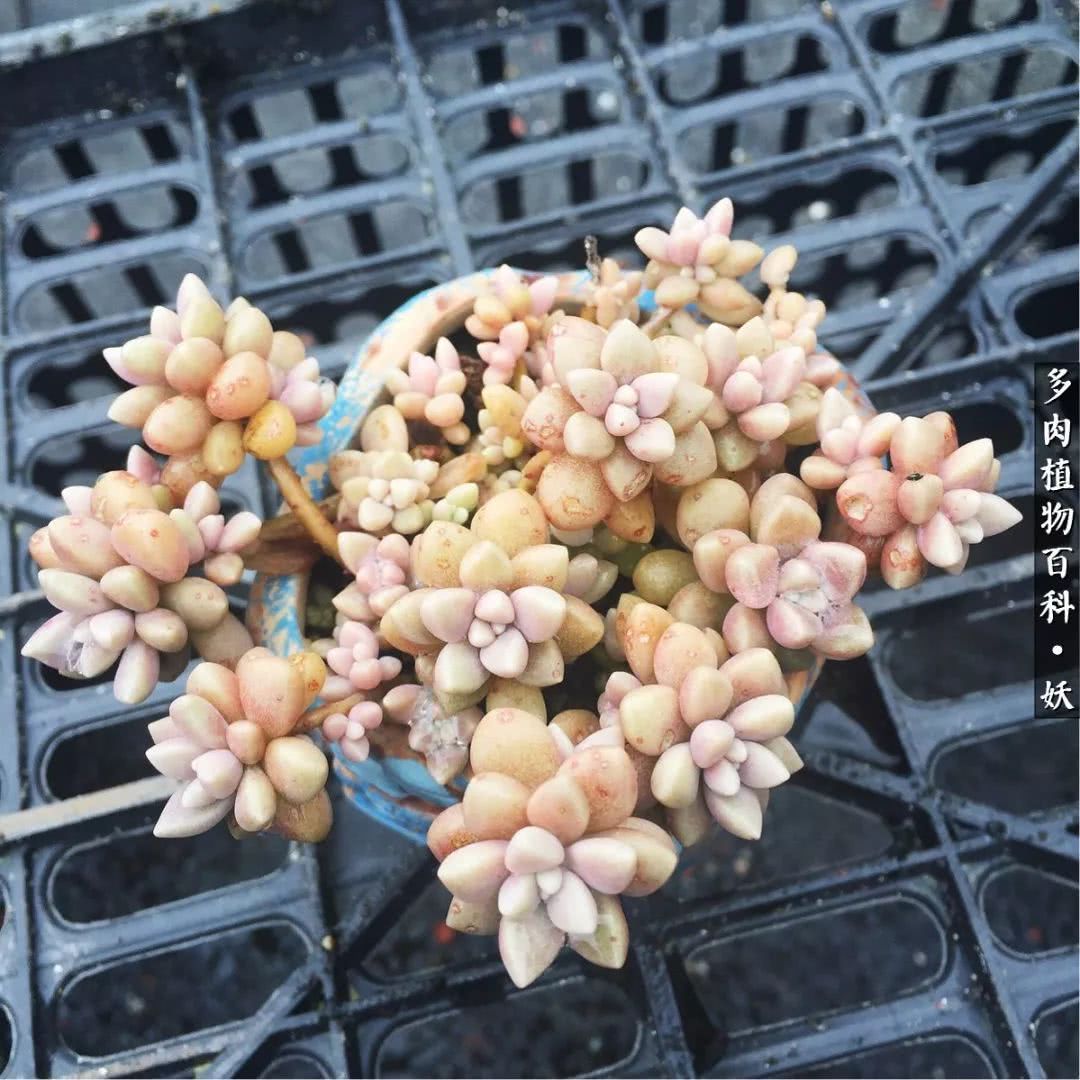
Graptopetalum mendozae, it was a very small clump when it arrived, and I've always grown it in a thumb pot, so it has always kept its small and delicate form. At its best, it was a pink jelly color, simply heart-meltingly cute. Although it is a common mass-market succulent, it still has its own charm.
Echeveria 'Pink Blue Bird' with thick leaves. These two photos are how it looks now. It has faded quite a bit, but has gained traces of time, and the leaves have increased by several rings
The Pink Blue Bird before winter, living up to its name, with pink showing through the blue!
Crested Echeveria 'Drunk Beauty' and Echeveria runyonii 'Topsy Turvy'. Compared with the second photo, they have still grown quite a bit
Echeveria 'Ruan Zuo'. When it arrived, the whole plant had fallen apart into two, so I simply planted them separately. Look at the comparison between photo one and photo two (now), same pot, and now it has gotten much fatter!
Echeveria 'First Love', a three-headed cluster I happened to pick up at a greenhouse. Reason tells me I should change the soil, but I really don't want to break this flowerpot. The neck is small, and it's already not easy to move it out...
Echeveria 'Chihuahua', grown up from a single leaf-propagation seedling. It went through all kinds of pancake-flattening, and the comeback was not easy. At the end of the article you can still find its appearance from before New Year. It was really cowardly. After all, this is Hunan in the free-shipping region, so you can't ask for too much
Echeveria 'Lime and Chili'. The two photos have a bit of color difference, different angles, and the light changed
Blue Elf or Blue Apple, I don't quite remember, and I'm face-blind anyway
Echeveria 'Onslow'. At first it was triplets leaning tightly together, and now they all have stems below
Echeveria runyonii 'Topsy Turvy' grown from a leaf-propagation seedling. This pot has more grit, and has always stayed quite empty. In four years it has grown only this much, and the leaves are all short and plump. I love it
Echeveria 'Jelly Sasa Queen', raised into a weathered look
Echeveria 'Cixi', fatter by more than just a little, very fleshy
Pachyphytum 'White Beauty', crazily pupping
Flower Moon Night or Lotus hybrid, I'm silly and can't tell them apart... also a professional pancake-spreader. I once thought about throwing it away, but luckily I didn't give up, and in the end it made a gorgeous turn!
Sedum pachyphyllum, when it was in the shop it went without sunlight for a long time and stretched out like crazy. After moving back, within a week it was packed with pups!
Pachyphytum 'Winter Beauty'. The photo below is from before the snow. The change before and after isn't very big, but I give this shape 100 points!
Echeveria rusbyi. It no longer has the bun shape from before winter in the photo below, but it has grown quite a few pups. It had root rot in summer and was cut from one plant into two! Tenacious vitality
Mixed pot, Graptosedum 'Ghost Plant'. It's starting to take on shape. After a continuous week of rainy days in Hunan, it's starting to fade
The red edges of Echeveria 'Crispy Duck'
Sedeveria 'Little Light'. I cut off the flower stalks. The last photo is from before winter. Now it's pupping so much that I don't even know where to start if I want to behead it
The overrunning Sedum 'Marcus', a little expert at pupping, also covered in traces of time, covered in scars
Echeveria 'Cute Rose', bought in summer. It took more than half a month to settle in, which is sad just thinking about
Three-headed Echeveria 'Orange Monroe'. Let's see if it can color up this spring...
Mixed pot of Echeveria 'Lina' and Pachyphytum 'Winter Beauty', let them grow as they please, they can always astonish me
Echeveria 'Purple Pearl'. The mother plant already has a thick stem, and the ones behind are all her offspring, growing especially fast
The rising Sedum rubrotinctum. I've had the thought of pulling it out
This is the Graptosedum 'Ghost Plant' that I beheaded after root rot and stuck back in. It's still alive and well, just split into many heads...
The broken-headed Schlumbergera 'Butterfly'. Its leaves have become shorter and fatter
Life can always give us surprises. Looking at them, I am very satisfied. No matter what the environment, they can always live tenaciously, be reborn through nirvana, and make a gorgeous transformation!
The more beautiful something is, the more it needs the quiet power of guardianship!
The photo below is the group photo from before winter
Advertisement ADVERTISEMENT
This article has beenexclusively authorizedby the author to the WeChat public account: Succulent Plant Encyclopedia (ID: duoroubaike). The article content does not represent the views or stance of the public account
- Review of last issue's excellent pushes -
- Encyclopedia featured articlesrecommended -