How do you do plant arrangement in a small courtyard? Master this one trick and you're set
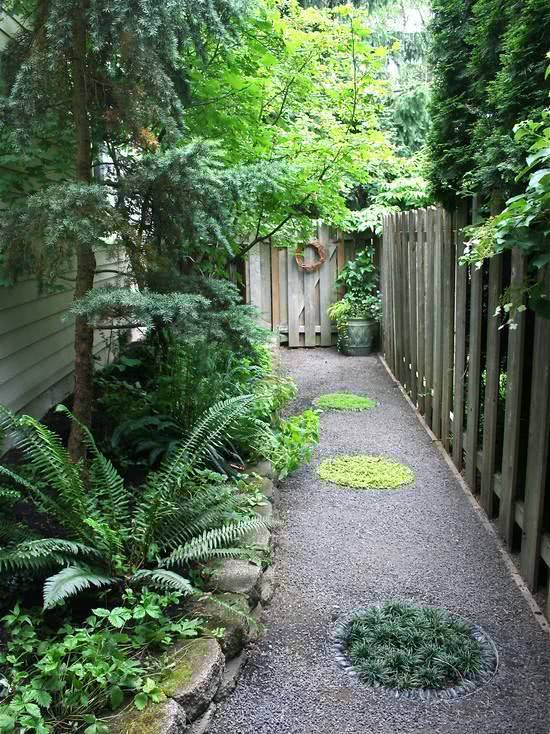
Because of limitations such as cost, location and area, what we usually see are small courtyards, and a small courtyard can often be just as comfortable and cozy as a large one.
But if a small courtyard is to feel comfortable, plant arrangement and landscaping is a step that cannot be bypassed. The editor has summed up a series of methods to teach you how to do plant arrangement well in a small courtyard.
Contrasting leaf shapes, complementary colors
When a small courtyard feels a little cramped, when designing plant combinations you might as well place flowering plants with yellow and purple flowers into the plant community; these plants with vivid colors can harmonize the plant community and also highlight the characteristics of the other plant elements in the combination.
In choosing leaf shapes for plants, you can plant plants with hard, upright leaves together with plants that are small in size, soft in texture and have rounder leaves (such as licorice and Lantana plants), forming a huge contrast in leaf shape and appearance that gives a strong visual effect.
Same color, make up for it with shape
When putting together plants for a small courtyard, if you want to plant two or more flowering plants of the same color together, you need to ensure the landscape effect of the combination through differences in plant form and leaf shape.
For example, you can try planting light pink coneflower together with phlox to create a rather strong romantic pink atmosphere.
Differences in height and appearance
When doing plant arrangement you may come across differences in plant height and appearance; you might as well make full use of this difference.
For example, clumping yucca has sword-like, long and narrow upright leaves, so it can form a sharp contrast with the soft-textured, shorter Cupressus plants and Juniperus plants planted around it.
Sisal yucca
The large ceramic spheres placed beside the yucca, with their rough, rustic shape and gray-blue tone, can make the overall combination stand out even more and become the most eye-catching landscape in the whole garden.
When the base tones are the same
The pairing of purple, blue-purple and red-purple can, through subtle color differences, achieve a fairly striking contrasting effect while still being harmonious.
For example, ornamental kale, which blends blue-purple and purplish-red, combined with pure purple heliotrope, brings the colors so close that the harmony of the combined landscape reaches an almost perfect degree, and it will surely become a classic landscape in the garden.
Of course, you can create a plant community with sharp contrasts, but the premise is that the differences in plant form must be evenly matched. In this way, a beautiful, high-quality small courtyard plant community can be created.
Because of its broad area, a large courtyard allows relatively free and diverse plant arrangement, but this does not mean that there is no room to work with in plant arrangement for a small courtyard.
Although courtyard design is limited by area, as long as the flower color, flower shape and flower position are coordinated between plants, even a small courtyard area can be designed into a very unique courtyard landscape.
Plant arrangement in Japanese-style courtyards