How do you grow succulents so they have bright colors and look plump and adorable?
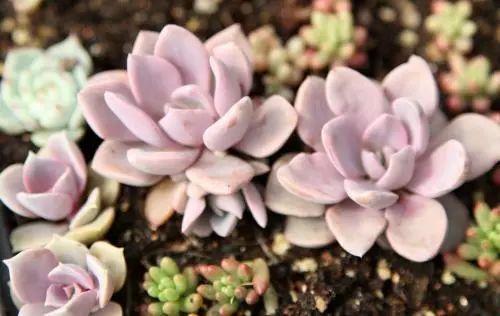
Succulents are fairly popular plants, nice to look at and easy to grow, but some people still fail to grow them well, and some grow ones whose colors are not as vivid as other people's or that just do not have that adorable look, so what exactly are the tricks?
1. The habits of succulents
To grow succulents well, the importance of understanding their habits goes without saying. The most important thing among these is understanding the dormancy period of succulents. Most succulents have their dormancy period in summer; during the summer dormancy period, just place them in a cool, ventilated spot with little water. In winter bring them indoors, in summer shade them; leggy growth and sprawled leaves are not frightening, and once the spring and autumn seasons come and they are grown outdoors normally, they still recover very quickly.
2. Soil for succulents
It is best not to dig up local soil, as it easily compacts and does not breathe, which is very bad for the roots of succulents; instead choose a special soil mix with good breathability. In addition, do not use sharp-edged material as top dressing stones, because when the succulent leaves become plump after heavy watering they are easily scratched, turn to mush, and can even lead to black rot disease.
3. Sunlight is the best fertilizer
For succulents, sunlight is the best fertilizer, and succulents, especially those in the Crassulaceae family, should be sunned often. Just as improper fertilizing harms plants, too much sunlight is no exception, so succulents that have not been grown outdoors long term must not suddenly be exposed to blazing sun.
4. Choosing flower pots
When it comes to choosing pots for succulents, it is recommended to choose one larger than the spread of the leaves; the benefit is that a large pot gives the succulent roots ample room to develop, which is good for growth. At the same time, a large pot surface helps with breathability and lowers the incidence of black rot disease; in addition, it can also avoid the damage to succulent roots caused by frequent repotting.
5. Do not grow seedlings outdoors
Many people understand the benefits of outdoor growing for succulents, so they unhesitatingly send succulents that are still at the seedling stage down the path of outdoor growing. This is not advisable, because the roots are not developed enough, and when grown outdoors the soil moisture drains too quickly, causing slow growth; add to that blazing sun, heavy rain and other harsh weather, and the little succulents will die or be damaged.
6. View black rot disease correctly
Black rot disease is a fairly common disease of succulents, so when growing succulents you must treat it with a calm heart, and you need not lose confidence in growing succulents because of it; everyone is the same, having all walked over one rotted succulent after another. When you find leaves turning to mush, pull them off promptly to avoid it spreading; if the stem turns black, decisively cut it off, preserving the intact head and leaves as much as possible to continue its life.
7. Beheading
To grow succulents well, beheading is a required course, and the care after beheading is also very important. Freshly beheaded succulents must be dried in a cool, ventilated spot before being potted in moist soil to root, which takes about a week; the same goes for freshly pulled-off leaves, which generally need to be dried for a few days, reducing the rate of turning to mush and making them less prone to mold after watering.