What does a succulent museum look like? A 108-year-old American grandmother spent 40 years creating one
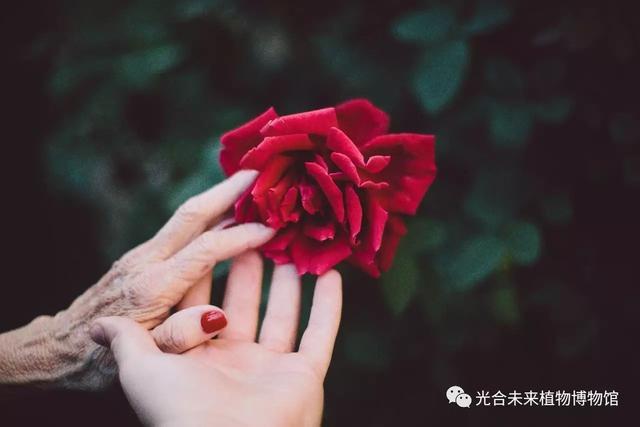
Follow nature, and life knows no limits.
The sunlight of California, USA,
is so bright it makes your eyes squint,
and the hot, dry weather
keeps greenery scarce here.
Yet there is one garden
that stays green in all four seasons.
If you happen to wander in,
you would think you had entered a plant kingdom.
This is the garden named after Mrs. Ruth Bancroft, and it is also the firstprivate garden sponsored and protected by the Garden Conservancy, and in 2011, it was rated by Pacific Horticulture magazine as "the most significant private garden on the West Coast of the United States”。
In this 3.5-acre garden,
more than 2,000 kinds of cacti, succulents, palm trees and other
desert plants of all sizes
and forms are planted.
When a second ago you still mistakenly thought
you had fallen into a barren desert,
this lovely and lively garden,
as if enchanted by magic,
quietly appears before your eyes.
In front of each kind of plant,
there are labels with explanations and introductions.
There is no time to read them one by one,
for hundreds upon hundreds of plants
would probably take a whole day,
and still not be finished.
The owner of the garden is Mrs. Ruth,
this old girl who is already 108 years old,
still holds her ground here every day,
spending the time of her later years
accompanying these flowers and plants,
slowly passing the days.
At eight in the morning,
Mrs. Ruth appears in the garden on time,
personally designing, planting, and irrigating.
She does all the work, big and small, with her own hands,
until sunset.
And she has done this
for 40 years.
Mrs. Ruth never imagined
that she would now have such great achievements:
desert plants both save water and are beautiful,
and for drought-prone California, USA,
they have extraordinary significance.
For all of this,
she has to thank her lifelong persistence.
Born in California in 1908, Mrs. Ruth
has a special feeling for this land.
She loved plants since childhood,
and often tended the flowers and plants at home.
In 1926, Mrs. Ruth began studying architecture,
hoping to become an architect one day.
However, an economic storm that swept the globe
also blew out her dream.
Left with no choice,
Mrs. Ruth had to take up teaching.
God does not shortchange anyone who works hard.
Her dream was temporarily dashed,
but love arrived as promised.
At school,
she met a husband who shared her aspirations.
Her husband was very supportive of Ruth's hobby,
and after marriage,
she threw herself wholeheartedly into the world of gardening.
Irises, roses, aromatic plants and so on,
at first Mrs. Ruth
also liked these delicate flowers.
It was not until the 1950s
that she became enamored with those drought-tolerant,
strangely shaped succulents and cacti.
Perhaps this is a realization about life:
though flowers like roses are beautiful,
they are fragile and delicate,
while the unremarkable-looking cactus
has astonishing vitality.
So,
Mrs. Ruth began planting all kinds of desert plants.
She traveled all over nursery centers in the United States,
searching for as many kinds of seedlings as possible.
Every time she went out,
she would return home fully loaded.
If she saw a rare variety,
she would treat it like a treasure,
and immediately take it home to plant.
But because the varieties were rare,
Mrs. Ruth was unfamiliar with the characteristics of these plants,
so every step of planting was a first experiment.
Only after checking many plant books
did she dare to carefully plant them.
Then day by day she took notes,
recording the growth of the plants.
Sometimes when the weather changed,
she would also defend against it in advance,
setting up protective facilities for these plants.
In the year she was about to turn 70,
Mrs. Ruth had an idea:
to create a succulent museum of her own.
People often say,
"A person who reaches seventy has been rare since ancient times."
For Mrs. Ruth,
70 years old
was just the beginning of another beautiful world.
Planning, designing, planting,
Mrs. Ruth integrated architecture and geometry
entirely into the museum.
With her own life,
she guarded the family of desert plants.
More than 20 years later,
Mrs. Ruth's garden
attracted the attention of the Garden Conservancy.
They realized the valuable reference significance of the desert garden,
so the first private garden sponsored and protected by the Garden Conservancy
came into being,
and in 1992 the garden also began to open to the public.
In 2014,
more than 12,000 visitors from the East Coast came to visit,
Among them are botanists, gardening enthusiasts, artists, and more,
who never stop marvelling at Lady Ruth's pioneering achievement.
Many rare species
can only be seen here.
The garden hosts art exhibitions from time to time,
using plants as a backdrop for the displays,
which seems to lend the artworks a distinctive flavour.
At the same time, the people who come here to visit are all different,
wedding photography, marriage proposals,
the garden has a romantic atmosphere all of its own.
A field classroom for children,
vivid and true to life.
Even dogs
are captivated by this extraordinary plant kingdom.
Today, Lady Ruth
still lives in the main house, which retains its 1950s style.
The house holds more than 4,500 plant books.
Apart from reading every day,
through the window
she can take in the whole plant world at a glance.
In an interview at the age of 100,
Lady Ruth said with a smile,
"I don't know how I got to 100,
I just feel my strength is not what it was,"
but people watching her
climb the stairs to her second-floor bedroom
see that it takes no effort at all.
A lifetime absorbed in nature,
half a lifetime guarding the garden,
the plants in her hands
are plump and fresh,
brimming with vitality.
Letting life grow with nature,
following nature,
becoming one with nature,
perhaps this is the one true rule for longevity.