Vegetables and Fruits on a Plate Turned into a Landscape Bonsai: A Masterpiece So Exquisite People Cannot Bear to Eat It
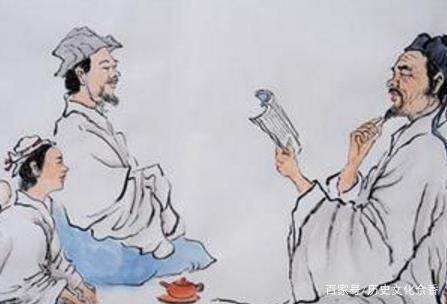
Hello everyone, welcome to my channel "Lingering Fragrance of History and Culture." Today, I want to tell you about a scholar from Piling in ancient times who served as an official in Chengdu. Once, at the medicine market on the ninth day, he saw a bronze ding, but this bronze ding was somewhat damaged. A person beside him urged him to buy this bronze ding. After buying it, he asked that person what use this bronze ding had. The person said that after he returned home, if he placed several incense burners around the ding and burned incense, all the incense smoke would gather inside the ding. He went back and tried it, and it really was just as the person had said, so he named it the "Incense-Gathering Ding." Although it is unknown which dynasty it was made in, it actually had such a wondrous function. I also think this kind of ding is very extraordinary.
Since the war began, the hidden treasures in many people's homes were mostly discovered by servants, thieves and soldiers, and very few escaped discovery. I have only heard that in the household of a high-ranking eunuch, there was a unique method of hiding treasure. To use this method of hiding treasure, one had to dig the pit very deep. After placing many items inside, one covered them with stones and earth, then covered the stones with earth again, and then placed the valuables inside, burying them in three or four layers like this, and finally built over them with bricks. If they were discovered in the future, when the diggers saw the upper layer of items, they would stop digging further, not knowing there was still more below, and that even more things were all underneath. They were fooled by this method. I think this method is especially practical.
During the Yuan Dynasty, the Shangshi Bureau presented a kind of wheat flour to the emperor. The mill for this flour was on the upper floor, and below the floor a mechanism was installed to make the upper millstone rotate. In this way, when the donkey pulled the mill downstairs and trod around, and the workers walked back and forth, it would not affect the normal rotation of the mill, and the mill was also not contaminated by dust, foul odors and other such smells. This was created by a skilled craftsman named Qu. I think this person was very clever and creative. In Pingjiang there was a man surnamed Wang, a lacquer craftsman. Once he made a boat out of many pieces of cowhide. After it was finished, he also painted the inside and outside of the boat with lacquer, then disassembled the boat into several sections and transported them all together to Shangdu. After arriving at Shangdu, he reassembled the boat and put it into the river to let it float. This boat could hold twenty people. Many people in Shangdu had never seen such a boat, and all who saw it praised and admired it. This event was also a great occasion of the time.
I saw it recorded in Zitao Xuan Zazhui: During the Tang Dynasty there was a nun named Jing who, with her extraordinary imagination, made the vegetables and fruits on her plate into landscape bonsai, each piece representing a scene from the Wangchuan Picture. People loved to view and admire these works, and even when the food had rotted and changed flavor, they still could not bear to eat it. Sun Chengyou was a maternal relative of the King of Wuyue. He often showed off his extravagance to others. He used precious spices to fry a pastry, then made it into a miniature model of Mount Li, complete with water, bamboo, houses, bridges and figures of all kinds. In the spring of the Wuyin year, at the deity procession at Hewu Bridge, more than 120 sugarcane stalks were stacked into a landscape, and figures were made from flour to imitate the scene of Chang Yuchun seizing Caishi Rock. It was seven or eight chi tall and was placed in a large bronze censer. Many people came here to look at it and considered it incomparably exquisite. In the spring of the Yimao year, the emperor visited Wu Commandery. Someone actually used shelled walnuts to stack into an artificial mountain, with winding paths and unevenly arranged figures. The art of carving ice and engraving fat had reached its limit here. I think this scene must have been very spectacular.
When the current prime minister Lord Ba's household was confiscated, the treasures within were too numerous to count. Among them was a desk, carved and cast entirely from amber from top to bottom and from left to right, with crystal inlaid on its surface. It was two chi square, and underneath there were even drawers, about three cun tall, also inlaid with crystal inside. Within them water was stored and many goldfish were kept. With red scales and green algae, from the outside the goldfish seemed to float in midair. Everyone who saw this desk exclaimed that it was a wondrous object. During the Qing Dynasty, a certain Zhu, county magistrate of Gaoling, had a white jade dragon, two cun or a little more in both height and width, with interlocking latticework on all four sides. Outside the cage a child looked down and peered inside, and within the cage there was actually an ape sitting and looking up outward, vividly lifelike. Niu Xiu saw it with his own eyes when he served as an official in the Qin region. This article is originally created by Lingering Fragrance of History and Culture. Welcome to follow and let me take you to grow your knowledge together!