A fruit available only in June that fights cancer and prevents heart disease, a nourishing delicacy but not to be eaten too much
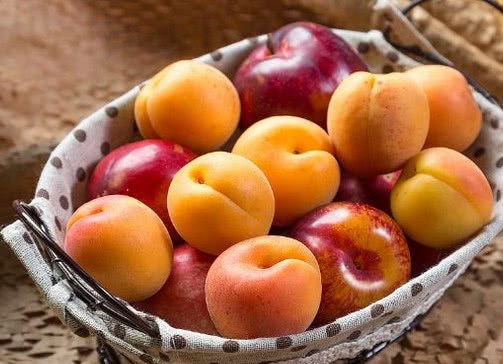
Summer is here, and more and more kinds of fruit are lining the shelves, no longer just apples, oranges and bananas. A few days ago I happened upon an apricot farmer's roadside stall; afraid of sourness, I bought a jin of big golden apricots to share with my mother. She said this kind of apricot has juicy, crisp flesh and an inviting color, and is not very sweet, unlike the apricots back home, whose flesh is soft, slightly grainy and very sweet. The apricot is a very common fruit; because this fruit tree is a light-loving species with strong adaptability, it lives a very long time. And it can be eaten by men and women, young and old alike.
Apricots can be eaten and can also be used in medicine and beauty care. Apricot fruit has good medicinal effects and holds an important place in Chinese herbal medicine, mainly treating wind-cold lung disease, promoting fluid production and quenching thirst, moistening the lungs and resolving phlegm, and clearing heat and detoxifying. You could say it is small in size but great in power. People familiar with apricots all know that the whole apricot tree is a treasure; its fruit, the apricot, is rich in nutrients, containing many organic compounds as well as vitamins and inorganic salts essential to the human body, making it a fruit of relatively high nutritional value. Moreover, the apricot kernel inside the fruit is even more nutritious, rich in protein, crude fat and sugars, and also containing inorganic salts such as phosphorus, iron, potassium and calcium as well as various vitamins, making it a nourishing delicacy.
Health foods usually call amygdalin vitamin B17. The apricot is the fruit richest in vitamin B17, and vitamin B17 is an extremely effective anti-cancer substance, and it only kills cancer cells, with no toxic harm to normal healthy cells. To prevent heart disease and reduce myocardial infarction: the fruit contains relatively much flavonoid. Flavonoids help prevent heart disease and reduce myocardial infarction. Therefore, regularly eating preserved apricots and dried apricots is of some benefit to heart disease patients.
Moreover, apricot kernels also have great uses. Some are suitable for being freshly ground into powder for cookies or sweet fillings, and some are suitable for being sliced to use as decoration. Our native apricot kernels mainly come in two kinds, sweet and bitter. The sweet almonds we usually eat are also called southern apricot kernels, with slightly lower toxicity; the bitter ones are northern apricot kernels, with relatively higher toxicity but high medicinal value. The two kinds of apricot kernels can be used together, for example in soup, but you must ask clearly about the ratio. Using apricot kernels in soup is similar to using ginkgo; the amount should not be too much.
Though apricots are tasty, they must not be eaten too much. The relatively strong acidity of fresh apricots will sharply increase the acid in the stomach and cause stomach problems. Friends suffering from gastrointestinal diseases and ulcers should also not eat apricots; eating them will worsen the condition. In addition, people with diabetes should not eat sweet apricots. Wild mountain apricots have sour flesh, a hot nature and slight toxicity, and the pits of these apricots are all bitter kernels. Excessive consumption will harm the tendons and bones, trigger old illnesses, and may even cause loss of eyebrows and hair and affect eyesight. If women in confinement, pregnant women and children eat too many apricots, they are also very prone to developing sores and boils. Because firewood apricots are fairly acidic, eating too many not only easily sharply increases the acid in the stomach, harming the stomach and causing stomach problems, but also easily corrodes the teeth and induces cavities.
Do you like eating apricots?