Key Cultivation Techniques and Planting Methods for Catalpa Trees Explained
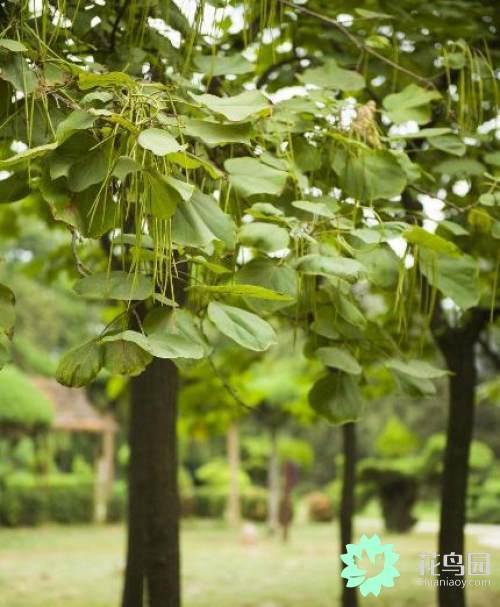
catalpa treeThe ornamental value, medicinal value and landscaping value of the catalpa tree are all very high, yet most people still do not know enough about it; however, this does not mean we can ignore the existence of the catalpa tree and the benefits it can bring to our lives. So, as more and more people come to know the catalpa tree, the number of people growing it keeps rising, and therefore the cultivation techniques for the catalpa tree have also become very practical knowledge.
1. Planting the catalpa tree
The catalpa tree can be planted in spring or autumn. Before planting, dig the planting holes well. In addition, planting with a soil ball can improve the survival rate, but be careful not to plant too deep, as planting too deep will cause the plant to develop stifled buds. When planting, some decomposed base fertilizer should also be applied and mixed evenly with the planting soil. After planting, water once thoroughly, then water again after three days and again after five days.
2. Water and fertilizer management for the catalpa tree
In daily care, attention should be paid tothe catalpa tree's water management. In addition to the first three waterings after planting, two thorough waterings should also be given between May and October. When there is more rainfall in summer, watering is not needed unless it is too dry, and in winter the antifreeze watering should also be done well. Once the plant is over four years old, it is enough to water well for the greening-up watering and the antifreeze watering. In addition, the catalpa tree likes fertilizer; apply sufficient base fertilizer at planting time, and in May some urea can be applied, which can make the branches and leaves luxuriant and speed up growth.
3. Shaping and pruning the catalpa tree
Because the catalpa tree has strong sprouting ability, it tolerates pruning well. In spring, when the new shoots reach about 30 cm, select suitable main branches and cut off the excess branches. During the growing season, newly sprouted buds should also be removed. If you want to expand the crown, you need to shorten the main branches and keep the outward-facing buds.
4. Points to note when growing the catalpa tree
The catalpa tree is also easily threatened by pests and diseases. Common pests include the globular stink bug, the gypsy moth, the paulownia tortoise beetle, and the catalpa shoot borer, all of which can be controlled by spraying insecticidal preparations. In addition,the catalpa tree's common disease includes anthracnose, which is prone to occur under high temperatures and poor ventilation, so besides spraying pesticides, attention should also be paid to water and fertilizer management for the catalpa tree to improve the plant's disease resistance.
5. Grafting propagation of the catalpa tree
Grafting of the catalpa tree can be done in winter or spring. Bud grafting can be chosen in spring or late autumn. In winter, it can be grafted indoors and then stored in damp sand, and planted out in early spring. Grafting around Qingming is best, and grafting while covering with soil as you go gives a higher survival rate. In addition, the cleft grafting method can be used, that is, prepare the needed scion and rootstock, align their cambium layers well, bind them with hemp rope and plastic rope, and seal them well with damp soil. They will sprout in about 10 days.