Are orchid seedling divisions easy to grow? Fellow orchid growers all say they are hard to keep alive; pay attention to these points
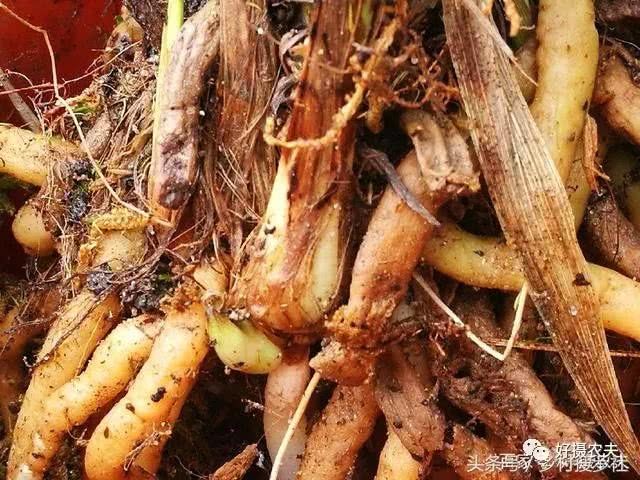
A couple of days ago, fellow orchid grower Xiao Wang messaged Haoshe Nongfu, asking me what a "seedling division" is, because people often mention this term in the Baidu Orchid Forum. Actually, Nongfu doesn't quite understand some of these technical terms either, because I usually like to explain things in plain language, so I looked it up, oh!! So that's how it is.
In the previous episode we talked about front-growth shoots and back-growth shoots, because Old Zhang met a woman he liked and split from his sons and grandsons into separate households. But today it's different, because the sons and grandsons felt Old Zhang was no longer of much use at home, so Zhang Er and Zhang San took the initiative to split from Old Zhang, and Old Zhang began living alone in loneliness. So generally speaking, what is called a seedling division is something the original owner no longer wants. At this point Old Zhang is the seedling division; Old Zhang's health was pretty good, and on his own he slowly built up some property again, and even had a second spring, remarried and had two more sons. Congratulations! The seedling division succeeded.
A wild-collected orchid, whether it is a Cymbidium goeringii (Spring Orchid) or a Cymbidium faberi (Huilan), generally comes with old growths attached. After being grown at home and producing new growths, the old growths slowly lose vigor until they wither; this is normal. Some sellers cut off the old growths as single divisions before they lose vigor and wither (usually only done for named cultivars, and usually expensive), and some orchid growers who want to grow named cultivars but cannot afford the high prices buy these seedling divisions with a try-it-and-see attitude. Seedling divisions are not impossible to grow; grasp the key points well, and seedling divisions can likewise branch out and spread leaves, with descendants filling the house like Old Zhang's second spring.
、
The photo above shows new shoots emerging from a front-growth shoot. New shoots from front-growth shoots are relatively robust; generally speaking, the new shoot will be more robust than the mother shoot. As for whether a seedling division can produce new shoots, when acquiring a seedling division you must pay attention to a few points:
1. Do not acquire a seedling division that carries disease or bacteria; this can be judged by the color of the roots and the leaves.
2. Keep as much of the old base as possible; the larger the pseudobulb, the better. The old base itself carries a certain amount of stored nutrients, which can keep the orchid seedling alive before new roots and shoots form.
3. The pseudobulb should ideally have no wounds; old growths have poor resistance, and if there is a wound it is prone to infection.
In addition, seedling divisions are relatively weak, so by all means do not rush to fertilize; fertilizer that cannot be absorbed in time will cause fertilizer burn to the roots. Growing seedling divisions is a job that requires more patience than most,