The biggest culprit behind the highest mortality rate in succulents is actually this - check your succulents now
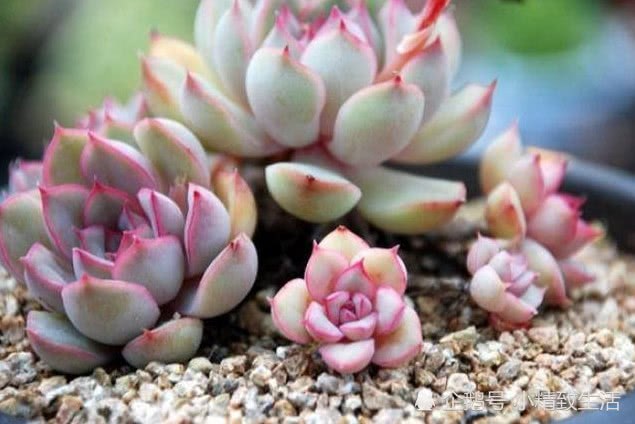
Succulents are deeply favored by gardening enthusiasts for their adorably cute appearance. However, many beginner friends find succulents really hard to grow, and always end up with their plants dying without knowing why. In fact, the causes of succulent death include bacterial infection, pests and diseases, frost damage, sunburn and many other reasons, but even all these causes combined cannot match the biggest culprit behind succulent death - fungal diseases.
Without considering professional scientific knowledge, succulent fungal diseases can actually be roughly divided into three major categories: external infection, internal infection and black rot. By understanding these three general categories, you can promptly judge the condition and timely choose the corresponding treatment methods and medications. Next, Xiaojingzhi Life will analyze together with everyone the manifestations and treatment methods of these three major categories of fungal diseases.
1. External infection
External fungal infection in succulents can be simply understood as skin disease of succulents, mainly caused by fungi infecting the epidermis of the plant, and external infections will leave scars even after being cured. Sooty mold, powdery mildew, gray mold, anthracnose, rust, downy mildew and others all belong to the external infection category. Because the fungi are on the surface of the plant, fungal spores spread through the air, so this type of external infection is highly contagious. Once discovered, it needs to be isolated and treated promptly.
Once external infection with symptoms like the above is found on succulents, besides immediately isolating and placing them in a ventilated environment, for mild symptoms you can spray with broad-spectrum mancozeb or chlorothalonil. If you also add systemic carbendazim as a root drench, the effect will be even more remarkable. If severe, you must spray the corresponding specific fungicide.
2. Internal infection
Typical examples such as Graptopetalum mendozae, 'Norma', and Echeveria 'Allen', under hot and humid conditions, very easily develop problems on their leaves such as lumps, bumps and blisters. Although abnormalities from these problems can be observed on the surface, external treatment or medication basically has no effect. Only systemic fungicides can be used to sterilize and treat from inside the succulent.
The cause of this type of internal infection is mostly fungi invading the plant body through the leaf stomata of succulents, then surviving and reproducing beneath the leaf epidermis, causing bumps and blisters. Since the fungi infect beneath the leaf surface epidermis, the chance of spreading to other succulents is relatively small, but precisely because of this, ordinary spraying of medication has little effect. If only one or two leaves are infected, you can directly pull off the leaves. If the infected area is large, directly use systemic carbendazim as a root drench plus spraying.
3. Black rot
Black rot is mainly caused by Fusarium invading the vascular bundles of succulents. It is very hard to detect in the early stage of infection. If your succulent continuously drops leaves without any warning or develops large areas of water-soaked rot, you need to be alert. If the stem has already turned black to the point where it is visible from the outside, then behead it as soon as possible.
Although black rot also infects from inside the succulent, because it spreads extremely fast and is basically already in the late stage by the time it is discovered, it is classified separately as its own category.
Summary: In fact, fungal infections in succulents are mostly caused by hot and humid environments and poorly draining potting soil. Normally pay attention to creating a cool, ventilated, dry environment with sufficient light for your succulents. Also, be careful when watering to try not to water onto the leaves or into the crown buds, so your succulents can grow healthily. Prevention is the real key.
Organized and published by Xiaojingzhi Life, hoping it is helpful to everyone.