Watermelon splitting causes heavy losses for growers, but these measures can help you avoid it
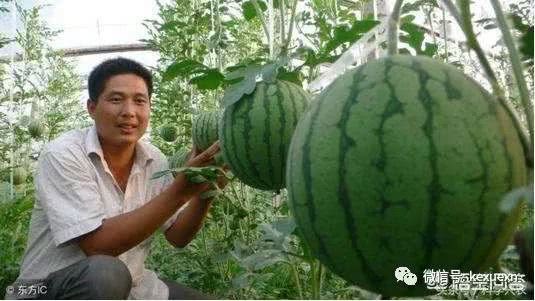
The so-called "splitting" of watermelons is also known as fruit cracking. It generally occurs when watermelons are about to ripen or during the ripening stage. At this time, the watermelon rind is relatively tight and brittle. When bumps or excessive rain occur, the growth rate speeds up and watermelon splitting occurs. Below is a detailed introduction to the causes and corresponding countermeasures.
Causes of watermelon splitting
Watermelons that split are basically mostly thin-rind watermelons. This type of watermelon has a thin rind and thick, abundant flesh, and is also very popular and well recognized by everyone. But this advantage is also its disadvantage: it splits easily. During the watermelon expansion period, after field watering or rain, or after fertilizing, the growth rate of the watermelon rapidly speeds up, but the growth rate of the flesh and the watermelon is not consistent, which leads to watermelon splitting. In addition, after continuous rainy days, when the weather suddenly clears, the growth rate suddenly speeds up, which can also lead to watermelon splitting. And because the rind is relatively brittle and thin, splitting can also occur when birds peck at the watermelon rind.
Countermeasures to prevent fruit cracking
In fact, the best strategy for preventing watermelon fruit cracking is still to choose thick-rind watermelon varieties. This kind of watermelon has a very strong ability to resist fruit cracking. It can also reduce quite a bit of loss. However, thick-rind watermelons are also relatively less popular in the market than thin-rind watermelons.
For growers who plant thin-rind watermelons, strengthening management becomes a major tool for preventing fruit cracking. Especially the management of field water and fertilizer can be said to be particularly important. During the watermelon expansion period, after the watermelon sets fruit and grows to the size of an egg and to 15 cm in size, a round of water and fertilizer can be supplemented respectively. Nitrogen fertilizer can be supplemented in small amounts. In addition, pay attention to supplementing phosphorus and potassium fertilizer.
When the watermelon is about to ripen, attention should be paid to controlling water and fertilizer. At this time, water and fertilizer should no longer be supplemented, so as to avoid excessive water and fertilizer causing fruit splitting and cracking.
In addition, regarding the issue of applying phosphorus and potassium fertilizer as a top dressing, foliar spraying of fertilizer can be considered. It is not only absorbed quickly, but can also enhance the toughness of the fruit rind.
The above is a little of what Science Agriculture shares with you regarding the causes of watermelon splitting and countermeasures. We hope it is helpful to you.