This tree is worthless, but its bark contains silver threads and is a rare treasure; some people have made a fortune selling it
Friendly reminder
Hemu Report aims to share and popularize information about various plants and their uses, for reference only. If medicinal use is needed, it is recommended to consult a professional physician to avoid problems!
In rural China, there are many precious trees, such as agarwood that gives off fragrance, huanghuali (Dalbergia odorifera) that can be made into valuable furniture, and mahogany with its classic wood, etc. They are all famous for their good timber and are extremely expensive. In rural areas there is another kind of tree whose wood itself is worthless; what is valuable is its bark, which is worth more than the wood. When people see this tree, the first thing they think of is how to peel off its bark. What is unique about this bark is that it contains a gelatinous "silver thread," which is not only a precious medicinal material but also a raw material for high-end rubber products. Quite a few farmers have made a fortune by selling the bark.
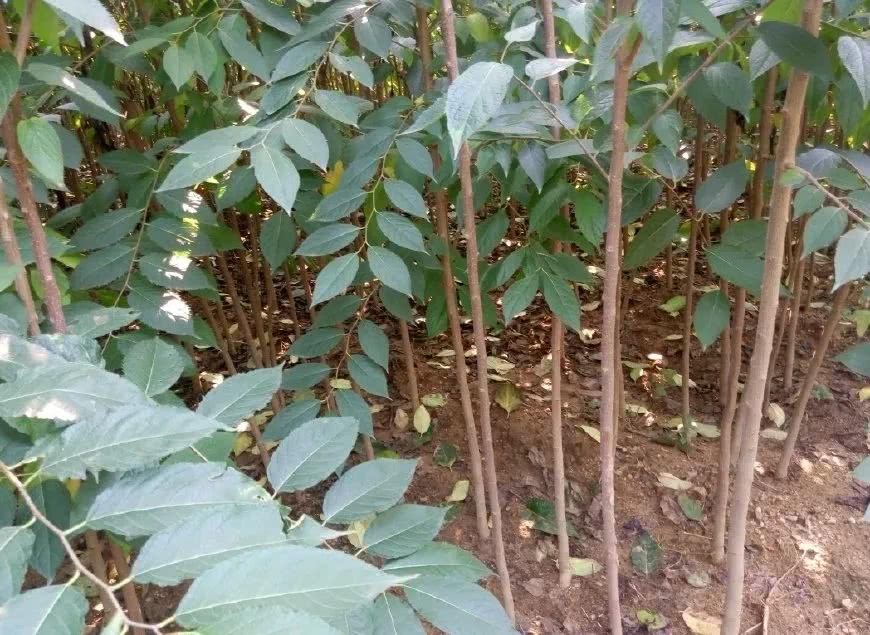
This tree is Eucommia ulmoides, now planted in many places. But the saplings are worthless; only Eucommia trees over 15 years old are valuable. The dried bark of Eucommia ulmoides first appeared in the Shennong Bencao Jing, which states that it can "tonify the center, benefit vital essence, and strengthen sinews and bones. Taken over a long time, it lightens the body and delays aging." It is also listed there as a superior-grade herb. Since then, in various ancient medical books, Eucommia has been regarded as a precious tonic medicinal material, mainly used to tonify the liver and kidneys and nourish qi and blood. Today Eucommia is also a common tonic in people's daily lives, so the demand for Eucommia bark is very large.
Although Eucommia is good, its bark is not easy to obtain. First, you must select an old tree and use the "half-ring peeling method" to harvest the bark. This is because if part of the bark is not retained, the tree will die completely after peeling. Second, you should choose a cloudy day to peel the bark, which can reduce water evaporation from the trunk. When cutting the bark, choose a position 10 cm from the ground, and the bark cut should not exceed half of the trunk; too much will cause the tree to wither and die. At the same time, when cutting, be sure not to damage the woody layer inside; after slicing open the bark, slowly peel it off. After peeling in this way, the bark of Eucommia can grow back again after about 3 years.
Eucommia bark is very easy to identify. After breaking the bark, you can see fine "silver threads." This is its gum, called "silk-linked bark" or "jade-silk bark" among the people. It is an important feature for identifying true Eucommia, because most tree barks do not have this silky gum. This gum is called "Eucommia rubber" and can not only be used as medicine but also to make hard rubber. Because it does not deform after processing and cooling, is resistant to acid and alkali corrosion, and can insulate against electricity and heat, it is one of the high-end materials for making submarine cables and oil pipelines. Therefore, the bark of old Eucommia trees is a rare treasure and has also become a "money tree" for farmer friends in the mountains.
Although Eucommia is rare, it is actually a fairly high-yielding tree. A 5-year-old tree can produce 5 tons of bark per hectare, and the general price per jin of bark is about 12 yuan, with higher prices for better quality. Farmers can earn quite a lot just by selling bark, and then they can also sell saplings and seeds, bringing extra economic income. Readers and friends, do you know Eucommia?
Text/Hemu Report, Images/Internet
If you like Hemu's articles, welcome to follow